
Before Memmo my notes were scattered across PDFs. Now a workspace pulls everything into one place — I see exactly what's still left to study.
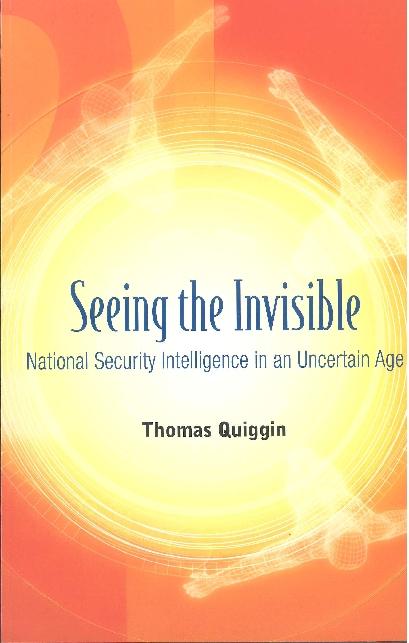
“Tom Quiggin has written a timely book for the national security community. Political extremism is likely to supplant transnational terrorism as a key factor in national security. State run intelligence institutions are going to have to improve their strategic level analytical capabilities to meet this new challenge and many others.
This book outlines the changing needs of national security intelligence, the complex international environment in which it operates, and the ways that will have to adapt to counter the multiple emerging asymmetric threats. Lessons for intelligence have been learned on the front lines of counter terrorism, but we still need fundamental change to meet the future.”
“This is one of the most original, broad-ranging, and indeed exciting books to emerge in the new era that juxtaposes asymmetric and non-traditional threats with distributed and innovative combinations of open sources and methods. Tom Quiggin fully understands that in the age of distributed information the concept of “central intelligence” is not only obsolete, but that effective intelligence cannot be achieved without the full cooperation of all organizations — governmental as well as non-governmental.
This work is in my view the first major work in the new generation of intelligence and national security studies and will inform those who have to make the decisions and carry out the work, not only in government, but in the private and non-profit sectors where much of the innovation is occurring. With the author being most persuasive to the effect that “connecting the dots” for discrete event predictions is not within the capacity of the existing strategic intelligence community, anticipatory warning systems such as horizon scanning must not only be implemented for all forms of threat including communicable diseases, but they must be created with the full participation of all elements of society.”
Before Memmo my notes were scattered across PDFs. Now a workspace pulls everything into one place — I see exactly what's still left to study.
Memmo's summaries are gold before exams. I don't have to re-read 800 pages two weeks before — just the important parts.
The AI chat has saved me the night before an exam more than once. I just keep asking until I get it — no waiting on a study group to reply.
The quizzes hit exactly what I need to know. Memmo tracks what I get stuck on — so I only practice what's worth it.
Flashcards with spaced repetition are magic. Memmo knows when I'm about to forget something and brings it back.
The AI podcasts are my favorite. I listen on my way to school and get a recap without sitting at a computer.

Handbok i kvalitativa metoder
281 kr

Hållbar utveckling: en introduktion för ingenjörer och andra problemlösare
334 kr

Brymans Samhällsvetenskapliga metoder
390 kr

Projektledning
491 kr

Den orättvisa hälsan: om socioekonomiska skillnader i hälsa och livslängd
326 kr

Vetenskapsteori för nybörjare
196 kr

Organizational Leadership
429 kr

På väg mot läraryrket
172 kr

Det sociala livet i skolan: Socialpsykologiska perspektiv
253 kr

Betygsättningens didaktik
151 kr

Personality
402 kr

Studying Leadership
404 kr

Managing Innovation
477 kr

Introduktion till samhällsvetenskaplig metod
347 kr

The Psychology of Sex and Gender
698 kr

Evidens och kunskap för socialt arbete
207 kr

Introduction to Leadership
605 kr