
Before Memmo my notes were scattered across PDFs. Now a workspace pulls everything into one place — I see exactly what's still left to study.
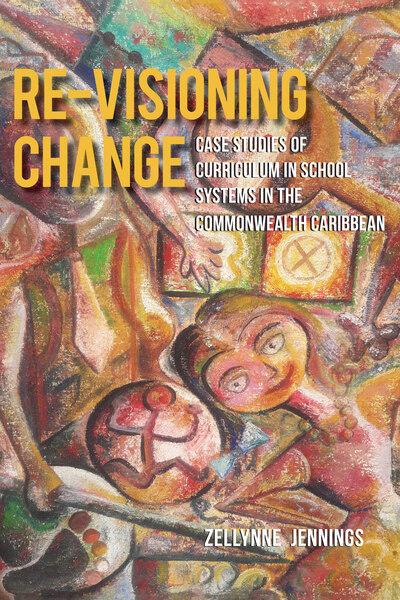
Education in a Crisis of Change: Reflections
Education is not static. It is forever going through a process of change. The description as “process” suggests that change is “an overlapping series of dynamically complex phenomena” (Fullan 1994, 21). Some of these can be anticipated, but others are unpredictable. The enormity of this statement struck me as I was reflecting on the first version of this book and working on the revisions. Something unanticipated and unpredicted engulfed the world: the Covid-19 pandemic described by the United Nations (2020, 4) as presenting “the greatest test the world has faced since the Second World War”. All at once life changed. Countries sealed their borders. Air travel was halted, and cities were put on lockdown. Economies plummeted. Curfew hours were instituted, and schools were closed. Life was under siege.
I was particularly struck by three things. First, that a virus that originated thousands of miles away in a distant continent could so quickly affect a group of countries that in the psyche of the First World were but grains of sand on a sun-soaked beach! The interconnectedness of the world! Globalization, after all, has been described as “a social process whereby the constraints of space and time on economic, political and cultural arrangements weaken gradually” (Little 1996, 427), giving this sense of interconnection. Globalization, however, has also resulted in widening the gap between rich and poor countries and between the rich and poor within countries. “The world is more unequal today than at any point since World War 11”, wrote UNDP (2013, 1).
This leads to my second point. After protocols were put in place to deal with the health hazard, it was remarkable how attention then turned to the economy. The mantra was “if Covid-19 doesn’t kill you, hunger will”. Research in the Caribbean carried out in April 2020 found that “for households earning less than the minimum wage, a striking 34.3 percent of respondents declared that they had gone hungry in the previous week, and just over half stated that they consumed less healthy food. These issues even persist, at substantially lower levels, in the higher-income categories” (Mooney and Rosenblatt 2020, 13). In Jamaica, affluent businessmen spent huge sums of money to argue in the media for the airports to be opened, and the engine of the economy wound up again. And so, they were. The tourists came back to enjoy the sand and sea and the virus reared its ugly head even more.
The third thing. After much ado about health issues and the economy, something came to us almost as an afterthought: the schools had been closed! What had been happening to the children? They were supposed to be learning online, but Hanuchek and Woesmann (2020) cite international studies that showed that the learning progress of students had suffered a strong decline during the crisis, especially in schools in low-income areas. In the Commonwealth Caribbean (CC), however, the concern was more about the parents who had to stay home with their children and could not go to work. It was by no means clear how possible or effective working from home was. Again, more thought was on the economy than on the children. The integral connection between the two was made clear by Hanuchek and Woesmann (2020, 1), who wrote, “The worldwide school closures in early 2020 led to losses in learning that will not easily be made up for even if schools quickly return to their prior performance levels. These losses will have lasting economic impacts both on the affected students and on each nation.” The children at the greatest disadvantage are those from poor homes where families are unable to afford the technology needed for the children to access learning online. These writers argue that the current students can expect 3 per cent lower career earnings in their lifetime if the schools on reopening can return to their 2019 performance levels. As far as nations were concerned “the impact could optimistically be 1.5 per cent lower GDP throughout the remainder of the century – and proportionately even lower if education systems are slow to return to prior levels of performance” (Hanuchek and Woesmann 2020, 6). “This is going to be the hardest fall we’ve had maybe in the modern history of education”, wrote Greenberg (2020).
It is not just the academic aspect of the children’s education that we should be concerned about at this time of crisis. Children’s physical, social and emotional development is in jeopardy. School closures mean that physical education classes cannot take place. Social distancing protocols prevent children from playing together as before and learning the social and emotional skills which are so important in their everyday lives as well as their eventual careers. Children who need it do not have access to guidance and counselling services and breakfast and lunch programmes offered by the schools. This is a particular disadvantage for those who live under crowded home conditions where they may be subject to abuse, food shortages and cruelty. There is also the fact that “children’s reliance on online platforms for distance learning has also increased their risk of exposure to inappropriate content and online predators” (United Nations 2020, 3).
We must also think about the parents. The success of out-of-school learning depends on the strength of their instructional skills, but they have been thrust into a role for which most have not been prepared. They need to know mathematics and English and be familiar with the school’s curriculum so that they can give their children the help they need. They need to be able to troubleshoot the technical glitches of online access to learning. They need to offer guidance to the children, supervise their work, keep them occupied while at the same time do their normal everyday activities. Some of this is not new to parents as they were encouraged to participate in their children’s education long before the crisis. Covid-19, however, has thrust them into the limelight through online learning out of school – a task with which parents from low-income homes can barely cope. If globalization widened the gap between the rich and poor, the pandemic threatens to deepen the divide even further.
This Book’s Purpose
What is the relevance of all of this to the book? It was striking how the pandemic threw the world into confusion. There was no past knowledge for reference on how to treat it because there was nothing quite like it before, not even the Spanish flu of 1918. Even the wearing of face masks became a contentious issue because of a lack of research to support one choice rather than the other. We came to recognize the value in being able to draw on evidence from the past to inform present action.
This book presents several case studies of attempts to introduce change into school systems in the CC which can inform action that needs to be taken to address many of the issues that the countries face as they try to restore normality in the education system post the pandemic. Hanuchek and Woessmann (2020) argue that to address the differences in learning loss of students from high- and low-income backgrounds, individualized instruction is the best strategy to adopt. There is much that can be learned from the case studies that deal with a similar problem during the early 1980s. Because rural children often had to help their parents to take goods to the market, they were frequently absent from school and thus incurred learning loss. The solution devised was the use of self-instructional materials that the students could work on in their own time under the guidance of the teacher. There is much to be learned from the Grade 10–11 Programme and Project PRIMER1 on the use of individualized instruction in the Caribbean context.Hanuchek and Woessmann (2020) also emphasize the need for attention to education at the early childhood level, especially at this time of crisis, since it is the foundation on which learning at other levels rest. Particular attention, they say, should be given to the disadvantaged students. The case study of the transition from basic school to primary school (see chapter 8) highlights the issues that must be dealt with in schools in impoverished rural areas. One of the issues is encouraging parents’ involvement in the education of their children. The findings of this study support those reported in Hoover-Dempsey et al. (2005), which suggested that positive school staff attitudes towards students’ families and communities are particularly important to parental empowerment and involvement.
Several of the case studies also address the issues of equity and social justice. There are examples of innovations designed to reduce the gap between the rich and poor in school systems and cater to children with learning difficulties. The first chapter elaborates on the goals of the innovations discussed in this book and draws attention to those that used both traditional and modern technology to address problems in the school system. While there is no example from the past that deals with system-wide use of modern technology in schooling from home, the case studies show that much of what is being experienced now – inadequate supplies of laptops or computers, weak technology infrastructure, teachers ill prepared for the task – are repeats of our past experience in using modern technology in our school systems. In a sense it is like going on a journey “back to the past”.
The essence of this book can be summed up thus: “When practitioners are better able to understand the past, chances are that they will be able to impart greater sensitivity to their plans for change and as a result improve the probability for success in their programmes. This is a perspective needed in most developing nations today, and it is a position anchored in the view that the past prefigures the present.”2Through an analysis and discussion of case studies of curriculum change in school systems in the CC, the author unearths and analyses the problems experienced with a view to deriving from these some broader insights into the dynamics of implementing change in Caribbean schools. Ultimately this book is about improving student learning because if policymakers and practitioners become more sensitive to their plans for change, this is more likely to lead to programme success which is normally measured in terms of student achievement. The book should also be useful in the training programmes for teachers, principals and other education stakeholders who need to understand the processes of change as experienced in CC education systems. Hopefully, the book will appeal to a wider range of readers who will find something of interest in it. It is also hoped that the book will prove a stimulus to further research on curriculum change in the wider Caribbean.
Before Memmo my notes were scattered across PDFs. Now a workspace pulls everything into one place — I see exactly what's still left to study.
Memmo's summaries are gold before exams. I don't have to re-read 800 pages two weeks before — just the important parts.
The AI chat has saved me the night before an exam more than once. I just keep asking until I get it — no waiting on a study group to reply.
The quizzes hit exactly what I need to know. Memmo tracks what I get stuck on — so I only practice what's worth it.
Flashcards with spaced repetition are magic. Memmo knows when I'm about to forget something and brings it back.
The AI podcasts are my favorite. I listen on my way to school and get a recap without sitting at a computer.

Handbok i kvalitativa metoder
281 kr

Hållbar utveckling: en introduktion för ingenjörer och andra problemlösare
334 kr

Brymans Samhällsvetenskapliga metoder
390 kr

Projektledning
491 kr

Den orättvisa hälsan: om socioekonomiska skillnader i hälsa och livslängd
326 kr

Organizational Leadership
429 kr

Vetenskapsteori för nybörjare
196 kr

På väg mot läraryrket
172 kr

Det sociala livet i skolan: Socialpsykologiska perspektiv
253 kr

Betygsättningens didaktik
151 kr

Personality
402 kr

Studying Leadership
404 kr

Managing Innovation
477 kr

Introduktion till samhällsvetenskaplig metod
347 kr

The Psychology of Sex and Gender
698 kr

Evidens och kunskap för socialt arbete
207 kr

Introduction to Leadership
605 kr