
Before Memmo my notes were scattered across PDFs. Now a workspace pulls everything into one place — I see exactly what's still left to study.
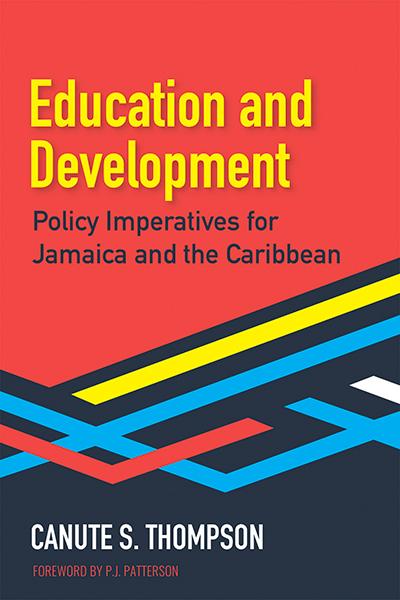
Canute S. Thompson examines the nexus between the place and scope of the educational enterprise of a country and a country’s developmental prospects and experience. His central claim is that the sustainable development of a country is a function of the quality of its education system and the levels to which its citizens are educated. He argues that in this calculus, the quality of post-secondary and tertiary education systems is a determinant of a country’s prospects for development.
In examining the issue of underdevelopment facing the Caribbean, Thompson explains that institutions of higher learning in the region face the imperative of finding ways of becoming both more accessible and more relevant to the developmental needs of the region. Taking account of the provisions of the General Agreement on Trades in Services, he points to the disadvantages this trading arrangement poses for higher education institutions in small developing states and suggests ways in which the vulnerabilities these institutions face may be addressed.
While asserting that higher education institutions, including and especially the University of the West Indies, must find ways to remain viable in a highly competitive marketplace, Thompson argues that governments of the region have a duty to ensure the survival and success of these institutions. In this vein, he advances recommendations for the public funding of access to higher education.
Thompson also examines impediments to development – such as crime, the decline in social activism, weak institutional processes and leadership, and public mistrust – and explores their connection to education. He concludes that the path to sustainable regional development is dependent on improving the quality of, and access to, education, and that such improvements will in turn help contain crime, inspire social activism, strengthen institutional processes and leadership, and ultimately restore public trust.
Before Memmo my notes were scattered across PDFs. Now a workspace pulls everything into one place — I see exactly what's still left to study.
Memmo's summaries are gold before exams. I don't have to re-read 800 pages two weeks before — just the important parts.
The AI chat has saved me the night before an exam more than once. I just keep asking until I get it — no waiting on a study group to reply.
The quizzes hit exactly what I need to know. Memmo tracks what I get stuck on — so I only practice what's worth it.
Flashcards with spaced repetition are magic. Memmo knows when I'm about to forget something and brings it back.
The AI podcasts are my favorite. I listen on my way to school and get a recap without sitting at a computer.

Handbok i kvalitativa metoder
281 kr

Hållbar utveckling: en introduktion för ingenjörer och andra problemlösare
334 kr

Brymans Samhällsvetenskapliga metoder
390 kr

Projektledning
491 kr

Den orättvisa hälsan: om socioekonomiska skillnader i hälsa och livslängd
326 kr

Organizational Leadership
429 kr

Vetenskapsteori för nybörjare
196 kr

På väg mot läraryrket
172 kr

Det sociala livet i skolan: Socialpsykologiska perspektiv
253 kr

Betygsättningens didaktik
151 kr

Personality
402 kr

Studying Leadership
404 kr

Managing Innovation
477 kr

Introduktion till samhällsvetenskaplig metod
347 kr

The Psychology of Sex and Gender
698 kr

Evidens och kunskap för socialt arbete
207 kr

Introduction to Leadership
605 kr