
Before Memmo my notes were scattered across PDFs. Now a workspace pulls everything into one place — I see exactly what's still left to study.
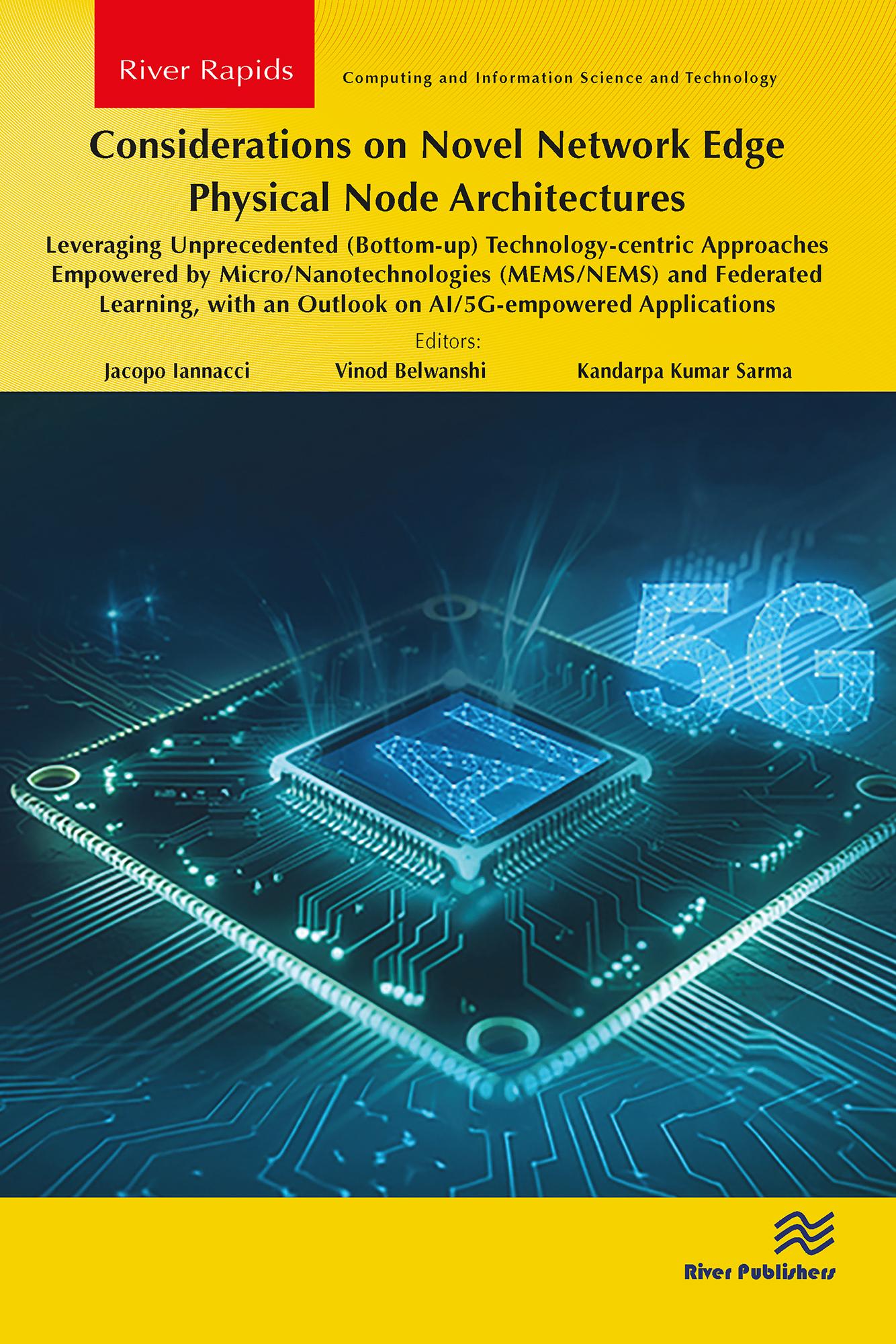
The relentless pace of technological advancement, particularly in telecommunications, is reshaping how we connect and communicate. What once took a decade to standardize now evolves in just a few years, blurring generational divides and delivering seamless transitions to users. Against this backdrop, Considerations on Novel Network Edge Physical Node Architectures explores the complex paradigm of 6G mobile communications—anticipated to emerge around 2030—and casts a longer-term vision toward future networks (FNs).
The scientific community has been engaged in 6G research since 2017–2018, defining use cases, key enabling technologies (KETs), and performance indicators (KPIs). Ambitious targets include peak data rates of 1 Tbps, average user rates of 10–100 Gbps, sub-0.1 ms latency, and reliability greater than 10⁻⁸. Application domains span holographic communications, digital twins, multi-sensory extended reality (XR), tactile and haptic interactions, and integrated space–terrestrial networks.
While these expectations hold the promise of a more interconnected world, realizing them demands a fundamental shift in approach. The projected density of 10–100 million smart devices per square kilometer in 6G networks cannot be addressed through conventional hardware–software co-design alone. This book proposes new ways of conceiving the physical building blocks of edge intelligence (EI), where intelligence is embedded at the network’s edge.
Central to this vision is the use of micro- and nanotechnologies (MEMS/NEMS) to create miniaturized sensors, actuators, and transducers (SATs) that serve as distributed intelligence units. These physical innovations are examined alongside non-physical enablers such as artificial intelligence (AI) and federated learning (FL), illustrating how a holistic integration of technologies can enable practical, scalable applications.
By bridging physical and digital innovations, Considerations on Novel Network Edge Physical Node Architectures aims to inject fresh ideas into scientific discourse and provide a foundation for turning the ambitious visions of 6G and future networks into reality. It is an essential resource for researchers, engineers, and industry professionals seeking to shape the next generation of telecommunications infrastructure.
Before Memmo my notes were scattered across PDFs. Now a workspace pulls everything into one place — I see exactly what's still left to study.
Memmo's summaries are gold before exams. I don't have to re-read 800 pages two weeks before — just the important parts.
The AI chat has saved me the night before an exam more than once. I just keep asking until I get it — no waiting on a study group to reply.
The quizzes hit exactly what I need to know. Memmo tracks what I get stuck on — so I only practice what's worth it.
Flashcards with spaced repetition are magic. Memmo knows when I'm about to forget something and brings it back.
The AI podcasts are my favorite. I listen on my way to school and get a recap without sitting at a computer.

Handbok i kvalitativa metoder
281 kr

Hållbar utveckling: en introduktion för ingenjörer och andra problemlösare
334 kr

Brymans Samhällsvetenskapliga metoder
390 kr

Projektledning
491 kr

Den orättvisa hälsan: om socioekonomiska skillnader i hälsa och livslängd
326 kr

Vetenskapsteori för nybörjare
196 kr

Organizational Leadership
429 kr

På väg mot läraryrket
172 kr

Det sociala livet i skolan: Socialpsykologiska perspektiv
253 kr

Betygsättningens didaktik
151 kr

Personality
402 kr

Studying Leadership
404 kr

Managing Innovation
477 kr

Introduktion till samhällsvetenskaplig metod
347 kr

The Psychology of Sex and Gender
698 kr

Evidens och kunskap för socialt arbete
207 kr

Introduction to Leadership
605 kr