
Before Memmo my notes were scattered across PDFs. Now a workspace pulls everything into one place — I see exactly what's still left to study.
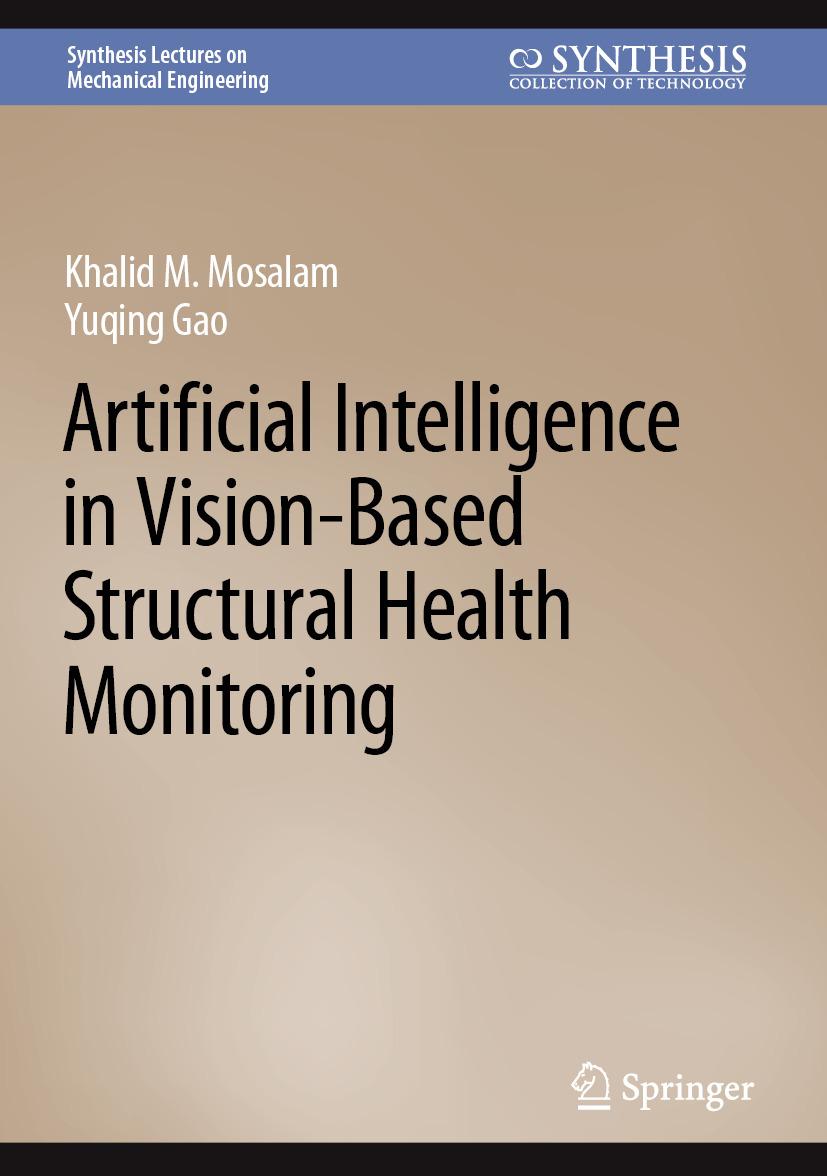
This book provides a comprehensive coverage of the state-of-the-art artificial intelligence (AI) technologies in vision-based structural health monitoring (SHM). In this data explosion epoch, AI-aided SHM and rapid damage assessment after natural hazards have become of great interest in civil and structural engineering, where using machine and deep learning in vision-based SHM brings new research direction. As researchers begin to apply these concepts to the structural engineering domain, especially in SHM, several critical scientific questions need to be addressed: (1) What can AI solve for the SHM problems? (2) What are the relevant AI technologies? (3) What is the effectiveness of the AI approaches in vision-based SHM? (4) How to improve the adaptability of the AI approaches for practical projects? (5) How to build a resilient AI-aided disaster prevention system making use of the vision-based SHM?
This book introduces and implements the state-of-the-art machine learning and deep learning technologies for vision-based SHM applications. Specifically, corresponding to the above-mentioned scientific questions, it consists of: (1) motivation, background & progress of AI-aided vision-based SHM, (2) fundamentals of machine learning & deep learning approaches, (3) basic AI applications in vision-based SHM, (4) advanced topics & approaches, and (5) resilient AI-aided applications. In the introduction, a brief coverage about the development progress of AI technologies in the vision-based area is presented. It gives the readers the motivations and background of the relevant research. In Part I, basic knowledges of machine and deep learning are introduced, which provide the foundation for the readers irrespective of their background. In Part II, to verify the effectiveness of the AI methods, the key procedure of the typical AI-aided SHM applications (classification, localization, and segmentation) is explored, including vision data collection, data pre-processing,transfer learning-based training mechanism, evaluation, and analysis. In Part III, advanced AI topics, e.g., generative adversarial network, semi-supervised learning, and active learning, are discussed. They aim to address several critical issues in practical projects, e.g., the lack of well-labeled data and imbalanced labels, to improve the adaptability of the AI models. In Part IV, the new concept of “resilient AI” is introduced to establish an intelligent disaster prevention system, multi-modality learning, multi-task learning, and interpretable AI technologies. These advances are aimed towards increasing the robustness and explainability of the AI-enabled SHM system, and ultimately leading to improved resiliency.
The scope covered in this book is not only beneficial for education purposes but also is essential for modern industrial applications. The target audience is broad and includes students, engineers, and researchers in civil engineering, statistics, and computer science.
Unique Book Features:
• Provide a comprehensive review of the rapidly expanding field of vision-based structural health monitoring (SHM) using artificial intelligence approaches.
• Re-organize fundamental knowledge specific to the machine and deep learning in vision tasks.
• Include comprehensive details about the procedure of conducting AI approaches for vision-based SHM along with examples and exercises.
• Cover a vast array of special topics and advanced AI-enabled vision-based SHM applications.
• List a few potential extensions for inspiring the readers for future investigation.
Before Memmo my notes were scattered across PDFs. Now a workspace pulls everything into one place — I see exactly what's still left to study.
Memmo's summaries are gold before exams. I don't have to re-read 800 pages two weeks before — just the important parts.
The AI chat has saved me the night before an exam more than once. I just keep asking until I get it — no waiting on a study group to reply.
The quizzes hit exactly what I need to know. Memmo tracks what I get stuck on — so I only practice what's worth it.
Flashcards with spaced repetition are magic. Memmo knows when I'm about to forget something and brings it back.
The AI podcasts are my favorite. I listen on my way to school and get a recap without sitting at a computer.

Handbok i kvalitativa metoder
281 kr

Hållbar utveckling: en introduktion för ingenjörer och andra problemlösare
334 kr

Brymans Samhällsvetenskapliga metoder
390 kr

Projektledning
491 kr

Den orättvisa hälsan: om socioekonomiska skillnader i hälsa och livslängd
326 kr

Vetenskapsteori för nybörjare
196 kr

Organizational Leadership
429 kr

På väg mot läraryrket
172 kr

Det sociala livet i skolan: Socialpsykologiska perspektiv
253 kr

Betygsättningens didaktik
151 kr

Personality
402 kr

Studying Leadership
404 kr

Managing Innovation
477 kr

Introduktion till samhällsvetenskaplig metod
347 kr

The Psychology of Sex and Gender
698 kr

Evidens och kunskap för socialt arbete
207 kr

Introduction to Leadership
605 kr