
Before Memmo my notes were scattered across PDFs. Now a workspace pulls everything into one place — I see exactly what's still left to study.
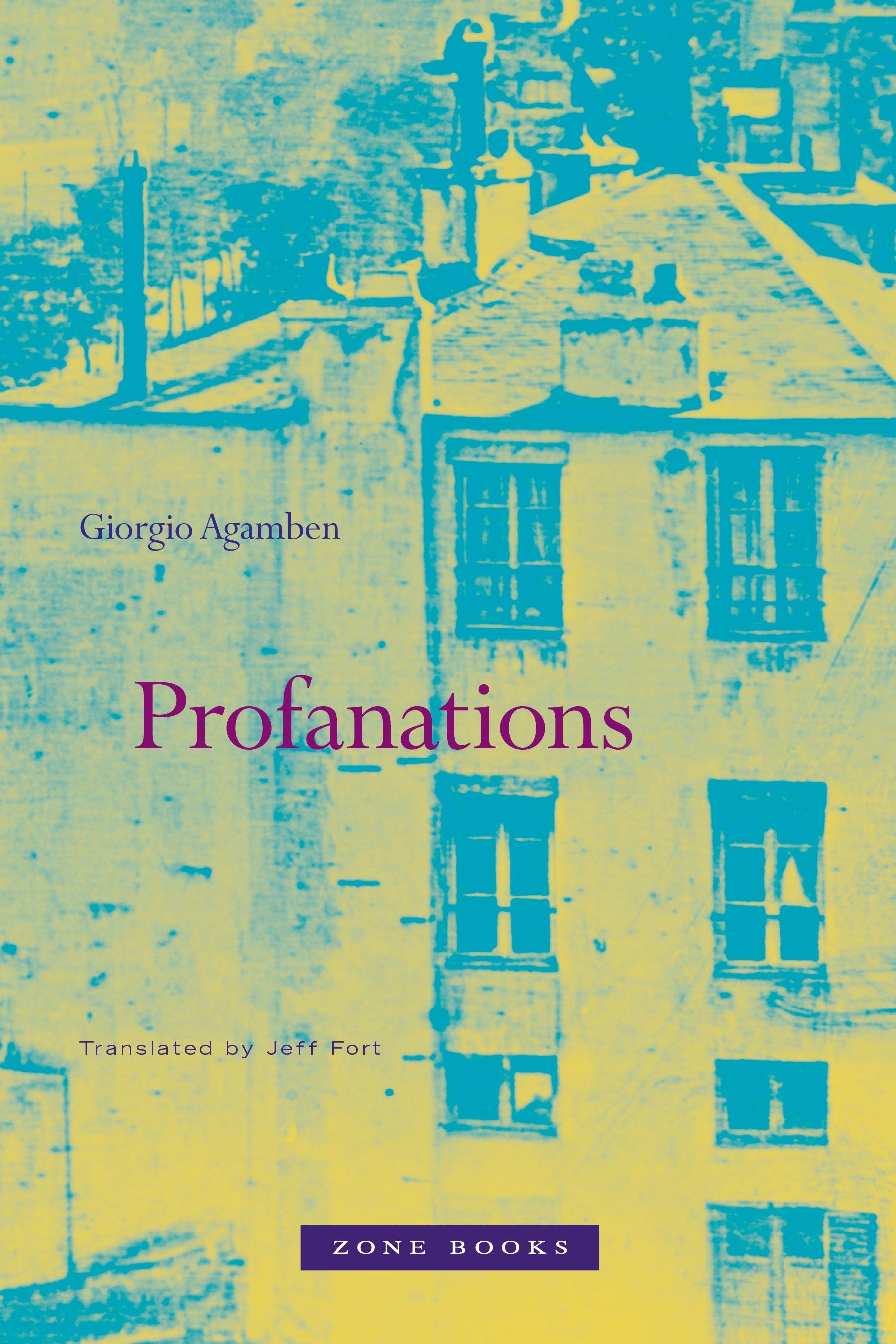
The Italian philosopher Giorgio Agamben has always been an original reader of texts, understanding their many rich and multiple historical, aesthetic, and political meanings and effects. In Profanations, Agamben has assembled for the first time some of his most pivotal essays on photography, the novel, and film. A meditation on memory and oblivion, on what is lost and what remains, Profanations proves yet again that Agamben is one of the most provocative writers of our times.
In ten essays, Agamben rethinks approaches to a series of literary and philosophical problems: the relation between genius, ego, and theories of subjectivity; the problem of messianic time as explicated in both images and lived experience; parody as a literary paradigm; the potential of magic to provide an ethical canon.
The range of topics and themes addressed here attest to the very creativity of Agamben’s singular mode of thought and his persistent pursuit to grasp the act of witnessing, sometimes futile, sometimes earth-shattering — the talking cricket in Pinocchio; “helpers” in Kafka’s novels; pictorial representations of the Last Judgment, of anonymous female faces, and of Orson Wells’s infamous object of obsession Rosebud. “In Praise of Profanity,” the central essay of this small but dense book, confronts the question of profanity as the crucial political task of the moment.
An act of resistance to every form of separation, the concept of profanation — as both the “return to common usage” and “sacrifice” — reorients perceptions of how power, consumption, and use interweave to produce an urgent political modality and desire: to profane the unprofanable. In short, Agamben provides not only a new and potent theoretical model but also a writerly style that itself forges inescapable links between literature, politics, and philosophy.
Before Memmo my notes were scattered across PDFs. Now a workspace pulls everything into one place — I see exactly what's still left to study.
Memmo's summaries are gold before exams. I don't have to re-read 800 pages two weeks before — just the important parts.
The AI chat has saved me the night before an exam more than once. I just keep asking until I get it — no waiting on a study group to reply.
The quizzes hit exactly what I need to know. Memmo tracks what I get stuck on — so I only practice what's worth it.
Flashcards with spaced repetition are magic. Memmo knows when I'm about to forget something and brings it back.
The AI podcasts are my favorite. I listen on my way to school and get a recap without sitting at a computer.

Handbok i kvalitativa metoder
281 kr

Hållbar utveckling: en introduktion för ingenjörer och andra problemlösare
334 kr

Brymans Samhällsvetenskapliga metoder
390 kr

Projektledning
491 kr

Den orättvisa hälsan: om socioekonomiska skillnader i hälsa och livslängd
326 kr

Vetenskapsteori för nybörjare
196 kr

Organizational Leadership
429 kr

På väg mot läraryrket
172 kr

Det sociala livet i skolan: Socialpsykologiska perspektiv
253 kr

Betygsättningens didaktik
151 kr

Personality
402 kr

Studying Leadership
404 kr

Managing Innovation
477 kr

Introduktion till samhällsvetenskaplig metod
347 kr

The Psychology of Sex and Gender
698 kr

Evidens och kunskap för socialt arbete
207 kr

Introduction to Leadership
605 kr