
Before Memmo my notes were scattered across PDFs. Now a workspace pulls everything into one place — I see exactly what's still left to study.
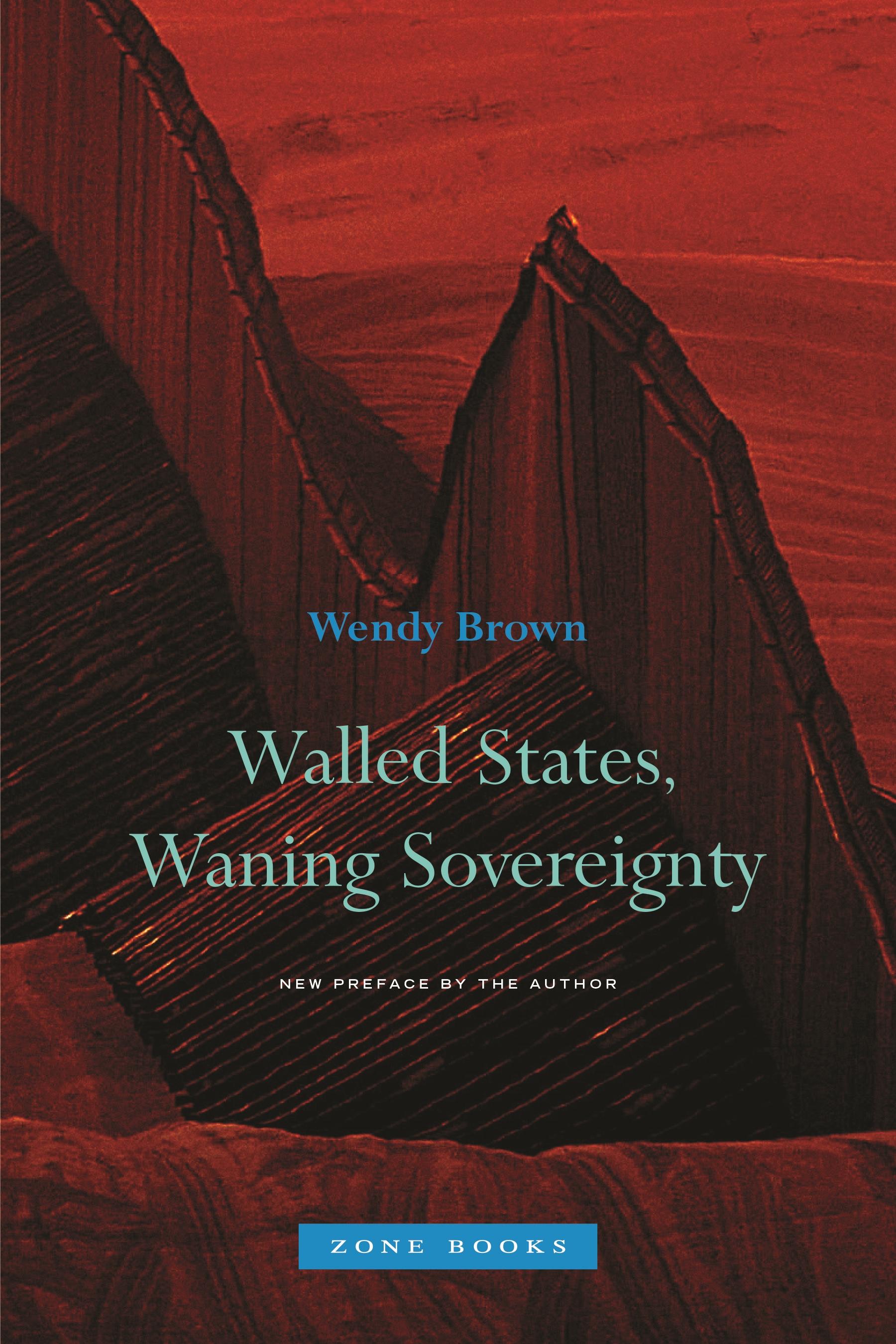
Why, just two decades after international celebrations of the fall of the Berlin Wall, are so many nation-states building elaborate walls at or near their borders? Why walls now, given growing global connectedness and given the general imperviousness of late modern powers — from capital to religion to terror — to physical blockading? How do walls shore up an imago of sovereign statehood and to what extent do they fortify reactionary national imaginaries? What do the new walls perform symbolically, materially, psychically?
In Walled States, Waning Sovereignty, Wendy Brown reflects on the proliferation of nation-state walls in a time of eroded nation-state sovereignty and intensifying transnational powers unleashed by globalization. A leading theorist of neoliberalism, Brown argues that although the new walls may demarcate existent or aspirational nation-state boundaries, they do not arise as fortresses against invading national armies or even as articulations of sovereign statehood.
Rather, in a post-Westphalian context of increasing nonstate transnational actors and powers, the new walls consecrate the very boundary corruption they would contest as well as signify the contemporary limitations of national and global governance by law or political dictate. Even as walls theatrically display nation-state sovereignty, they index with equal force the decline of sovereign state power.
In a rare combination of powerful theory and precise historical, political, and economic analysis, Walled States, Waning Sovereignty provides a new — indeed the first — account of nation-state walling as a distinctive contemporary phenomenon. For Brown, the frenzy of wall building today reveals crucial predicaments of political power and desire emerging from the waning of sovereignty, including new political legitimacy deficits, new citizen anxieties, and new fusions of state and non-state violence.
Before Memmo my notes were scattered across PDFs. Now a workspace pulls everything into one place — I see exactly what's still left to study.
Memmo's summaries are gold before exams. I don't have to re-read 800 pages two weeks before — just the important parts.
The AI chat has saved me the night before an exam more than once. I just keep asking until I get it — no waiting on a study group to reply.
The quizzes hit exactly what I need to know. Memmo tracks what I get stuck on — so I only practice what's worth it.
Flashcards with spaced repetition are magic. Memmo knows when I'm about to forget something and brings it back.
The AI podcasts are my favorite. I listen on my way to school and get a recap without sitting at a computer.

Handbok i kvalitativa metoder
281 kr

Hållbar utveckling: en introduktion för ingenjörer och andra problemlösare
334 kr

Brymans Samhällsvetenskapliga metoder
390 kr

Projektledning
491 kr

Den orättvisa hälsan: om socioekonomiska skillnader i hälsa och livslängd
326 kr

Vetenskapsteori för nybörjare
196 kr

Organizational Leadership
429 kr

På väg mot läraryrket
172 kr

Det sociala livet i skolan: Socialpsykologiska perspektiv
253 kr

Betygsättningens didaktik
151 kr

Personality
402 kr

Studying Leadership
404 kr

Managing Innovation
477 kr

Introduktion till samhällsvetenskaplig metod
347 kr

The Psychology of Sex and Gender
698 kr

Evidens och kunskap för socialt arbete
207 kr

Introduction to Leadership
605 kr