
Before Memmo my notes were scattered across PDFs. Now a workspace pulls everything into one place — I see exactly what's still left to study.
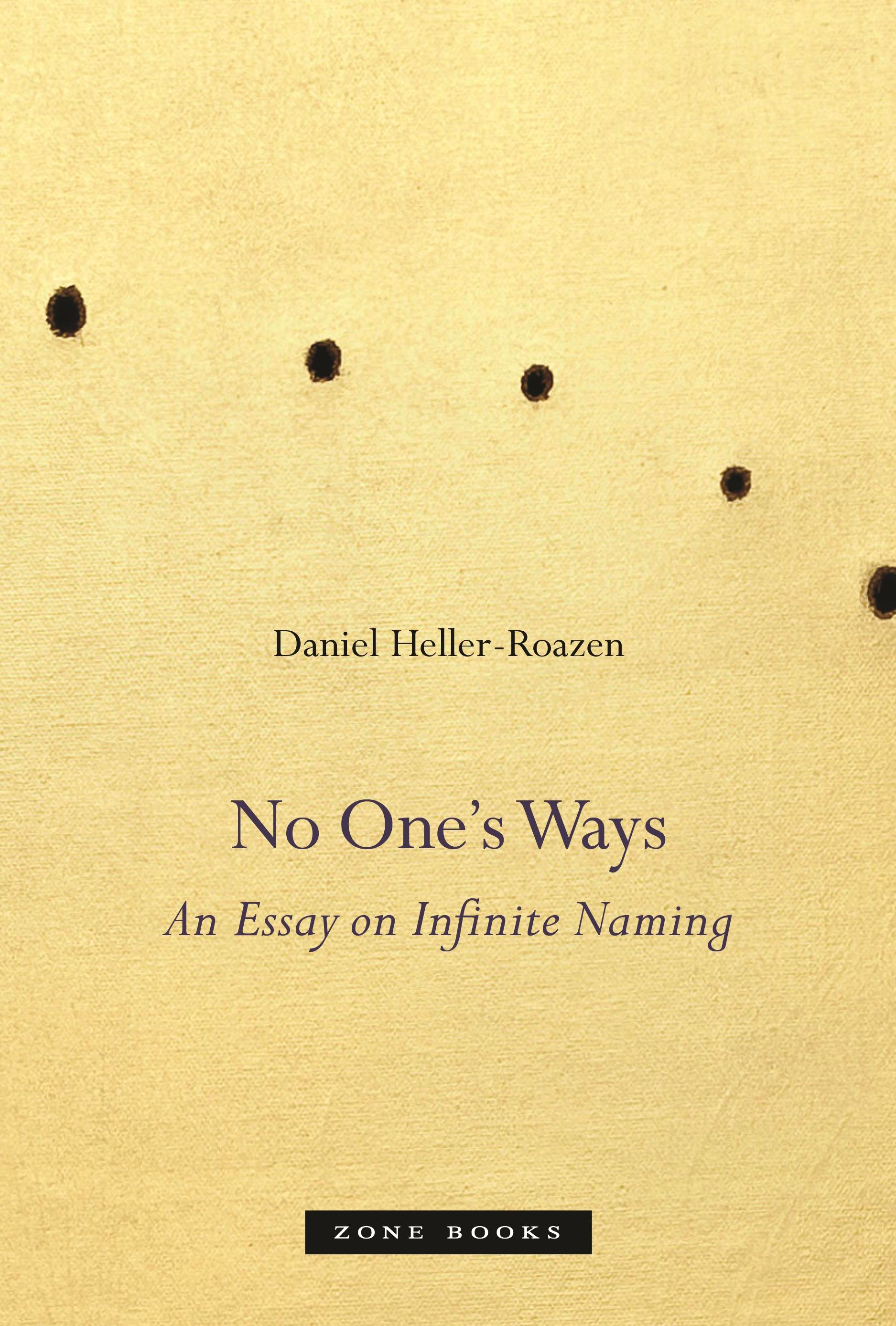
Homer recounts how, trapped inside a monster’s cave, with nothing but his wits, Ulysses once saved himself by twisting his name. He called himself Outis: “No One” or “Non-One,” “No Man” or “Non-Man.” The ploy was a success. He blinded his barbaric host and eluded him, becoming anonymous, for a while, even as he bore a name.
Philosophers never forgot the lesson that the ancient hero taught. From Aristotle and his commentators in Greek, Arabic, Latin, and more modern languages, from the masters of the medieval schools to Kant and his many successors, thinkers have exploited the possibilities of adding “non-” to the names of man.
Aristotle is the first to write of “indefinite” or “infinite” names, his example being “non-man.” Kant turns to such terms in his theory of the infinite judgment, illustrated by the sentence, “The soul is non-_mortal.” Such statements play unexpected and often major roles in the systems of Salomon Maimon, Hegel and Hermann Cohen, before being variously and profoundly reinterpreted in the twentieth century.
Reconstructing the adventures of a particle in philosophy, Heller-Roazen’s book shows how a grammatical possibility can be an incitement for thought. Yet it also draws a lesson from persistent examples. The philosophers’ infinite names all point to one subject: us. “Non-man” or “soul,” “Spirit” or “the unconditioned,” we are beings who name and name ourselves, bearing witness to the fact that we are, in every sense, unnamable.
Before Memmo my notes were scattered across PDFs. Now a workspace pulls everything into one place — I see exactly what's still left to study.
Memmo's summaries are gold before exams. I don't have to re-read 800 pages two weeks before — just the important parts.
The AI chat has saved me the night before an exam more than once. I just keep asking until I get it — no waiting on a study group to reply.
The quizzes hit exactly what I need to know. Memmo tracks what I get stuck on — so I only practice what's worth it.
Flashcards with spaced repetition are magic. Memmo knows when I'm about to forget something and brings it back.
The AI podcasts are my favorite. I listen on my way to school and get a recap without sitting at a computer.

Handbok i kvalitativa metoder
281 kr

Hållbar utveckling: en introduktion för ingenjörer och andra problemlösare
334 kr

Brymans Samhällsvetenskapliga metoder
390 kr

Projektledning
491 kr

Den orättvisa hälsan: om socioekonomiska skillnader i hälsa och livslängd
326 kr

Vetenskapsteori för nybörjare
196 kr

Organizational Leadership
429 kr

På väg mot läraryrket
172 kr

Det sociala livet i skolan: Socialpsykologiska perspektiv
253 kr

Betygsättningens didaktik
151 kr

Personality
402 kr

Studying Leadership
404 kr

Managing Innovation
477 kr

Introduktion till samhällsvetenskaplig metod
347 kr

The Psychology of Sex and Gender
698 kr

Evidens och kunskap för socialt arbete
207 kr

Introduction to Leadership
605 kr