
Before Memmo my notes were scattered across PDFs. Now a workspace pulls everything into one place — I see exactly what's still left to study.
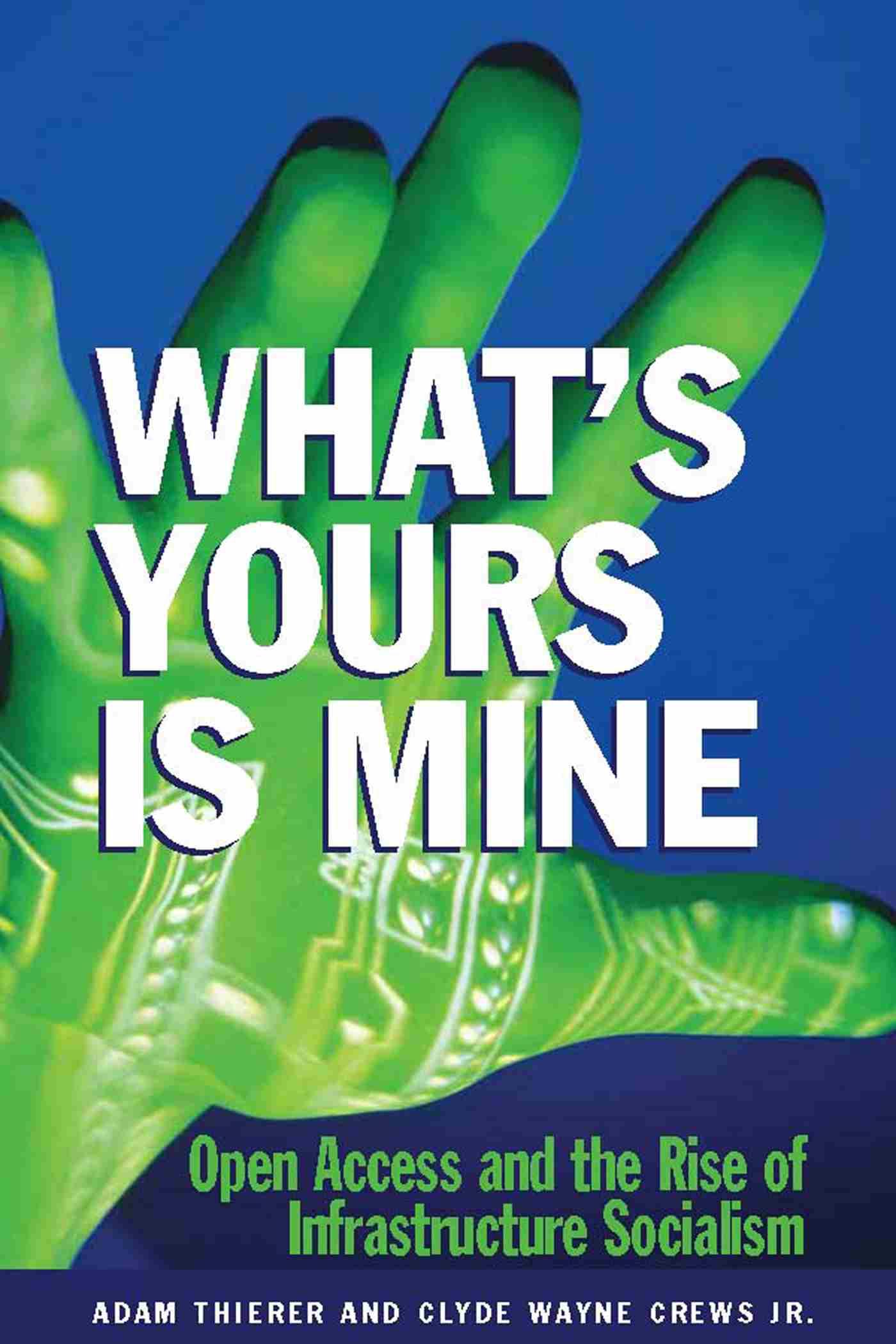
In What's Yours Is Mine: Open Access and the Rise of Infrastructure Socialism, authors Adam Thierer and Clyde Wayne Crews Jr. examine the hazards of mandatory "open access"-- a trend in which hyper-regulatory bureaucrats and central planners are increasingly commanding technology companies and industry sectors to share networks, facilities, or specific technologies with rivals. Telephone and cable companies, wireless carriers, electric utilities, the Visa/Mastercard network, Microsoft's Windows operating system -- all these and more have been targets of demands for forced access. Although supporters claim that open access is pro-competitive, the opposite is true. Forced access policies inevitably mean price and quality controls, stagnation, increased litigation, and a crippling of innovation.
Genuine competition requires that firms have the ability to exclude rivals. Government seizure of existing networks and technologies on behalf of rivals means that next-generation technologies will not be created by those rivals or the incumbents. The recent decision by the FCC to continue such micro-management of local telecom markets illustrates this principle; regulators have opted to continue to require sharing of local telephone lines and switches despite the fact that those rules have decimated innovation and investment in the U.S. telecom market. The key message for policymakers hoping for a high-tech renaissance: Competition in the creation of networks is as important as competition in the goods and services that get sold across those networks. Competition, innovation, and consumers will suffer if forced sharing policies are not abandoned. In today's world of increasing global communications and digital technologies, What's Yours Is Mine makes an urgently needed pro-consumer case for laissez-faire in the evolution of technology industries.
Before Memmo my notes were scattered across PDFs. Now a workspace pulls everything into one place — I see exactly what's still left to study.
Memmo's summaries are gold before exams. I don't have to re-read 800 pages two weeks before — just the important parts.
The AI chat has saved me the night before an exam more than once. I just keep asking until I get it — no waiting on a study group to reply.
The quizzes hit exactly what I need to know. Memmo tracks what I get stuck on — so I only practice what's worth it.
Flashcards with spaced repetition are magic. Memmo knows when I'm about to forget something and brings it back.
The AI podcasts are my favorite. I listen on my way to school and get a recap without sitting at a computer.

Handbok i kvalitativa metoder
281 kr

Hållbar utveckling: en introduktion för ingenjörer och andra problemlösare
334 kr

Brymans Samhällsvetenskapliga metoder
390 kr

Projektledning
491 kr

Den orättvisa hälsan: om socioekonomiska skillnader i hälsa och livslängd
326 kr

Organizational Leadership
429 kr

Vetenskapsteori för nybörjare
196 kr

På väg mot läraryrket
172 kr

Det sociala livet i skolan: Socialpsykologiska perspektiv
253 kr

Betygsättningens didaktik
151 kr

Personality
402 kr

Studying Leadership
404 kr

Managing Innovation
477 kr

Introduktion till samhällsvetenskaplig metod
347 kr

The Psychology of Sex and Gender
698 kr

Evidens och kunskap för socialt arbete
207 kr

Introduction to Leadership
605 kr