
Before Memmo my notes were scattered across PDFs. Now a workspace pulls everything into one place — I see exactly what's still left to study.
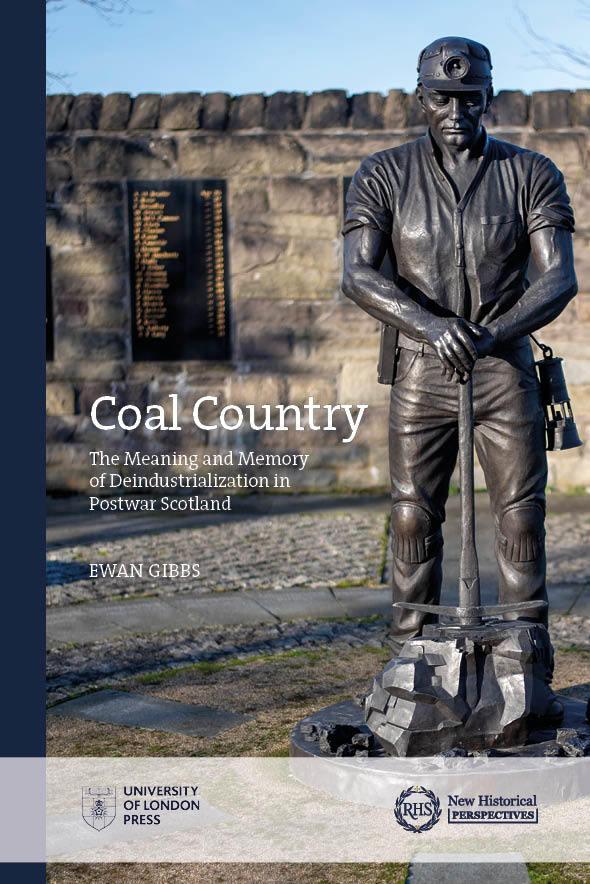
The flooding and subsequent closure of Scotland’s last deep coal mine in 2002 brought a centuries long saga to an end. Villages and towns across the densely populated Central Belt owe their existence to coal mining’s expansion during the nineteenth century and its maturation in the twentieth. Colliery closures and job losses were not just experienced in economic terms: they had profound implications for what it meant to be a worker, a Scot and a resident of an industrial settlement. Coal Country presents the first book-length account of deindustrialization in the Scottish coalfields. It draws on archival research using records from UK government, the nationalized coal industry and trade unions, as well as the words and memories of former miners, their wives and children that were collected in an extensive oral history project.
Deindustrialization progressed as a slow but powerful march across the second half of the twentieth century. In this book, big changes in cultural identities are explained as the outcome of long-term economic developments. The oral testimonies bring to life transformations in gender relations and distinct generational workplaces experiences. This book argues that major alterations to the politics of class and nationhood have their origins in deindustrialization. The adverse effects of UK government policy, and centralization in the nationalized coal industry, encouraged miners and their trade union to voice their grievances in the language of Scottish national sovereignty. These efforts established a distinctive Scottish national coalfield community and laid the foundations for a devolved Scottish Parliament. Coal Country explains the deep roots of economic changes and their political reverberations, which continue to be felt as we debate another major change in energy sources during the 2020s.
Before Memmo my notes were scattered across PDFs. Now a workspace pulls everything into one place — I see exactly what's still left to study.
Memmo's summaries are gold before exams. I don't have to re-read 800 pages two weeks before — just the important parts.
The AI chat has saved me the night before an exam more than once. I just keep asking until I get it — no waiting on a study group to reply.
The quizzes hit exactly what I need to know. Memmo tracks what I get stuck on — so I only practice what's worth it.
Flashcards with spaced repetition are magic. Memmo knows when I'm about to forget something and brings it back.
The AI podcasts are my favorite. I listen on my way to school and get a recap without sitting at a computer.

Handbok i kvalitativa metoder
281 kr

Hållbar utveckling: en introduktion för ingenjörer och andra problemlösare
334 kr

Brymans Samhällsvetenskapliga metoder
390 kr

Projektledning
491 kr

Den orättvisa hälsan: om socioekonomiska skillnader i hälsa och livslängd
326 kr

Vetenskapsteori för nybörjare
196 kr

Organizational Leadership
429 kr

På väg mot läraryrket
172 kr

Det sociala livet i skolan: Socialpsykologiska perspektiv
253 kr

Betygsättningens didaktik
151 kr

Personality
402 kr

Studying Leadership
404 kr

Managing Innovation
477 kr

Introduktion till samhällsvetenskaplig metod
347 kr

The Psychology of Sex and Gender
698 kr

Evidens och kunskap för socialt arbete
207 kr

Introduction to Leadership
605 kr