
Before Memmo my notes were scattered across PDFs. Now a workspace pulls everything into one place — I see exactly what's still left to study.
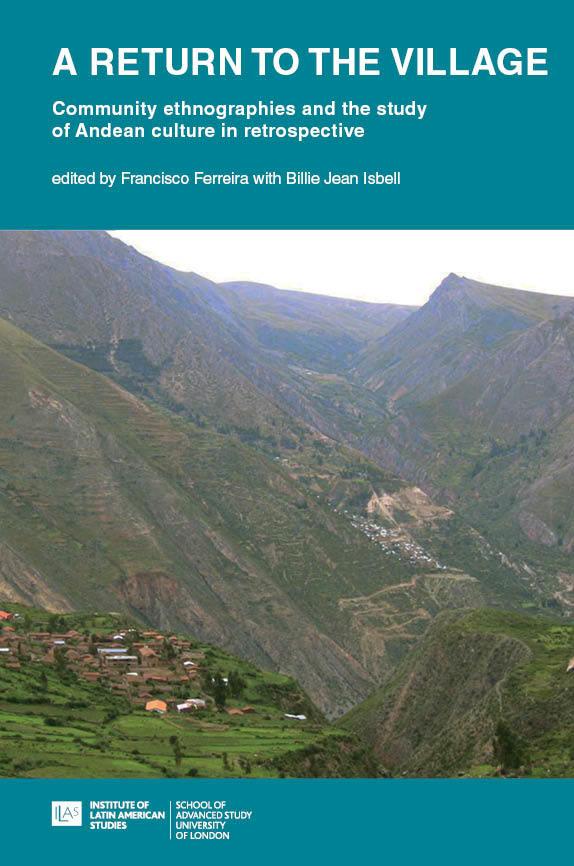
This edited volume brings together several scholars who have produced outstanding ethnographies of Andean communities, mostly in Peru but also in neighbouring countries. These ethnographies were published between the 1970s and 2000s, following different theoretical and thematic approaches, and they often transcended the boundaries of case studies to become important reference works on key aspects of Andean culture: for example, the symbolism and ritual uses of coca in the case of Catherine J. Allen; agricultural rituals and internal social divisions in the case of Peter Gose; social organisation and kinship in the case of Billie Jean Isbell; the use of khipus and concepts of literacy in the case of Frank Salomon; and the management and ritual dimensions of water and irrigation in the case of Ricardo Valderrama and Carmen Escalante.
In their chapters the authors revisit their original works in the light of contemporary anthropology, focusing on different academic and personal aspects of their ethnographies. For example, they explain how they chose the communities they worked in; the personal relations they established there during fieldwork; the kind of links they have maintained; and how these communities have changed over time. They also review their original methodological and theoretical approaches and findings, reassessing their validity and explaining how their views have evolved or changed since they originally conducted their fieldwork and published their studies.
This book also offers a review of the evolution and role of community ethnographies in the context of Andean anthropology. These ethnographies had a significant influence between the 1940s and 1980s, when they could be roughly divided – following Olivia Harris – between ‘long-termist’ and ‘short-termist’ approaches, depending on predominant focuses on historical continuities or social change respectively. However, by the 1990s these works came to be widely considered as too limited and subjective in the context of wider academic changes, such as the emergence of postmodern trends, and reflective and literary turns in anthropology. Overall, the book aims to reflect on this evolution of community ethnographies in the Andes, and on their contribution to the study of Andean culture.
Before Memmo my notes were scattered across PDFs. Now a workspace pulls everything into one place — I see exactly what's still left to study.
Memmo's summaries are gold before exams. I don't have to re-read 800 pages two weeks before — just the important parts.
The AI chat has saved me the night before an exam more than once. I just keep asking until I get it — no waiting on a study group to reply.
The quizzes hit exactly what I need to know. Memmo tracks what I get stuck on — so I only practice what's worth it.
Flashcards with spaced repetition are magic. Memmo knows when I'm about to forget something and brings it back.
The AI podcasts are my favorite. I listen on my way to school and get a recap without sitting at a computer.

Handbok i kvalitativa metoder
281 kr

Hållbar utveckling: en introduktion för ingenjörer och andra problemlösare
334 kr

Brymans Samhällsvetenskapliga metoder
390 kr

Projektledning
491 kr

Den orättvisa hälsan: om socioekonomiska skillnader i hälsa och livslängd
326 kr

Vetenskapsteori för nybörjare
196 kr

Organizational Leadership
429 kr

På väg mot läraryrket
172 kr

Det sociala livet i skolan: Socialpsykologiska perspektiv
253 kr

Betygsättningens didaktik
151 kr

Personality
402 kr

Studying Leadership
404 kr

Managing Innovation
477 kr

Introduktion till samhällsvetenskaplig metod
347 kr

The Psychology of Sex and Gender
698 kr

Evidens och kunskap för socialt arbete
207 kr

Introduction to Leadership
605 kr