
Before Memmo my notes were scattered across PDFs. Now a workspace pulls everything into one place — I see exactly what's still left to study.
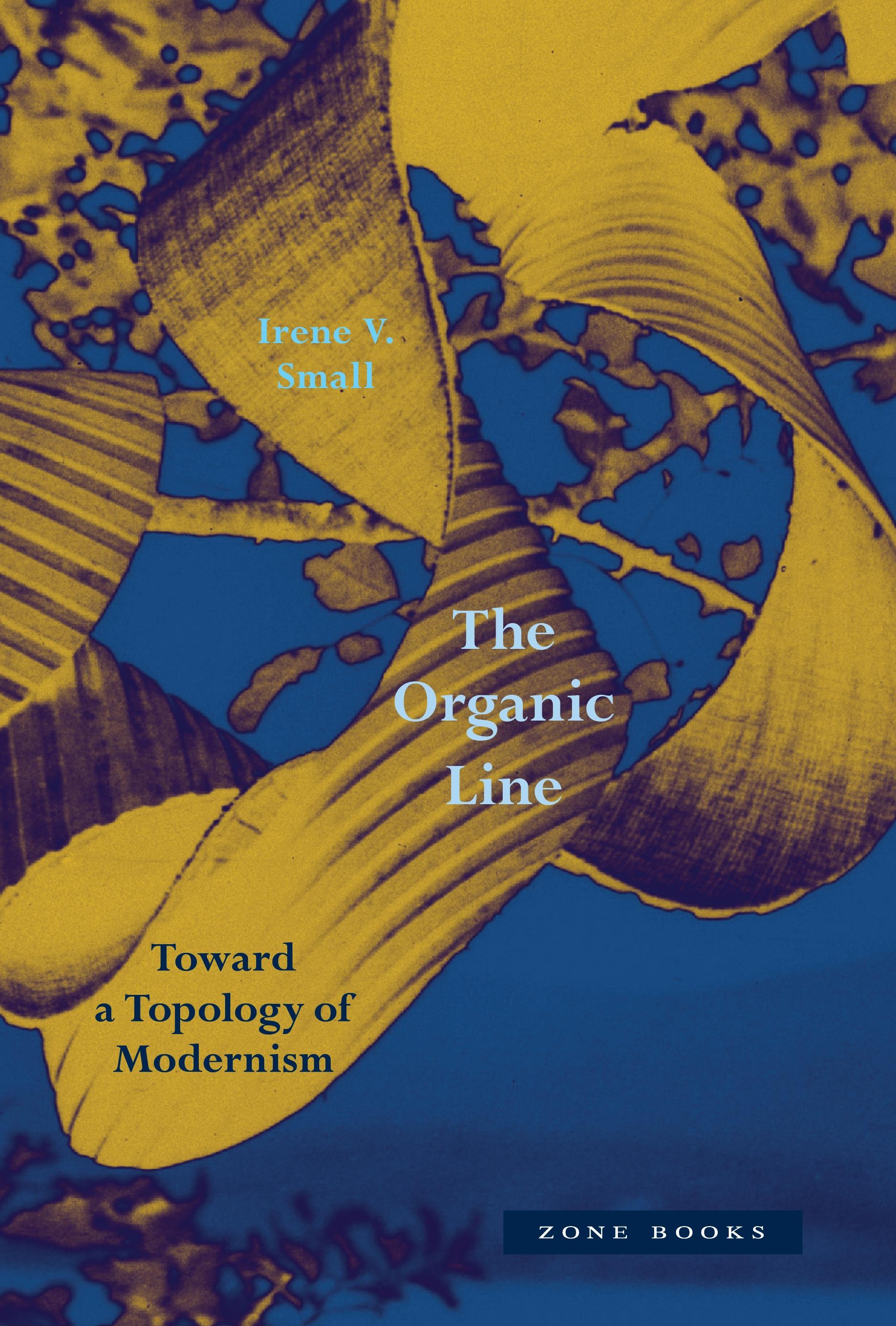
A major rethinking of twentieth-century abstract art mobilized by the work of Brazilian artist Lygia Clark
What would it mean to treat an interval of space as a line, thus drawing an empty void into a constellation of art and meaning-laden things? In this book, Irene Small elucidates the signal discovery of the Brazilian artist Lygia Clark in 1954: a fissure of space between material elements that Clark called “the organic line.” For much of the history of art, Clark’s discovery, much like the organic line, has escaped legibility. Once recognized, however, the line has seismic repercussions for rethinking foundational concepts such as mark, limit, surface, and edge. A spatial cavity that binds discrepant entities together, the organic line transforms planes into flexible topologies, borders into membranes, and interstices into points of connection. As a paradigm, the organic line has profound historiographic implications as well, inviting us to set aside traditional notions of influence and origin in favor of what Small terms weak links and plagiotropic relations. These fragile, oblique, and transversal ties have their own efficacy, and Small’s innovative readings of canonical modernist works such as Kazimir Malevich’s Black Square, John Cage’s 4’33”, and Le Corbusier’s machine-à-habiter, as well as contemporary works by such artists as Adam Pendleton, Ricardo Basbaum, and Mika Rottenberg, reveal the organic line’s remarkable potential as an analytic instrument. Mobilizing a rich repertoire of archival sources and moving across multiple chronologies, geographies, and disciplines, this book invites us to envision modernism not as a stable construct defined by centers and peripheries, inclusions and exclusions, but as a topological field of interactive, destabilizing tensions. More than a history of a little-known artistic device, The Organic Line: Toward a Topology of Modernism is a user’s guide and manifesto for reimagining modern and contemporary art for the present.
Before Memmo my notes were scattered across PDFs. Now a workspace pulls everything into one place — I see exactly what's still left to study.
Memmo's summaries are gold before exams. I don't have to re-read 800 pages two weeks before — just the important parts.
The AI chat has saved me the night before an exam more than once. I just keep asking until I get it — no waiting on a study group to reply.
The quizzes hit exactly what I need to know. Memmo tracks what I get stuck on — so I only practice what's worth it.
Flashcards with spaced repetition are magic. Memmo knows when I'm about to forget something and brings it back.
The AI podcasts are my favorite. I listen on my way to school and get a recap without sitting at a computer.

Handbok i kvalitativa metoder
281 kr

Hållbar utveckling: en introduktion för ingenjörer och andra problemlösare
334 kr

Brymans Samhällsvetenskapliga metoder
390 kr

Projektledning
491 kr

Den orättvisa hälsan: om socioekonomiska skillnader i hälsa och livslängd
326 kr

Vetenskapsteori för nybörjare
196 kr

Organizational Leadership
429 kr

På väg mot läraryrket
172 kr

Det sociala livet i skolan: Socialpsykologiska perspektiv
253 kr

Betygsättningens didaktik
151 kr

Personality
402 kr

Studying Leadership
404 kr

Managing Innovation
477 kr

Introduktion till samhällsvetenskaplig metod
347 kr

The Psychology of Sex and Gender
698 kr

Evidens och kunskap för socialt arbete
207 kr

Introduction to Leadership
605 kr