
Before Memmo my notes were scattered across PDFs. Now a workspace pulls everything into one place — I see exactly what's still left to study.
A Cold War-era study of Latin American anarchism in action.
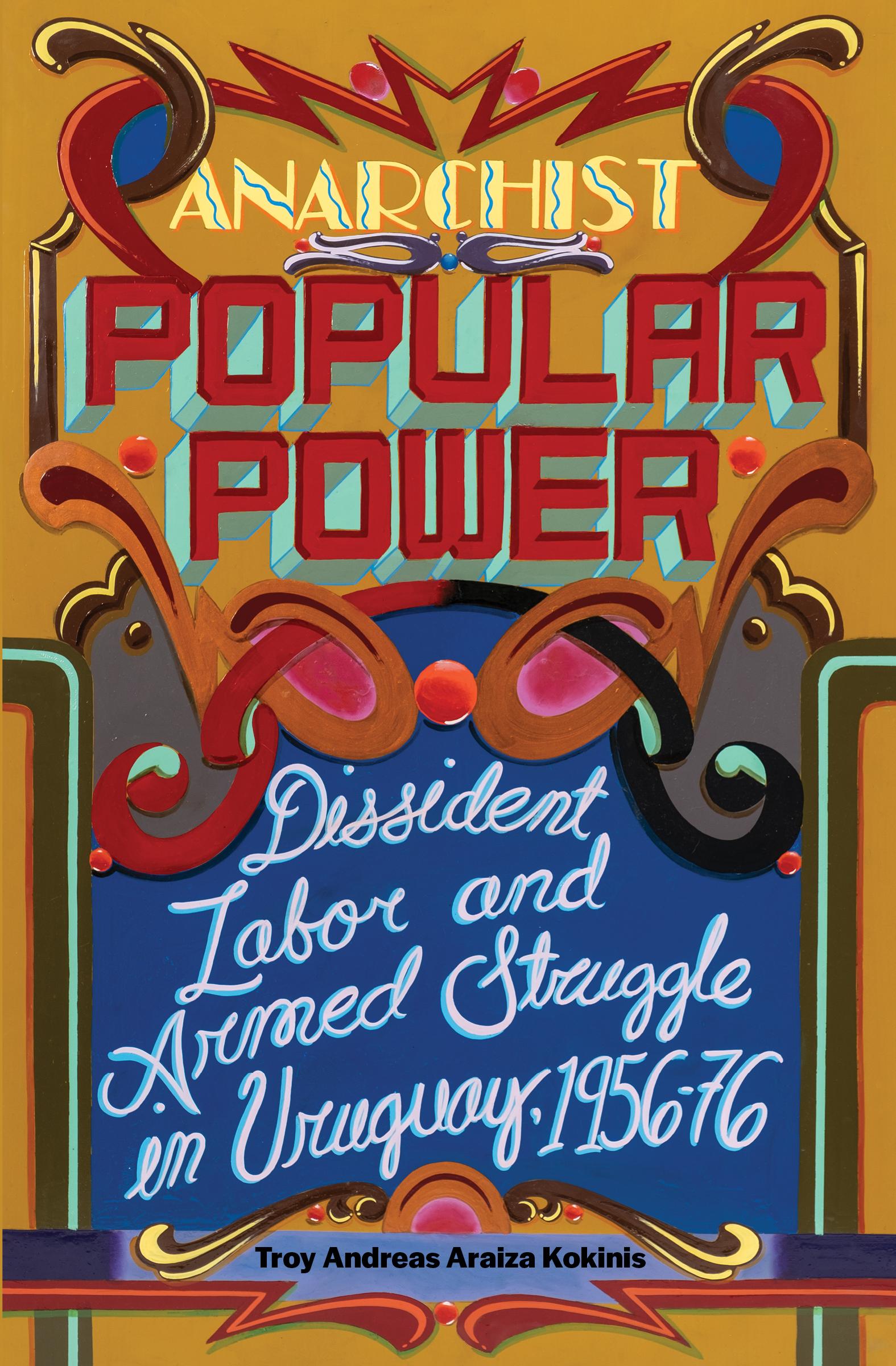
Araiza Kokinis's study of the Uruguayan Anarchist Federation (FAU) broadens our understanding of the Cold War-era political landscape beyond the capitalism-communism and Old Left-New Left binaries that dominate the historiography of the epoch.
Arguably the most impactful anarchist organization globally in the Cold War era, the FAU viewed everyday people as revolutionary protagonists and sought to develop a popular counter-subjectivity through accumulating experiences directly challenging the market and the state. The FAU argued that everyday people transformed into revolutionary subjects through the regular practice of collective direct action in labor unions, student organizations, and neighborhood councils. Their slogan was "create popular power," and their praxis differed from nationalist strains of Marxism at the time. The strategies and tactics promoted by FAU, ones in which everyday people took on roles as historical protagonists, offered the largest threat to maintaining social order in Uruguay and thus spawned a military takeover of the state to dismantle and deflate their vibrant popular revolt.
With less than 80 militants, FAU played a key role both sparking and networking popular protagonism in workplaces, neighborhoods, and on campuses. The FAU worked in coalition with the Communist Party (PCU), MLN-Tupamaros (MLN-T), and other Left organizations to support a unified Left project while simultaneously challenging hegemonic strategies, tactics, and discourses. Unlike other anarchist groups worldwide, which took to individualism and counterculture in response to Marxism’s popularity throughout the sixties, the FAU embraced Third Worldism and a class struggle strategy that made them a relevant force amongst popular social movements.
Throughout the constitutional dictatorship (1967–73), the Tendencia Combativa, a coalition of dissident labor unions spearheaded by FAU, controlled one-third of the nation’s unions in some of the most lucrative industries, especially in the private sector. By the time of June 27, 1973, military coup, a majority of Uruguayan industrialists recognized organized labor as the most serious threat to national security. Moreover, communications between US Ambassador to Uruguay Ernest V. Siracusa and US Secretary of State Henry Kissinger, showed the dictatorship’s primary concern was to repress the surging labor movement rather than confronting a waning Tupamaro guerrilla movement. The FAU’s anarchist activism within this broader climate of worker revolt threw a wrench in the 1970s neoliberal experiments in Latin America that later migrated north to impoverish American workers from the 1980s until today.
Before Memmo my notes were scattered across PDFs. Now a workspace pulls everything into one place — I see exactly what's still left to study.
Memmo's summaries are gold before exams. I don't have to re-read 800 pages two weeks before — just the important parts.
The AI chat has saved me the night before an exam more than once. I just keep asking until I get it — no waiting on a study group to reply.
The quizzes hit exactly what I need to know. Memmo tracks what I get stuck on — so I only practice what's worth it.
Flashcards with spaced repetition are magic. Memmo knows when I'm about to forget something and brings it back.
The AI podcasts are my favorite. I listen on my way to school and get a recap without sitting at a computer.

Handbok i kvalitativa metoder
281 kr

Hållbar utveckling: en introduktion för ingenjörer och andra problemlösare
334 kr

Brymans Samhällsvetenskapliga metoder
390 kr

Projektledning
491 kr

Den orättvisa hälsan: om socioekonomiska skillnader i hälsa och livslängd
326 kr

Organizational Leadership
429 kr

Vetenskapsteori för nybörjare
196 kr

På väg mot läraryrket
172 kr

Det sociala livet i skolan: Socialpsykologiska perspektiv
253 kr

Betygsättningens didaktik
151 kr

Personality
402 kr

Studying Leadership
404 kr

Managing Innovation
477 kr

Introduktion till samhällsvetenskaplig metod
347 kr

The Psychology of Sex and Gender
698 kr

Evidens och kunskap för socialt arbete
207 kr

Introduction to Leadership
605 kr