
Before Memmo my notes were scattered across PDFs. Now a workspace pulls everything into one place — I see exactly what's still left to study.
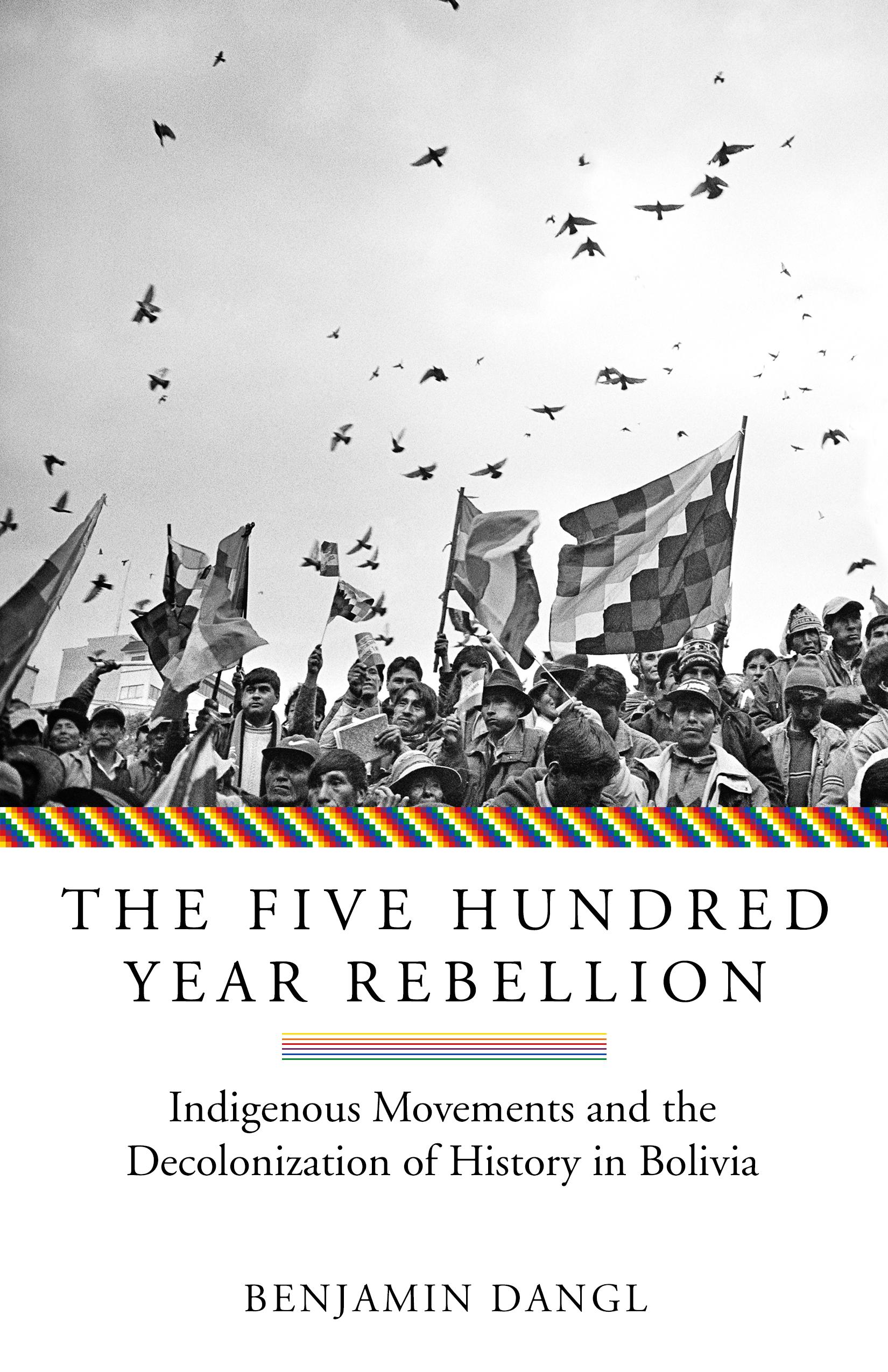
Excerpt from Chapter Six of The Five Hundred Year Rebellion
Rain poured from the sky as we climbed onto a bus from La Paz to El Alto. I was riding with Alejandro Marka, the indigenous leader Santos Marka T’ula’s great grandson, and he was bringing me up to Senkata, a neighborhood in El Alto where his uncle Gregorio Barco lived with relatives after moving from his rural home. Barco was T’ula’s 96-year-old son. I was astounded to hear that Barco was still alive and living in the city. “We have to go see him now,” Marka told me. “He is sick and could die at any moment.”
After a series of buses and taxis brought us to Barco’s neighborhood, we walked down dirt roads with gutters brimming with water; the streets were beginning to flood. Finally, Marka entered a courtyard home to a snarling dog, and opened up a creaking metal door into a single adobe room. The rain pounded an on exposed metal corrugated roof and a cold wind blew through cracks in the walls. Santos Marka T’ula’s last living child was resting on a bed beneath a pile of blankets
Marka gently woke up his uncle, who was wearing two hats for warmth and bore a small, white beard on his chin. He spoke only Aymara and was almost entirely deaf and blind. Marka yelled so that he could be understood by Barco, who greeted his nephew warmly. We shared food and coca with the elderly man while explaining the nature of our visit.
In spite of his age and illness, Barco’s memory of his father was strong. He told us he was proud to be Tula’s son, and thought a lot about his father’s struggle in his old age. Indeed, Barco explained that he had tried to carry on his father’s fight and share histories of T’ula’s resistance. But he faced repression and marginalization from an early age; the same landowner class that tried to stop his father’s organizing efforts clamped down on the young Barco.
As a youth, Barco said wealthy landowners in his region would ask him, “Why are you speaking so much about T’ula and in favor of T’ula? You are creating a false history.” They told him told him to work his land quietly and not cause any trouble. “If you go to school to learn how to read and write, we will punish you,” they said. While Barco watched others in his community go to school, he did not go “because authorities told him that if he went to school they would take out his eyes and cut out his tongue.” Barco explained that nearly a century after T’ula began his fight his family was still struggling to maintain ownership of its land. He told me, “We have suffered since the time that the Spanish arrived.” The efforts to silence Barco and prevent him from following in his father’s footsteps were part of a larger attempt to erase the history and legacy of Santos Marka T’ula.
At the turn of the twentieth century, a renewed expansion of the hacienda in Bolivia led to the breakup of indigenous-owned land. In response, a network of caciques apoderados rose up to resist this land grabbing and defend besieged indigenous communities from abuses. These leaders were empowered by late nineteenth century laws allowing them to legally represent their communities in court, as well as to use colonial land titles in defense of their territories. Caciques apoderados were appointed by their communities and sought out such titles as a tool in their struggle. They coordinated their efforts and strategies, and shared lawyers, the titles they recovered, and scribes in what would become a national network of nearly one hundred leaders, representing some four hundred communities across the departments of the eastern high plains of Bolivia. One of the most prominent leaders of the caciques apoderados was Santos Marka T’ula, a figure whose life story was recovered by the (Andean Oral History Workshop) THOA in the early 1980s, largely through the collection of oral histories.
According to the THOA, the story of T’ula was unknown in the early 1980s outside of a few rural communities in the Bolivian highlands. Once the research organization heard of the cacique apoderado struggle, however, they gathered fragmented archival evidence and disparate stories on T’ula from his living descendants, collaborators, neighbors, and contemporaries to produce a history of the leader. Some eleven members of the THOA were involved in this research process, which included visits to a number of rural communities to gather interviews, and trips to the national archives in Sucre. The result was a small booklet on T’ula’s life originally published in 1984 and titled El Indio Santos Marka T’ula: Cacique Principal de los Ayllus de Qallapa y Apoderado General de las Comunidades Originarias de la Republica. The initial booklet was accessible and affordable, and widely distributed to rural Aymara communities, where it was used in numerous primary schools. The THOA also turned their work on T’ula into a widely popular radionovela (serial radio program) which was broadcasted by radio stations nationwide in Aymara in the mid-1980s. The work of the THOA helped spur on discussions about indigenous people’s movements in Bolivia and the role of oral history in historical consciousness.
THOA’S RECOVERY OF T’ULA’S HISTORY
In the 1980s, many indigenous groups and campesino unions in Bolivia were reviving and celebrating histories of anti-colonial struggles. But little beyond the actions of indigenous rebel leader Zárate Willka was known about indigenous movements organizing around the turn of the twentieth century. The THOA set out to complement the histories of Willka by producing a history of T’ula and the wider cacique apoderado movement.
The THOA members first gathered every trace of information they could find on the leader’s life, as well as that of other participants in the wider cacique apoderado network in the early twentieth century. The archival and oral history work was conducted, THOA co-founder Silvia Rivera Cusicanqui explains, according to the “technique of an olla común [shared pot],” in which all researchers contributed their efforts and research into one collective set of files. They began meeting to “generate the lines of investigation, above all looking for the descendants of the caciques apoderados.” Some of the THOA members went to the Gualberto Villaroel province, where T’ula was from, and looked for contemporaries of the leader, people who had stories about his struggle. Meanwhile other THOA members searched for documents in the prefect documentary collection at the La Paz Archives, the library at the UMSA, and in newspaper archives to find reports from the late nineteenth and early twentieth century. Everything went into the shared pot files on the caciques apoderados.
THOA member Felipe Santos elaborates on the process of the shared pot: “The construction of knowledge in the THOA was and is communal…all reflection is shared collectively, through it each one feeds their own reflection, giving place to the system of aynnoqu (themes of work). On this understanding, the operative and logistical work of the THOA applies the ‘Shared pot’ [theory] which consists of the support of the individual for the central project. This is to say, through the strengthening of the central topic, the subthemes of the work are generated, in this way the member and the collectivity cooperate among themselves reciprocally.
Collectively working in this way, the THOA set out to organize meetings among elderly people from the Gualberto Villaroel province to gather stories and connect the historical dots. Rivera explains that through such meetings, “these fragmented memories started to connect, and [we discovered] that there was a great movement that was behind the rebellions, because until then, the idea that official history had was that there were rebellions which were explosions of irrational violence, which came like a species of already pushing off the oppressor above, but with no program, no proposal.”
But the THOA found that the caciques apoderados – ignored by most historical accounts of the era, according to the THOA – were a very sophisticated network of indigenous leaders who utilized a variety of legal and political tools in peaceful defense of their communities. Rivera speaks of how this discovery highlighted the ways in which “the official version of history always shows when the indigenous rise up in a violent way, but never shows the peaceful struggle, the legal struggle…” This research approach by THOA helped its members, Rivera notes, to re-interpret supposedly spontaneous rebellions “as the culminating point of a process of subterranean ideological accumulation, that emerges cyclically to the ‘surface’ to express the continuity and autonomy of indian society.” The story of T’ula provided fertile ground for the THOA to apply such historical practices and analyses.
In their approach to researching and producing histories around the caciques apoderados, the THOA tapped into what they saw as a vein of continuous indigenous historical memory that spanned centuries. They found that subterranean histories of resistance persisted among indigenous communities and were revived by the search for information about the caciques apoderados. “The search for colonial titles permitted in this way the opening of a horizon of collective memory that legitimized the legal and violent actions and bestowed an ethical sense of restitution of justice to the struggle of the comunarios,” Rivera writes. The eighteenth-century rebel leader Túpac Katari’s struggle similarly inspired and oriented the caciques apoderados’ efforts, according to T’ula’s scribe Leandro Condori Chura. In a book of his testimony, Condori recalls that the caciques he wrote for would say, “’ Túpac Katari has risen against the Spanish, considering that the Spanish had wanted to finish off the indians at any cost; that’s why Túpac Katari had risen against the Spanish, to defend himself and that’s why the Spanish had killed him,’” they said. “’That’s why we have to fight’”
The caciques apoderados of the era not only recovered Katari’s history and connection to their struggle, they also tried to literally recover a part of Katari’s quartered body. In an interview Rivera conducted with Julián Tanqara, a grandchild of a cacique apoderado, Tanqara describes how the caciques involved in the struggle in Pacajes searched a hill near Caquiaviri for Katari’s buried arm.
Once the shared pot was full, the THOA’s explicit goal was to produce a history of T’ula for the people. The THOA created the T’ula booklet in 1984 in a very readable form, ready for broad distribution in rural areas. It is a short booklet, at fifty-five pages, and includes drawings on every other page that accompany the narrative, bringing dominant themes and characters to life. For example, illustrations depict an angry judge sentencing a humble indigenous man. Other drawings illustrate Tula’s long, tiring journeys, meetings of caciques apoderados, and everyday scenes of farming and llama herding.
While archival sources and documentation are regularly cited, much of the text consists of block quotes in both Aymara and Spanish of testimonies from T’ula’s contemporaries or community and family members. Though the focus is on T’ula, his life is contextualized both within his community as well as the wider span of Andean history, from brief summaries of pre-colonial civilizations and the suffering under colonialism and the Republican state, to indigenous resistance in the twentieth century through the 1930s Chaco War. T’ula’s life is the vehicle of the narrative, positioned as a crucial step in a much longer journey toward justice.
Before Memmo my notes were scattered across PDFs. Now a workspace pulls everything into one place — I see exactly what's still left to study.
Memmo's summaries are gold before exams. I don't have to re-read 800 pages two weeks before — just the important parts.
The AI chat has saved me the night before an exam more than once. I just keep asking until I get it — no waiting on a study group to reply.
The quizzes hit exactly what I need to know. Memmo tracks what I get stuck on — so I only practice what's worth it.
Flashcards with spaced repetition are magic. Memmo knows when I'm about to forget something and brings it back.
The AI podcasts are my favorite. I listen on my way to school and get a recap without sitting at a computer.

Handbok i kvalitativa metoder
281 kr

Hållbar utveckling: en introduktion för ingenjörer och andra problemlösare
334 kr

Brymans Samhällsvetenskapliga metoder
390 kr

Projektledning
491 kr

Den orättvisa hälsan: om socioekonomiska skillnader i hälsa och livslängd
326 kr

Vetenskapsteori för nybörjare
196 kr

Organizational Leadership
429 kr

På väg mot läraryrket
172 kr

Det sociala livet i skolan: Socialpsykologiska perspektiv
253 kr

Betygsättningens didaktik
151 kr

Personality
402 kr

Studying Leadership
404 kr

Managing Innovation
477 kr

Introduktion till samhällsvetenskaplig metod
347 kr

The Psychology of Sex and Gender
698 kr

Evidens och kunskap för socialt arbete
207 kr

Introduction to Leadership
605 kr