
Before Memmo my notes were scattered across PDFs. Now a workspace pulls everything into one place — I see exactly what's still left to study.
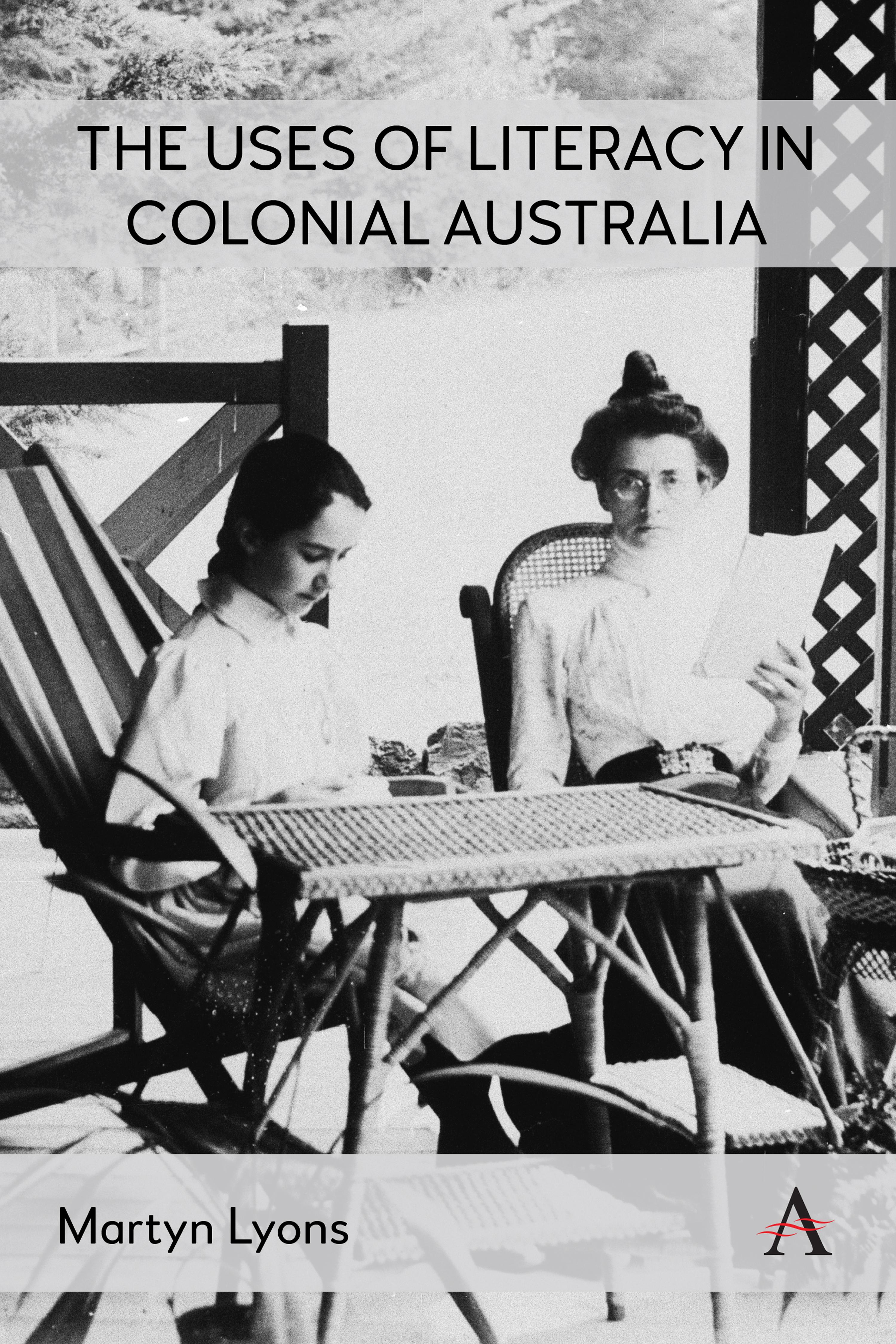
What did Australians read? This book answers this question in terms of books rather than newspapers and considers the long nineteenth century, interpreted as running from 1788 to 1901. In the wake of this primary question, several others arise: how did Australians acquire the books they read, and how did readers in the outback overcome the handicaps of distance and remoteness? Did they read for pleasure, instruction, self-edification, or spiritual sustenance? More importantly, how did Australian readers respond to the books they read? The evidence is drawn from autobiographical sources, in which individual readers related their personal reading experiences and responses.
At the same time, the book pursues a second and related question: What did Australians write? Reference is made here not to the kind of writing we know as ‘literature’, but to the non-literary writing which cultural historians call ‘ordinary writings’. These are the writings of everyday life, represented in this book by diaries, journals, hand-written newspapers and correspondence. The focus is wide enough to include the everyday cultural practices of people of low social status and little education. The writing practices of the partially literate, including writing delegated to a third party, have their place here.
In this double investigation, the book draws on evidence from a cohort of 101 nineteenth-century readers and writers. They are a heterogeneous group of autobiographers, coming from Melbourne and Sydney to rural Queensland and Western Australia. They come from the city and the bush, from coastal towns and the interior, from sheep stations, gold diggings and city offices. They show us the perennial importance of Shakespeare and the Bible, the popularity of the English canon, the prestige of poetry and the importance of religious reading. Books held the Empire together but, as they travelled, their meanings changed according to the local cultural environment. This book registers such nuances in the Australian context. The writing of this group is represented by some prolific diarists and correspondents. In the late-nineteenth century, the eastern colonies became world leaders in sending letters. The postal environment which made this possible is also examined.
Before Memmo my notes were scattered across PDFs. Now a workspace pulls everything into one place — I see exactly what's still left to study.
Memmo's summaries are gold before exams. I don't have to re-read 800 pages two weeks before — just the important parts.
The AI chat has saved me the night before an exam more than once. I just keep asking until I get it — no waiting on a study group to reply.
The quizzes hit exactly what I need to know. Memmo tracks what I get stuck on — so I only practice what's worth it.
Flashcards with spaced repetition are magic. Memmo knows when I'm about to forget something and brings it back.
The AI podcasts are my favorite. I listen on my way to school and get a recap without sitting at a computer.

Handbok i kvalitativa metoder
281 kr

Hållbar utveckling: en introduktion för ingenjörer och andra problemlösare
334 kr

Brymans Samhällsvetenskapliga metoder
390 kr

Projektledning
491 kr

Den orättvisa hälsan: om socioekonomiska skillnader i hälsa och livslängd
326 kr

Vetenskapsteori för nybörjare
196 kr

Organizational Leadership
429 kr

På väg mot läraryrket
172 kr

Det sociala livet i skolan: Socialpsykologiska perspektiv
253 kr

Betygsättningens didaktik
151 kr

Personality
402 kr

Studying Leadership
404 kr

Managing Innovation
477 kr

Introduktion till samhällsvetenskaplig metod
347 kr

The Psychology of Sex and Gender
698 kr

Evidens och kunskap för socialt arbete
207 kr

Introduction to Leadership
605 kr