
Before Memmo my notes were scattered across PDFs. Now a workspace pulls everything into one place — I see exactly what's still left to study.
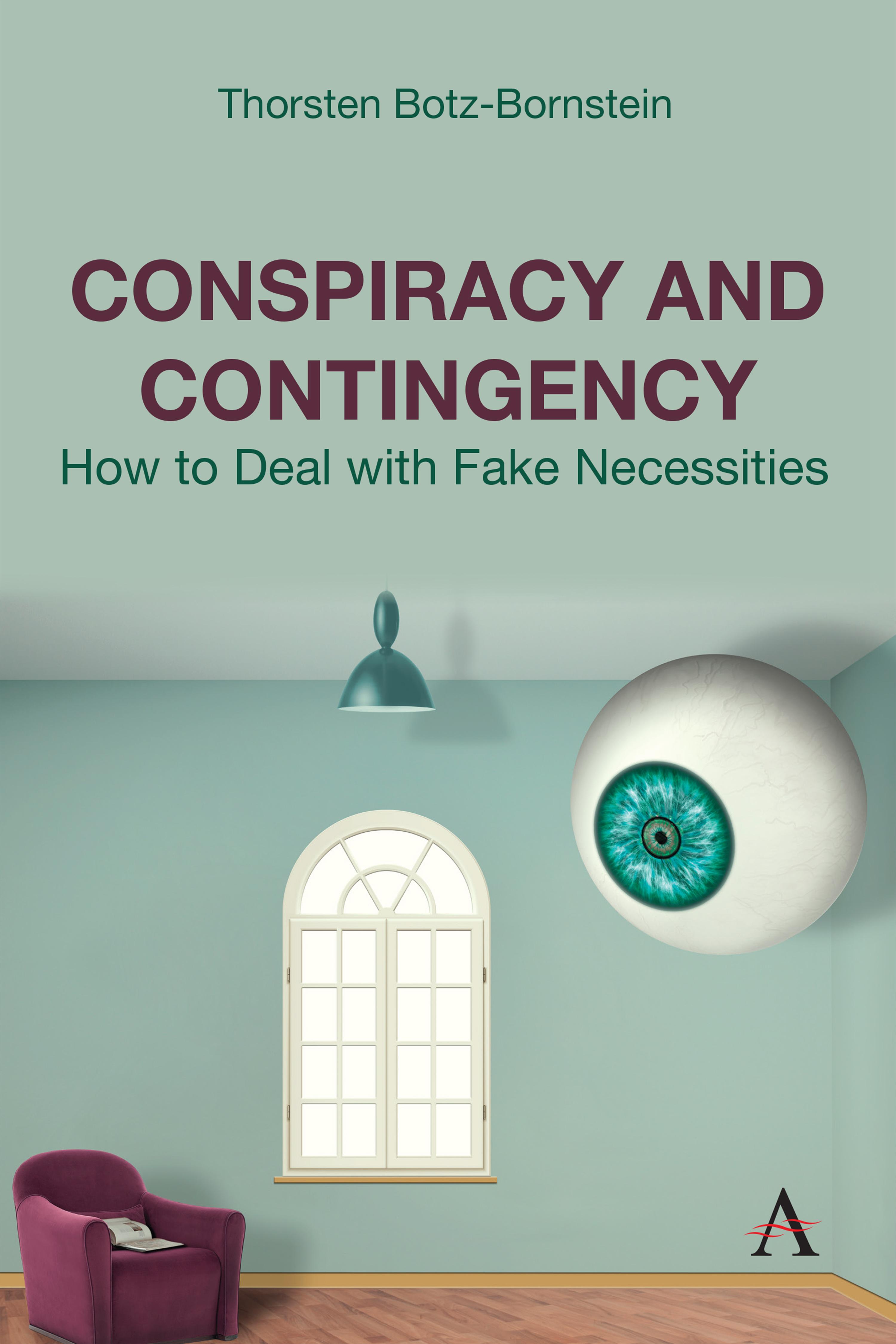
What do conspiracy theories, algorithms and meritocracy have in common? All three avoid contingency and frantically look for necessities. The COVID-19 crisis has brought about a proliferation of conspiracy theories that reject, among other things, official accounts of the virus’s origins and remedies, and sometimes even the existence of the virus itself. Conspiratorial thinking usually links events to secret plots concocted by powerful conspirators, whether it be Bill Gates or Big Pharma. In this book, I point to another dominant driving force: the desire to find simple and apparently reasonable explanations for phenomena that are actually purely random and contingent. Often, unfounded conspiracy theories emerge because contingency is not accepted, and necessities are looked for at all costs. Nothing happens by chance, and there must be a plan or an intelligent design behind everything.
This book deals with ‘contingency phobia’. This special phobia is not only manifest in most unwarranted conspiracy theories, but it also appears, in Western culture, as a recurrent psychological, cognitive and scientific pattern. It is the cause of a variety of other phenomena that have become emblematic for liberal democracies, such as the contemporary algorithm culture or the obsession with merit and ranking. Not only the conspiratorial mindset rejects a world of contingency and strives to create a universe structured by a necessary order; life coaches, algorithm engineers and neoliberal meritocrats all do the same. This book analyses these phenomena by using the same criteria: how do humans deal with contingency and how do they try to establish necessities?
Some philosophies, such as Daoism and Zen Buddhism, make unwarranted conspiracy theories quasi-impossible because they find original ways of combining contingency with ontological, theological or cosmological premises. I identify sources that other disciplines examining conspiracy theories, for example, political science, anthropology, psychology or sociology, have rarely seen as primary. Political scientists focus on the macro level and construe conspiracy theories mostly as national or regional phenomena whereas anthropologists, psychologists and sociologists tend to focus on the micro level. The present study is an example of practical philosophy depicting conspiratorial thinking as an organic or a dynamic phenomenon by crystallising cognitive and cultural ‘necessity-contingency patterns’ that can be found in politics, culture, religion and science.
Before Memmo my notes were scattered across PDFs. Now a workspace pulls everything into one place — I see exactly what's still left to study.
Memmo's summaries are gold before exams. I don't have to re-read 800 pages two weeks before — just the important parts.
The AI chat has saved me the night before an exam more than once. I just keep asking until I get it — no waiting on a study group to reply.
The quizzes hit exactly what I need to know. Memmo tracks what I get stuck on — so I only practice what's worth it.
Flashcards with spaced repetition are magic. Memmo knows when I'm about to forget something and brings it back.
The AI podcasts are my favorite. I listen on my way to school and get a recap without sitting at a computer.

Handbok i kvalitativa metoder
281 kr

Hållbar utveckling: en introduktion för ingenjörer och andra problemlösare
334 kr

Brymans Samhällsvetenskapliga metoder
390 kr

Projektledning
491 kr

Den orättvisa hälsan: om socioekonomiska skillnader i hälsa och livslängd
326 kr

Organizational Leadership
429 kr

Vetenskapsteori för nybörjare
196 kr

På väg mot läraryrket
172 kr

Det sociala livet i skolan: Socialpsykologiska perspektiv
253 kr

Betygsättningens didaktik
151 kr

Personality
402 kr

Studying Leadership
404 kr

Managing Innovation
477 kr

Introduktion till samhällsvetenskaplig metod
347 kr

The Psychology of Sex and Gender
698 kr

Evidens och kunskap för socialt arbete
207 kr

Introduction to Leadership
605 kr