
Before Memmo my notes were scattered across PDFs. Now a workspace pulls everything into one place — I see exactly what's still left to study.
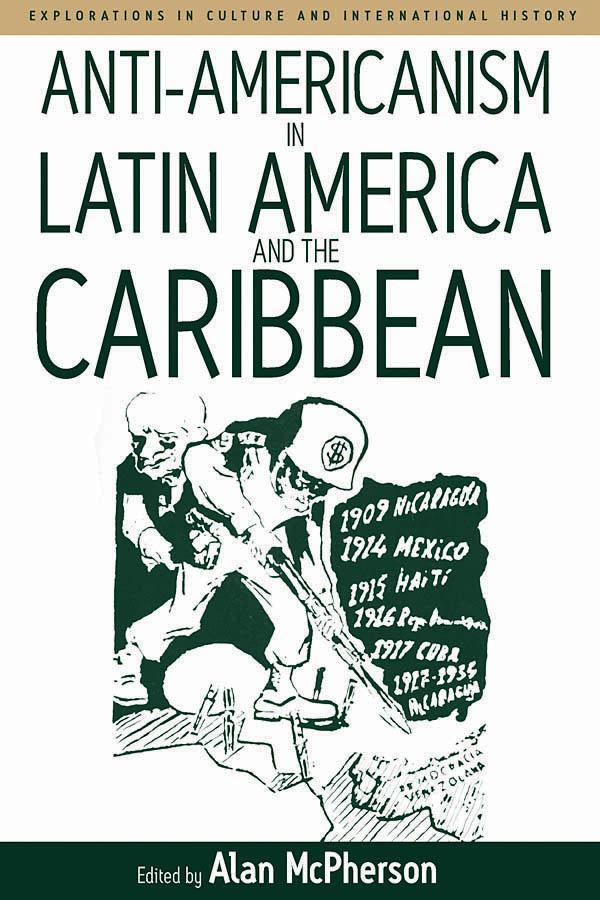
Whether rising up from fiery leaders such as Venezuela’s Hugo Chavez and Cuba’s Fidel Castro or from angry masses of Brazilian workers and Mexican peasants, anti U.S. sentiment in Latin America and the Caribbean today is arguably stronger than ever. It is also a threat to U.S. leadership in the hemisphere and the world. Where has this resentment come from? Has it arisen naturally from imperialism and globalization, from economic and social frustrations? Has it served opportunistic politicians? Does Latin America have its own style of anti Americanism? What about national variations? How does cultural anti Americanism affect politics, and vice versa? What roles have religion, literature, or cartoons played in whipping up sentiment against ‘el yanqui’? Finally, how has the United States reacted to all this?
This book brings leaders in the field of U.S. Latin American relations together with the most promising young scholars to shed historical light on the present implications of hostility to the United States in Latin America and the Caribbean. In essays that carry the reader from Revolutionary Mexico to Peronist Argentina, from Panama in the nineteenth century to the West Indies’ mid century independence movement, and from Colombian drug runners to liberation theologists, the authors unearth little known campaigns of resistance and probe deeper into episodes we thought we knew well. They argue that, for well over a century, identifying the United States as the enemy has rung true to Latin Americans and has translated into compelling political strategies. Combining history with political and cultural analysis, this collection breaks the mold of traditional diplomatic history by seeing anti Americanism through the eyes of those who expressed it. It makes clear that anti Americanism, far from being a post 9/11 buzzword, is rather a real force that casts a long shadow over U.S. Latin American relations.
Before Memmo my notes were scattered across PDFs. Now a workspace pulls everything into one place — I see exactly what's still left to study.
Memmo's summaries are gold before exams. I don't have to re-read 800 pages two weeks before — just the important parts.
The AI chat has saved me the night before an exam more than once. I just keep asking until I get it — no waiting on a study group to reply.
The quizzes hit exactly what I need to know. Memmo tracks what I get stuck on — so I only practice what's worth it.
Flashcards with spaced repetition are magic. Memmo knows when I'm about to forget something and brings it back.
The AI podcasts are my favorite. I listen on my way to school and get a recap without sitting at a computer.

Handbok i kvalitativa metoder
281 kr

Hållbar utveckling: en introduktion för ingenjörer och andra problemlösare
334 kr

Brymans Samhällsvetenskapliga metoder
390 kr

Projektledning
491 kr

Den orättvisa hälsan: om socioekonomiska skillnader i hälsa och livslängd
326 kr

Vetenskapsteori för nybörjare
196 kr

Organizational Leadership
429 kr

På väg mot läraryrket
172 kr

Det sociala livet i skolan: Socialpsykologiska perspektiv
253 kr

Betygsättningens didaktik
151 kr

Personality
402 kr

Studying Leadership
404 kr

Managing Innovation
477 kr

Introduktion till samhällsvetenskaplig metod
347 kr

The Psychology of Sex and Gender
698 kr

Evidens och kunskap för socialt arbete
207 kr

Introduction to Leadership
605 kr