
Before Memmo my notes were scattered across PDFs. Now a workspace pulls everything into one place — I see exactly what's still left to study.
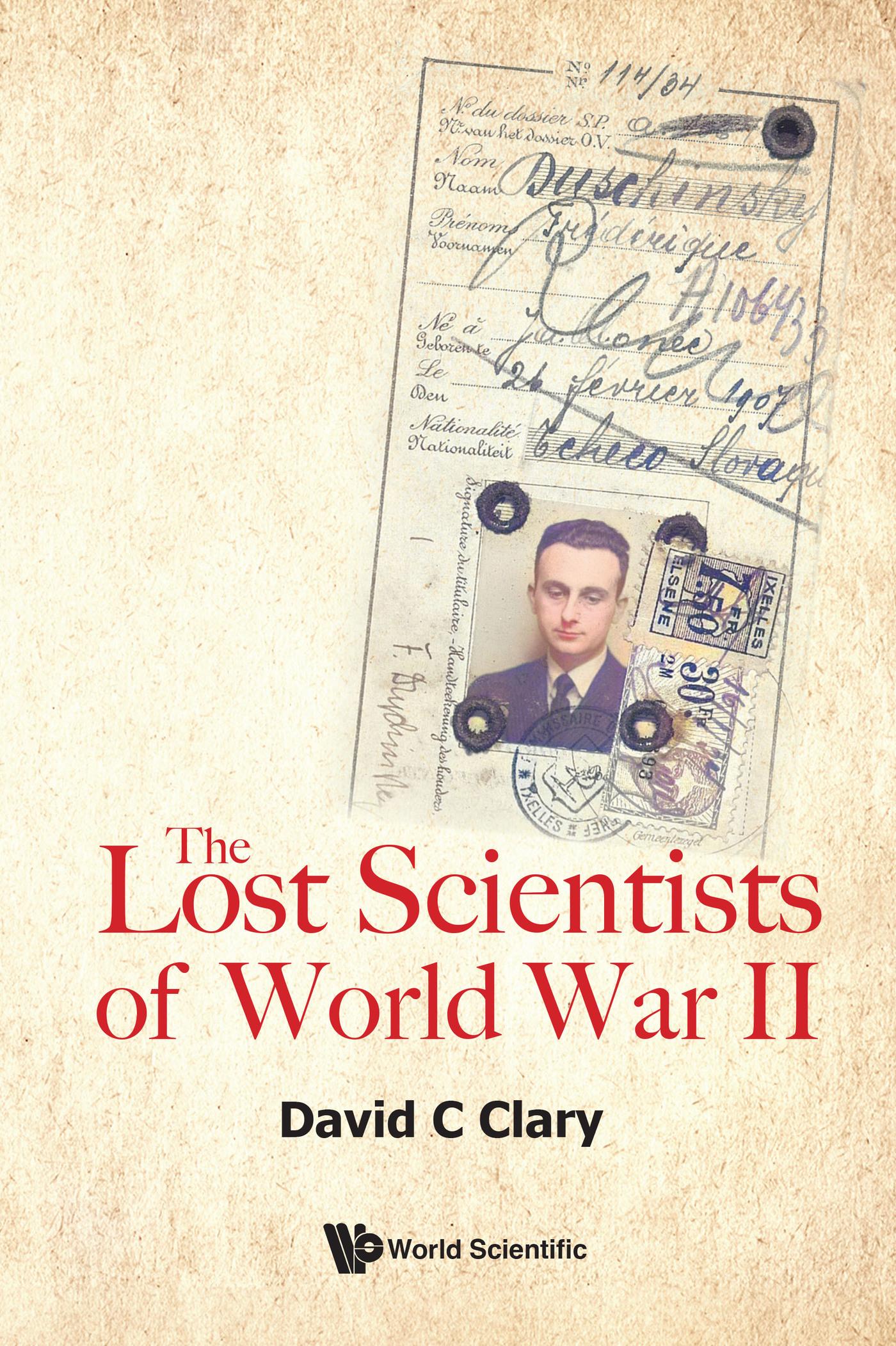
This book tells the stories of scientists from Germany and other European countries who vanished during World War II. These erudite scholars contributed to diverse scientific fields and were associated with some of the world's leading universities and research institutions. Despite their proficiency, they all sought help from agencies to relocate to the UK in the 1930s, but were unable to secure the necessary assistance.
The Lost Scientists of World War II explores the fascinating narratives of thirty of these scientific refugees, delving into the reasons behind the unavailability of aid and presenting fresh insights into the tragic fates or astounding survival experiences of these individuals.
Contents:
Readership: Science students and academics. Scholars interested in World War II and the Holocaust. Academics interested in refugee studies. The general public interested in science and the history of science.
'The bloody turmoil of WW2 took millions of lives. Victims included brilliant scholars, doctors, and innovators, their minds extinguished, their knowledge and ideas lost forever. The exact extent of the setback for science and technology will never be known — it can only be guessed from the stories of prominent Jewish scholars — Albert Einstein, Max Born, Rudolf Peierls, Robert Oppenheimer, and others — who escaped the holocaust and made ground-breaking contributions to science in their new home countries. Following the archives of the British organizations dedicated to helping imperilled scholars, Clary tells the stories of 30 scientists from the WW2 era, such as physicist Fritz Duschinsky, a Jew from Czechoslovakia murdered in Auschwitz at the age of 35, whose technique for computing molecular spectra is widely used in computational chemistry today. I always thought it odd that Duschinsky never followed up on his seminal paper. Now I know why ... Clary's stories of science interrupted are deeply moving, intellectually enriching, and — given the current rise of illiberal ideology worldwide — highly relevant. Sadly, the plight of scientists fleeing war zones and political persecution is not just a thing of the past. Clary's book will be appreciated by students, scientists, and history afficionados worldwide.' - Anna I KrylovUSC Associates Chair in Natural Sciences and Professor of Chemistry, University of Southern California, USA
'When the Nazis seized power in Germany and later in other parts of Europe, numerous scientists not only lost their positions but also faced the risk of losing their lives. The number of victims remained relatively low, thanks to the efforts of relief organizations like the Academic Assistance Council in London. The author sheds light on the lesser-known aspect of this dark period by allowing us to glimpse the unfortunate fates of 17 scientists from various disciplines who were deported and murdered or who chose suicide as a last resort. This narrative is complemented by stories of 13 others who managed to save their lives under particularly challenging circumstances. In doing so, the author provides insights into the internal selection processes within the scientific community, at times competing with the solidarity among colleagues that saved many, though not all of them.' - Stefan L WolffResearch Institute for the History of Science and Technology, Deutsches Museum, Germany
'Distinguished chemist David Clary recounts the struggles for personal and professional survival of 30 scientists who sought, mostly in vain, refuge in Britain in the run-up to and during WWII with the assistance from the British Academic Assistance Council (AAC)/Society for the Protection of Science and Learning (SPSL). Among them were accomplished mathematicians, physicists, chemists, biologists, and medical researchers from Europe who were turned down for reasons ranging from a lack of funds and adequate positions to interdisciplinarity of their research to possibly gender. The Lost Scientists of World War II reveals telling new details about these scientists' ordeals and allows us to better understand what present-day émigré scholars from war-torn or totalitarian countries are up against as they seek assistance from the Council for At-Risk Academics (CARA), successor to the AAC/SPSL, and from similar aid organizations.' - Bretislav FriedrichFritz Haber Institute of the Max Planck Society, Germany
Key Features:
Before Memmo my notes were scattered across PDFs. Now a workspace pulls everything into one place — I see exactly what's still left to study.
Memmo's summaries are gold before exams. I don't have to re-read 800 pages two weeks before — just the important parts.
The AI chat has saved me the night before an exam more than once. I just keep asking until I get it — no waiting on a study group to reply.
The quizzes hit exactly what I need to know. Memmo tracks what I get stuck on — so I only practice what's worth it.
Flashcards with spaced repetition are magic. Memmo knows when I'm about to forget something and brings it back.
The AI podcasts are my favorite. I listen on my way to school and get a recap without sitting at a computer.

Handbok i kvalitativa metoder
281 kr

Hållbar utveckling: en introduktion för ingenjörer och andra problemlösare
334 kr

Brymans Samhällsvetenskapliga metoder
390 kr

Projektledning
491 kr

Den orättvisa hälsan: om socioekonomiska skillnader i hälsa och livslängd
326 kr

Organizational Leadership
429 kr

Vetenskapsteori för nybörjare
196 kr

På väg mot läraryrket
172 kr

Det sociala livet i skolan: Socialpsykologiska perspektiv
253 kr

Betygsättningens didaktik
151 kr

Personality
402 kr

Studying Leadership
404 kr

Managing Innovation
477 kr

Introduktion till samhällsvetenskaplig metod
347 kr

The Psychology of Sex and Gender
698 kr

Evidens och kunskap för socialt arbete
207 kr

Introduction to Leadership
605 kr