
Before Memmo my notes were scattered across PDFs. Now a workspace pulls everything into one place — I see exactly what's still left to study.
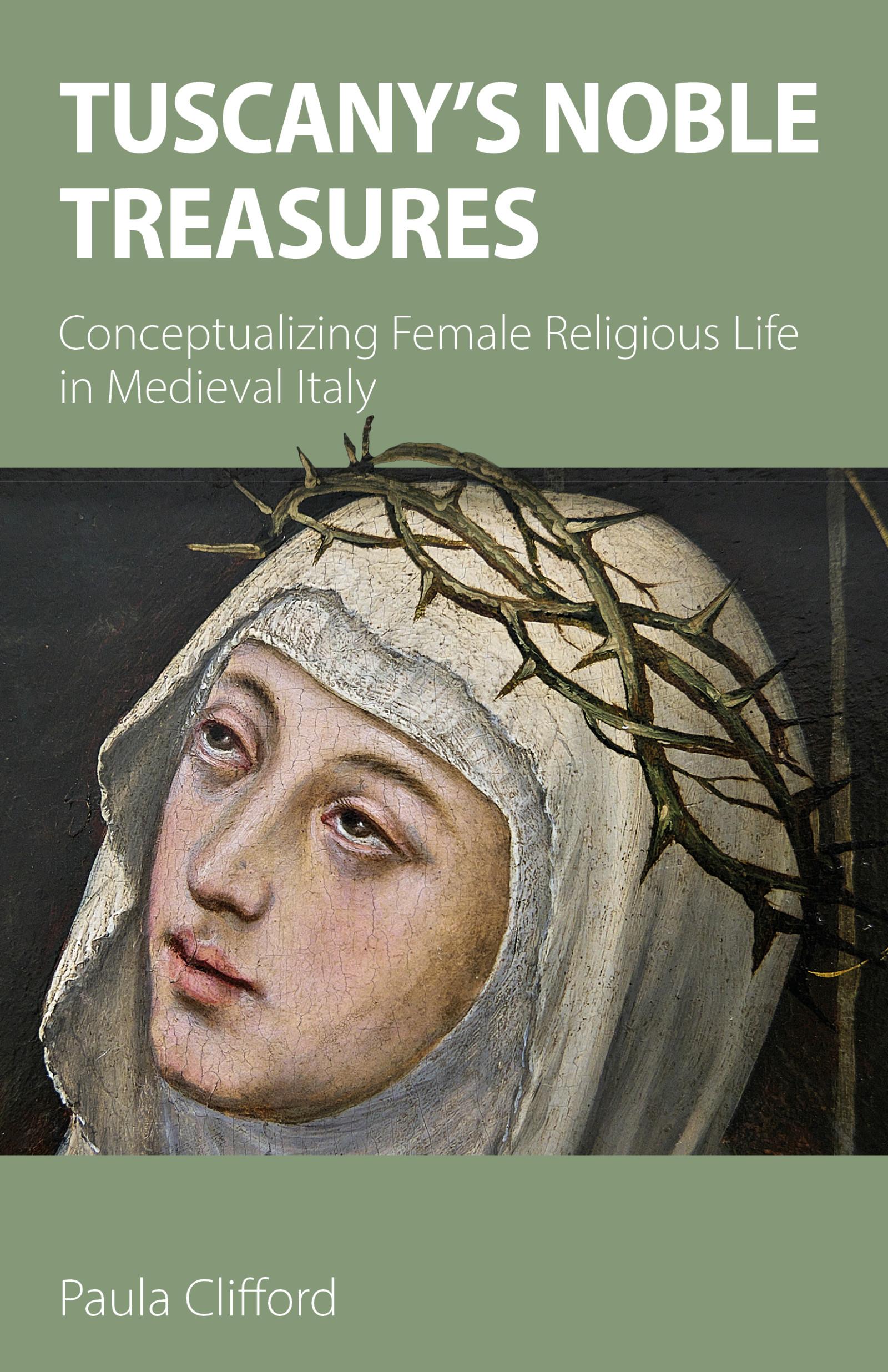
In the Middle Ages, the region of Tuscany and its surrounding area was, for around 150 years, home to a surprising number of holy women, from the birth of Margaret of Cortona in 1247 to the death of Catherine of Siena in 1380, with the fourteenth century seeing the greatest of them. While Catherine of Siena has received worldwide recognition, women like Agnes of Montepulciano and Angela of Foligno have received little attention outside their homeland. Yet they and others are important figures in what is a largely unrecognised movement of Tuscan mystics. Their individual stories are enhanced by the efforts of artists and writers which all help to create a recognisable type of religious woman.
This study looks first at the underlying influences on Tuscan mysticism, from the legend of St Katherine of Alexandria through to the celebration of women in the secular literature of the High Middle Ages and the effect of the emerging monastic orders. It examines the life and work of Tuscan holy women and focuses in particular on how they were perceived in their largely patriarchal contexts and by the artists, biographers and "men of God" who brought their own cultural assumptions to bear on the telling of their story. In consequence, the power that stemmed from their godly lives was to varying degrees undermined by some of the people closest to them and eroded by the church itself.
This story of women alternately constrained and encouraged by their social contexts is one of individual struggles and collective achievement. Although the movement in Italy began to fade away after the death of Catherine of Siena, the mystic tradition would live on in other parts of Europe, where the experiences of holy women such as Margery Kempe or, later, Teresa of Ávila will have much in common with their Tuscan predecessors.
Before Memmo my notes were scattered across PDFs. Now a workspace pulls everything into one place — I see exactly what's still left to study.
Memmo's summaries are gold before exams. I don't have to re-read 800 pages two weeks before — just the important parts.
The AI chat has saved me the night before an exam more than once. I just keep asking until I get it — no waiting on a study group to reply.
The quizzes hit exactly what I need to know. Memmo tracks what I get stuck on — so I only practice what's worth it.
Flashcards with spaced repetition are magic. Memmo knows when I'm about to forget something and brings it back.
The AI podcasts are my favorite. I listen on my way to school and get a recap without sitting at a computer.

Handbok i kvalitativa metoder
281 kr

Hållbar utveckling: en introduktion för ingenjörer och andra problemlösare
334 kr

Brymans Samhällsvetenskapliga metoder
390 kr

Projektledning
491 kr

Den orättvisa hälsan: om socioekonomiska skillnader i hälsa och livslängd
326 kr

Vetenskapsteori för nybörjare
196 kr

Organizational Leadership
429 kr

På väg mot läraryrket
172 kr

Det sociala livet i skolan: Socialpsykologiska perspektiv
253 kr

Betygsättningens didaktik
151 kr

Personality
402 kr

Studying Leadership
404 kr

Managing Innovation
477 kr

Introduktion till samhällsvetenskaplig metod
347 kr

The Psychology of Sex and Gender
698 kr

Evidens och kunskap för socialt arbete
207 kr

Introduction to Leadership
605 kr