
Before Memmo my notes were scattered across PDFs. Now a workspace pulls everything into one place — I see exactly what's still left to study.
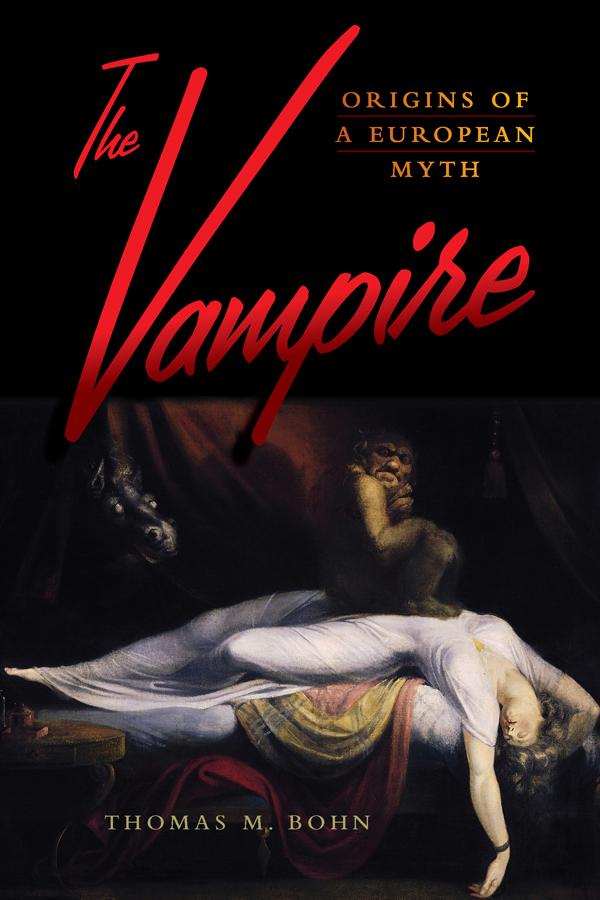
Even before Bram Stoker immortalized Transylvania as the homeland of his fictional Count Dracula, the figure of the vampire was inextricably tied to Eastern Europe in the popular imagination.
Drawing on a wealth of previously neglected sources, this book offers a fascinating account of how vampires—whose various incarnations originally emerged from folk traditions from all over the world—became so strongly identified with Eastern Europe. It demonstrates that the modern conception of the vampire was born in the crucible of the Enlightenment, embodying a mysterious, Eastern otherness that stood opposed to Western rationality.
From the Prologue:
From Original Sin to Eternal Life
For a broad contemporary public, the vampire has become a star, a media sensation from Hollywood. Bestselling authors such as Bram Stoker, Anne Rice and Stephenie Meyer continue to fire the imaginations of young and old alike, and bloodsuckers have achieved immortality through films like Dracula, Interview with a Vampireand Twilight. It is no wonder that, in the teenage bedrooms of our globalized world, vampires even steal the show from Harry Potter. They have long since been assigned individual personalities and treated with sympathy. They may possess superhuman powers, but they are also burdened by their immortality and have to learn to come to terms with their craving for blood. Whereas the Southeast European vampire, discovered in the 1730s, underwent an Americanization and domestication in the media landscape of the twentieth century, the creole zombies that first became known through the cheap novels and horror films of the 1920s still continue to serve as brainless horror figures. Do bloodsuckers really exist and should we really be afraid of the dead? These are the questions that I seek to tackle, following the wishes of my daughter, who was ten when I started this project.
Before Memmo my notes were scattered across PDFs. Now a workspace pulls everything into one place — I see exactly what's still left to study.
Memmo's summaries are gold before exams. I don't have to re-read 800 pages two weeks before — just the important parts.
The AI chat has saved me the night before an exam more than once. I just keep asking until I get it — no waiting on a study group to reply.
The quizzes hit exactly what I need to know. Memmo tracks what I get stuck on — so I only practice what's worth it.
Flashcards with spaced repetition are magic. Memmo knows when I'm about to forget something and brings it back.
The AI podcasts are my favorite. I listen on my way to school and get a recap without sitting at a computer.

Handbok i kvalitativa metoder
281 kr

Hållbar utveckling: en introduktion för ingenjörer och andra problemlösare
334 kr

Brymans Samhällsvetenskapliga metoder
390 kr

Projektledning
491 kr

Den orättvisa hälsan: om socioekonomiska skillnader i hälsa och livslängd
326 kr

Vetenskapsteori för nybörjare
196 kr

Organizational Leadership
429 kr

På väg mot läraryrket
172 kr

Det sociala livet i skolan: Socialpsykologiska perspektiv
253 kr

Betygsättningens didaktik
151 kr

Personality
402 kr

Studying Leadership
404 kr

Managing Innovation
477 kr

Introduktion till samhällsvetenskaplig metod
347 kr

The Psychology of Sex and Gender
698 kr

Evidens och kunskap för socialt arbete
207 kr

Introduction to Leadership
605 kr