
Before Memmo my notes were scattered across PDFs. Now a workspace pulls everything into one place — I see exactly what's still left to study.
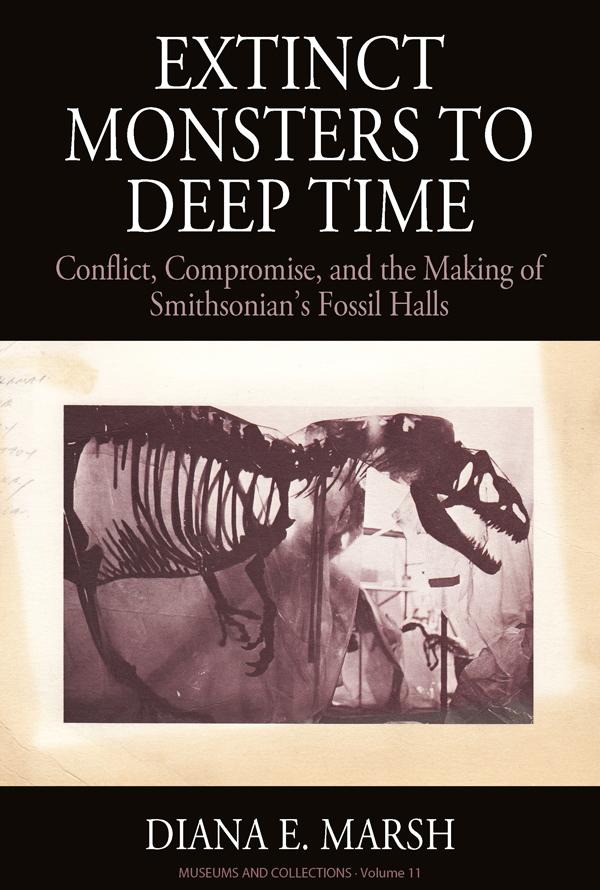
Via the Smithsonian Institution, an exploration of the growing friction between the research and outreach functions of museums in the 21st century.
Describing participant observation and historical research at the Smithsonian’s National Museum of Natural History as it prepared for its largest-ever exhibit renovation, Deep Time, the author provides a grounded perspective on the inner-workings of the world’s largest natural history museum and the social processes of communicating science to the public.
From the introduction:
In exhibit projects, the tension plays out between curatorial staff—academic, research, or scientific staff charged with content—and exhibitions, public engagement, or educational staff—which I broadly group together as “audience advocates” charged with translating content for a broader public. I have heard Kirk Johnson, Sant Director of the NMNH, say many times that if you look at dinosaur halls at different museums across the country, you can see whether the curators or the exhibits staff has “won.” At the American Museum of Natural History in New York, it was the curators. The hall is stark white and organized by phylogeny—or the evolutionary relationships of species—with simple, albeit long, text panels. At the Field Museum of Natural History in Chicago, Johnson will tell you, it was the “exhibits people.” The hall is story driven and chronologically organized, full of big graphic prints, bold fonts, immersive and interactive spaces, and touchscreens. At the Denver Museum of Nature and Science, where Johnson had previously been vice president and chief curator, “we actually fought to a draw.” That, he says, is the best outcome; a win on either side skews the final product too extremely in one direction or the other. This creative tension, when based on mutual respect, is often what makes good exhibitions.
Before Memmo my notes were scattered across PDFs. Now a workspace pulls everything into one place — I see exactly what's still left to study.
Memmo's summaries are gold before exams. I don't have to re-read 800 pages two weeks before — just the important parts.
The AI chat has saved me the night before an exam more than once. I just keep asking until I get it — no waiting on a study group to reply.
The quizzes hit exactly what I need to know. Memmo tracks what I get stuck on — so I only practice what's worth it.
Flashcards with spaced repetition are magic. Memmo knows when I'm about to forget something and brings it back.
The AI podcasts are my favorite. I listen on my way to school and get a recap without sitting at a computer.

Handbok i kvalitativa metoder
281 kr

Hållbar utveckling: en introduktion för ingenjörer och andra problemlösare
334 kr

Brymans Samhällsvetenskapliga metoder
390 kr

Projektledning
491 kr

Den orättvisa hälsan: om socioekonomiska skillnader i hälsa och livslängd
326 kr

Vetenskapsteori för nybörjare
196 kr

Organizational Leadership
429 kr

På väg mot läraryrket
172 kr

Det sociala livet i skolan: Socialpsykologiska perspektiv
253 kr

Betygsättningens didaktik
151 kr

Personality
402 kr

Studying Leadership
404 kr

Managing Innovation
477 kr

Introduktion till samhällsvetenskaplig metod
347 kr

The Psychology of Sex and Gender
698 kr

Evidens och kunskap för socialt arbete
207 kr

Introduction to Leadership
605 kr