
Before Memmo my notes were scattered across PDFs. Now a workspace pulls everything into one place — I see exactly what's still left to study.
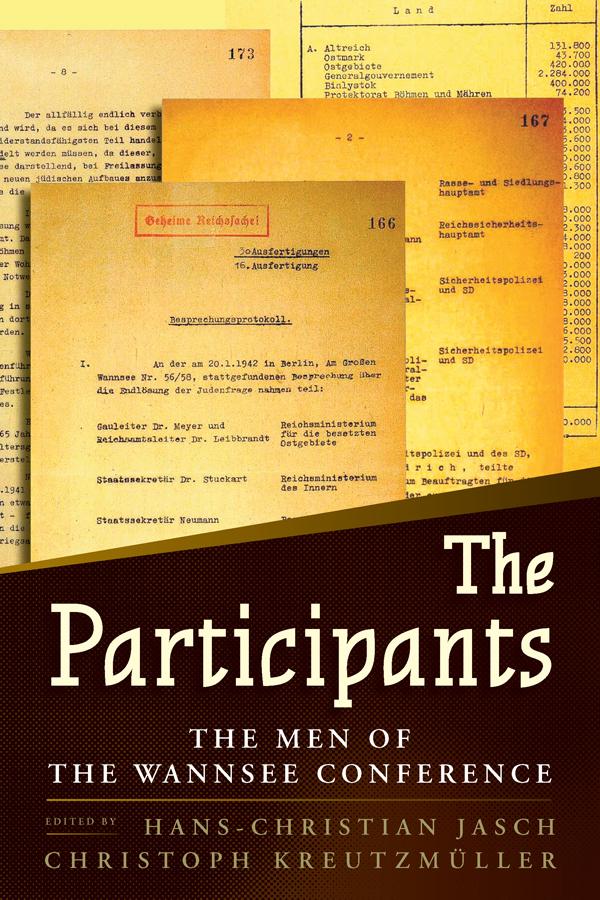
Combining accessible prose with scholarly rigor, The Participants presents fascinating profiles of the all-too-human men who implemented some of the most inhuman acts in history.
On 20 January 1942, fifteen senior German government officials attended a short meeting in Berlin to discuss the deportation and murder of the Jews of Nazi-occupied Europe. Despite lasting less than two hours, the Wannsee Conference is today understood as a signal episode in the history of the Holocaust, exemplifying the labor division and bureaucratization that made the “Final Solution” possible. Yet while the conference itself has been exhaustively researched, many of its attendees remain relatively obscure.
From the introduction:
Ten of the fifteen participants had been to university. Eight of them had even been awarded doctorates, although it should be pointed out that it was considerably easier to gain a doctorate in law or philosophy in the 1920s than it is today. Eight of them had studied law, which, then as now, was not uncommon in the top positions of public administration. Many first turned to radical politics as members of Freikorps or student fraternities. Three of the participants (Freisler, Klopfer and Lange) had studied in Jena. In the 1920s, the University of Jena was a fertile breeding ground for nationalist thinking. With dedicated Nazi, race researcher and later SS-Hauptsturmbannführer Karl Astel as rector, it developed into a model Nazi university. Race researcher Hans Günther also taught there. Others, such as Reinhard Heydrich, joined the SS because they had failed to launch careers elsewhere, and only became radical once they were members of the self-acclaimed Nazi elite order.
Before Memmo my notes were scattered across PDFs. Now a workspace pulls everything into one place — I see exactly what's still left to study.
Memmo's summaries are gold before exams. I don't have to re-read 800 pages two weeks before — just the important parts.
The AI chat has saved me the night before an exam more than once. I just keep asking until I get it — no waiting on a study group to reply.
The quizzes hit exactly what I need to know. Memmo tracks what I get stuck on — so I only practice what's worth it.
Flashcards with spaced repetition are magic. Memmo knows when I'm about to forget something and brings it back.
The AI podcasts are my favorite. I listen on my way to school and get a recap without sitting at a computer.

Handbok i kvalitativa metoder
281 kr

Hållbar utveckling: en introduktion för ingenjörer och andra problemlösare
334 kr

Brymans Samhällsvetenskapliga metoder
390 kr

Projektledning
491 kr

Den orättvisa hälsan: om socioekonomiska skillnader i hälsa och livslängd
326 kr

Vetenskapsteori för nybörjare
196 kr

Organizational Leadership
429 kr

På väg mot läraryrket
172 kr

Det sociala livet i skolan: Socialpsykologiska perspektiv
253 kr

Betygsättningens didaktik
151 kr

Personality
402 kr

Studying Leadership
404 kr

Managing Innovation
477 kr

Introduktion till samhällsvetenskaplig metod
347 kr

The Psychology of Sex and Gender
698 kr

Evidens och kunskap för socialt arbete
207 kr

Introduction to Leadership
605 kr