
Before Memmo my notes were scattered across PDFs. Now a workspace pulls everything into one place — I see exactly what's still left to study.
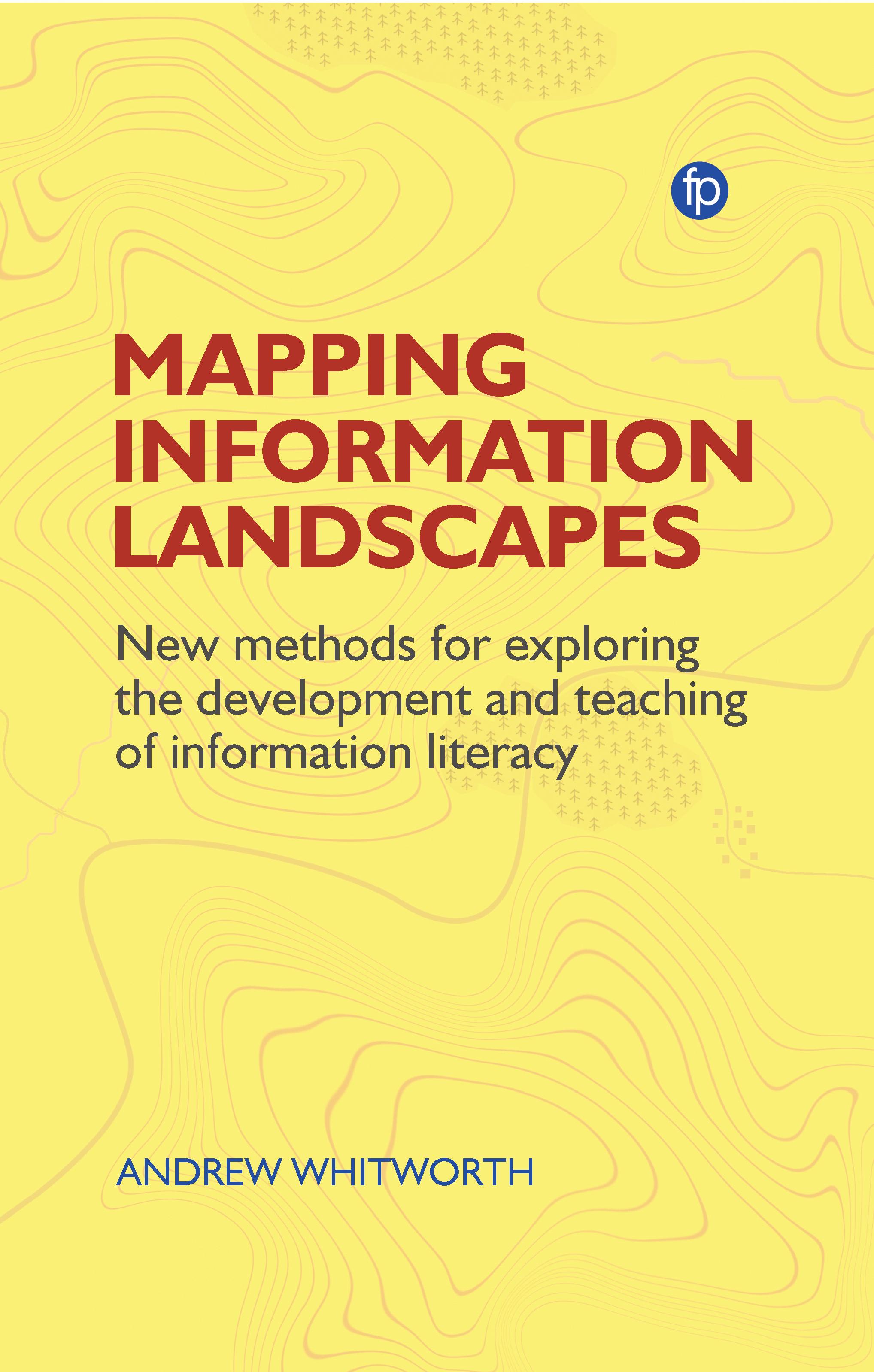
Mapping Information Landscapes presents the first in-depth study of the educational implications of the idea of information literacy as ‘the capacity to map and navigate an information landscape’. Written by a leading researcher in the field, it investigates how teachers and learners can use mapping in developing their ability to make informed judgements about information, in specific places and times.
Central to the argument is the notion that the geographical and information landscapes are indivisible, and the techniques we use to navigate each are essentially the same. The book presents a history of mapping as a means of representing the world, ranging from the work of medieval mapmakers to the 21st century. Concept and mind mapping are explored, and finally, the notion of discursive mapping: the dialogic process, regardless of whether a graphical map is an outcome.
The theoretical framework of the book weaves together the work of authors including Annemaree Lloyd, Christine Bruce, practice theorists such as Theodore Schatzki and the critical geography of David Harvey, an author whose work has not previously been applied to the study of information literacy.
The book concludes that keeping information landscapes sustainable and navigable requires attention to how equipment is used to map and organise those landscapes. How we collectively think about and solve problems in the present time inscribes maps and positions them as resources in whatever landscapes we will draw on in the future.
Information literacy educators, whether in libraries, other HE courses, high schools or the workplace, will benefit by learning about how mapping – implicitly and explicitly – can be used as a method of teaching IL. The book will also be useful reading for academics and researchers of information literacy and students of library and information science.
Before Memmo my notes were scattered across PDFs. Now a workspace pulls everything into one place — I see exactly what's still left to study.
Memmo's summaries are gold before exams. I don't have to re-read 800 pages two weeks before — just the important parts.
The AI chat has saved me the night before an exam more than once. I just keep asking until I get it — no waiting on a study group to reply.
The quizzes hit exactly what I need to know. Memmo tracks what I get stuck on — so I only practice what's worth it.
Flashcards with spaced repetition are magic. Memmo knows when I'm about to forget something and brings it back.
The AI podcasts are my favorite. I listen on my way to school and get a recap without sitting at a computer.

Handbok i kvalitativa metoder
281 kr

Hållbar utveckling: en introduktion för ingenjörer och andra problemlösare
334 kr

Brymans Samhällsvetenskapliga metoder
390 kr

Projektledning
491 kr

Den orättvisa hälsan: om socioekonomiska skillnader i hälsa och livslängd
326 kr

Organizational Leadership
429 kr

Vetenskapsteori för nybörjare
196 kr

På väg mot läraryrket
172 kr

Det sociala livet i skolan: Socialpsykologiska perspektiv
253 kr

Betygsättningens didaktik
151 kr

Personality
402 kr

Studying Leadership
404 kr

Managing Innovation
477 kr

Introduktion till samhällsvetenskaplig metod
347 kr

The Psychology of Sex and Gender
698 kr

Evidens och kunskap för socialt arbete
207 kr

Introduction to Leadership
605 kr