
Before Memmo my notes were scattered across PDFs. Now a workspace pulls everything into one place — I see exactly what's still left to study.
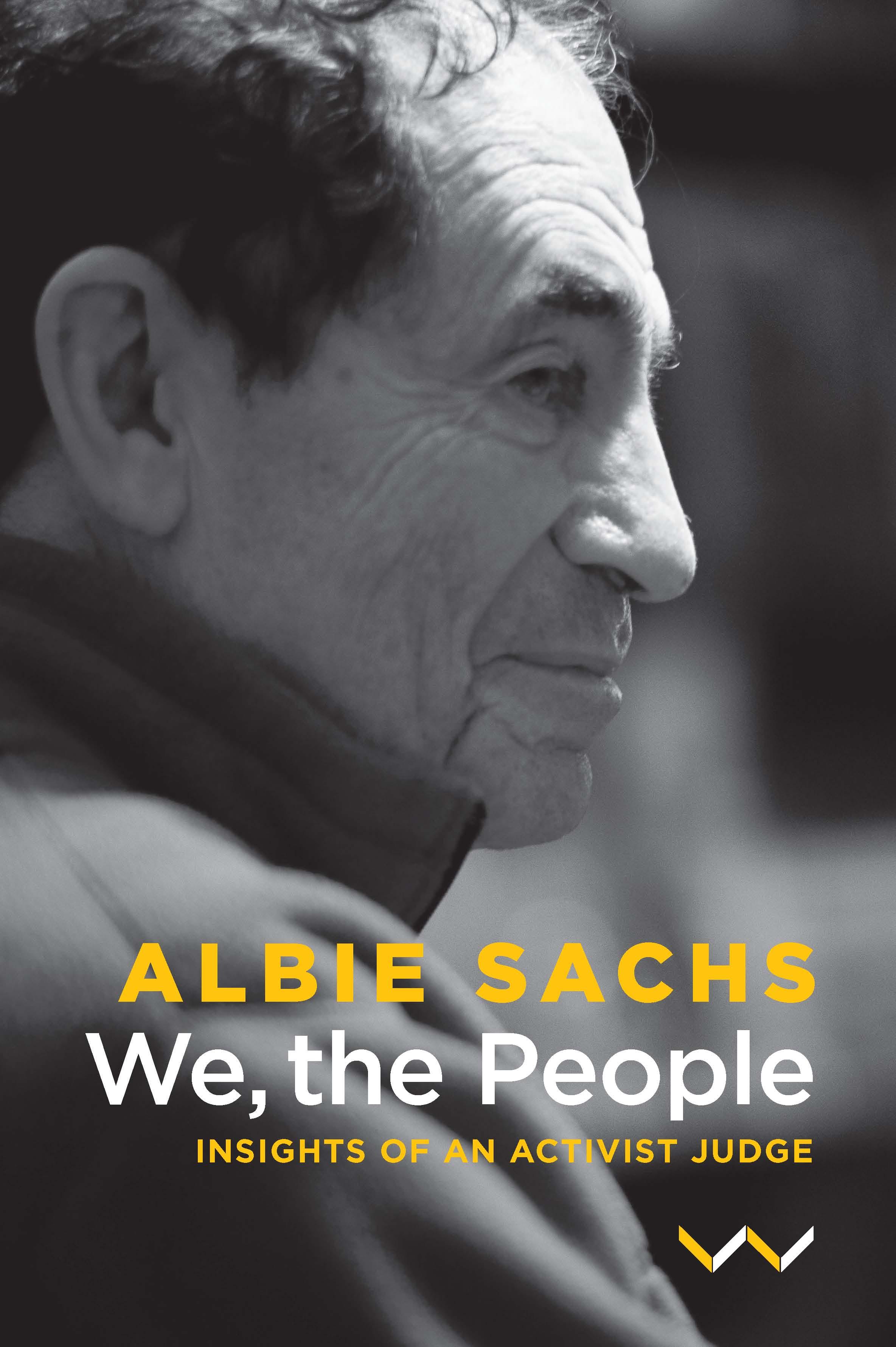
A stirring collection of public talks and essays by an activist and former judge offers an intimate insider’s view of South Africa’s Constitution.
This stirring collection of essays and talks by activist and former judge Albie Sachs is the culmination of more than 25 years of thought about constitution-making and non-racialism. Following the Constitutional Court's landmark Nkandla ruling in March 2016, it serves as a powerful reminder of the tenets of the Constitution, the rule of law and the continuous struggle to uphold democratic rights and freedoms. We, the People offers an intimate insider's view of South Africa's Constitution by a writer who has been deeply entrenched in its historical journey from the depths of apartheid right up to the politically contested present. As a second-year law student at the University of Cape Town, Sachs took part in the Defiance Campaign and went on to attend the Congress of the People in Kliptown, where the Freedom Charter was adopted in 1955. Three decades later, shortly after the bomb attack in Maputo that cost him his arm and the sight in one eye, he was called on by the Constitutional Committee of the African National Congress to co-draft (with Kader Asmal) the first outline of a Bill of Rights for a new democratic South Africa. In 1994, he was appointed by Nelson Mandela to the Constitutional Court, where he served as a judge until 2009. We, the People contains some of Sachs' most memorable public talks and writings, in which he takes us back to the broad-based popular foundations of the Constitution in the Freedom Charter. He picks up on Oliver Tambo's original vision of a non-racial future for South Africa, rather than one based on institutionalised power-sharing between the races. He explores the tension between perfectability and corruptibility, hope and mistrust, which lies at the centre of all constitutions. Sachs discusses the enforcement of social and economic rights, and contemplates the building of the Constitutional Court in the heart of the Old Fort Prison as a mechanism for reconciling the past and the future. Subjective experience and objective analysis interact powerfully in a personalised narrative that reasserts the value of constitutionality not just for South Africans, but for people striving to advance human dignity, equality and freedom across the world today.
Before Memmo my notes were scattered across PDFs. Now a workspace pulls everything into one place — I see exactly what's still left to study.
Memmo's summaries are gold before exams. I don't have to re-read 800 pages two weeks before — just the important parts.
The AI chat has saved me the night before an exam more than once. I just keep asking until I get it — no waiting on a study group to reply.
The quizzes hit exactly what I need to know. Memmo tracks what I get stuck on — so I only practice what's worth it.
Flashcards with spaced repetition are magic. Memmo knows when I'm about to forget something and brings it back.
The AI podcasts are my favorite. I listen on my way to school and get a recap without sitting at a computer.

Handbok i kvalitativa metoder
281 kr

Hållbar utveckling: en introduktion för ingenjörer och andra problemlösare
334 kr

Brymans Samhällsvetenskapliga metoder
390 kr

Projektledning
491 kr

Den orättvisa hälsan: om socioekonomiska skillnader i hälsa och livslängd
326 kr

Vetenskapsteori för nybörjare
196 kr

Organizational Leadership
429 kr

På väg mot läraryrket
172 kr

Det sociala livet i skolan: Socialpsykologiska perspektiv
253 kr

Betygsättningens didaktik
151 kr

Personality
402 kr

Studying Leadership
404 kr

Managing Innovation
477 kr

Introduktion till samhällsvetenskaplig metod
347 kr

The Psychology of Sex and Gender
698 kr

Evidens och kunskap för socialt arbete
207 kr

Introduction to Leadership
605 kr