
Before Memmo my notes were scattered across PDFs. Now a workspace pulls everything into one place — I see exactly what's still left to study.
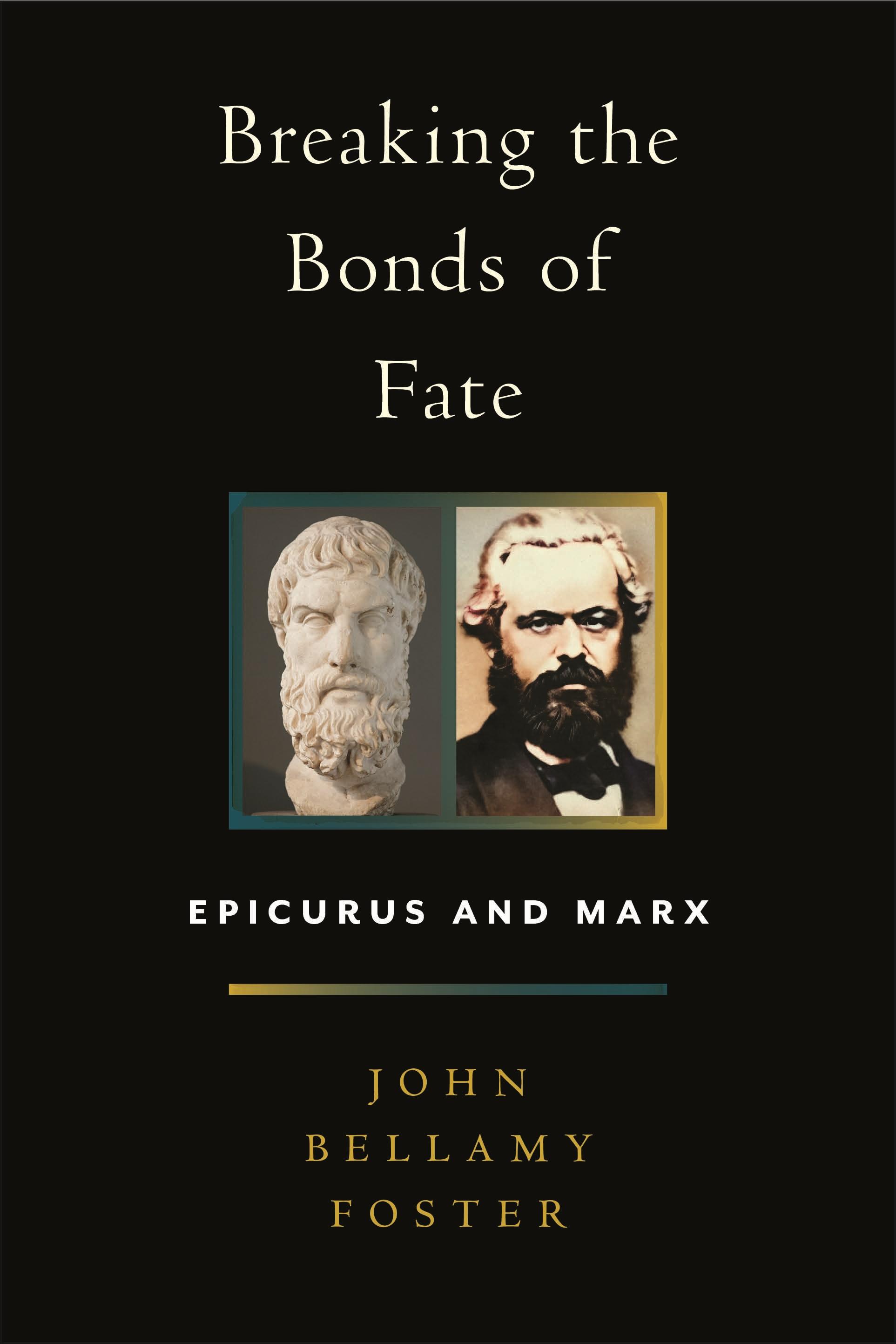
The immanent dialectic of the ancient Greek materialist philosopher, Epicurus (341-270 BCE), helped inspire the nineteenth-century ideas of Karl Marx, forming the subject of his doctoral dissertation. Marx’s detailed study of Epicurus led him to develop his own materialist dialectic in distinction to the idealist philosophy of G. W.F. Hegel. Until now, however, there has been no full scholarly treatment of the relation of Epicurus to Marx, paying equal attention to both thinkers and examining the long-term impact of Epicureanism on Marxist thought.
Breaking the Bonds of Fate: Epicurus and Marx fills this gap. Taking into consideration today’s revolution in the understanding of Epicurus—resulting from the recovery of fragments of his major work On Nature in the carbonized papyri that survived the burying in volcanic ash of the Roman town Herculaneum when Mt. Vesuvius erupted in 79 CE—it demonstrates that this new interpretation corresponds closely to Marx’s nineteenth-century treatment of Epicurus. The result is to fundamentally transform our contemporary understanding of both Epicurus and Marx.
The last (though logically the first) book to be written in a trilogy that also includes John Bellamy Foster’s Marx’s Ecology: Materialism and Nature (2000) and his The Return of Nature: Socialism and Ecology (2020), Breaking the Bonds of Fate: Epicurus and Marx provides a detailed historical and textual analysis grounding the argument of all three works. Not only does this clarify Marx’s relation to materialism and ecology, but also his analysis of freedom and necessity. Both Epicurus’ philosophy and that of Marx are given new meaning in our time, highlighting questions of substantive equality, dialectical naturalism, and sustainable community.
Before Memmo my notes were scattered across PDFs. Now a workspace pulls everything into one place — I see exactly what's still left to study.
Memmo's summaries are gold before exams. I don't have to re-read 800 pages two weeks before — just the important parts.
The AI chat has saved me the night before an exam more than once. I just keep asking until I get it — no waiting on a study group to reply.
The quizzes hit exactly what I need to know. Memmo tracks what I get stuck on — so I only practice what's worth it.
Flashcards with spaced repetition are magic. Memmo knows when I'm about to forget something and brings it back.
The AI podcasts are my favorite. I listen on my way to school and get a recap without sitting at a computer.

Handbok i kvalitativa metoder
281 kr

Hållbar utveckling: en introduktion för ingenjörer och andra problemlösare
334 kr

Brymans Samhällsvetenskapliga metoder
390 kr

Projektledning
491 kr

Den orättvisa hälsan: om socioekonomiska skillnader i hälsa och livslängd
326 kr

Vetenskapsteori för nybörjare
196 kr

Organizational Leadership
429 kr

På väg mot läraryrket
172 kr

Det sociala livet i skolan: Socialpsykologiska perspektiv
253 kr

Betygsättningens didaktik
151 kr

Personality
402 kr

Studying Leadership
404 kr

Managing Innovation
477 kr

Introduktion till samhällsvetenskaplig metod
347 kr

The Psychology of Sex and Gender
698 kr

Evidens och kunskap för socialt arbete
207 kr

Introduction to Leadership
605 kr