
Before Memmo my notes were scattered across PDFs. Now a workspace pulls everything into one place — I see exactly what's still left to study.
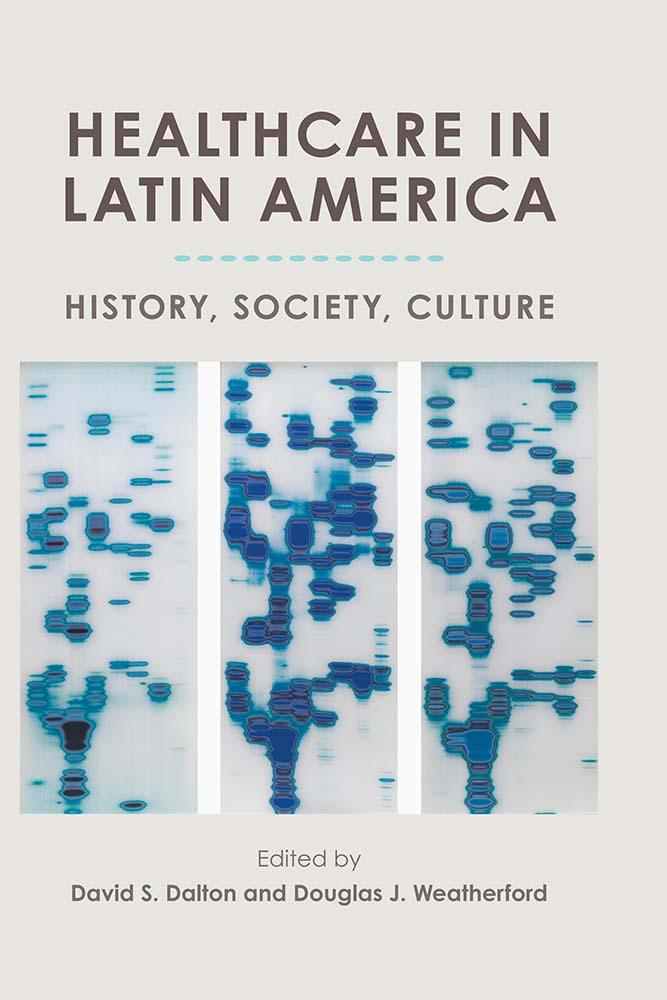
Illustrating the diversity of disciplines that intersect within global health studies, Healthcare in Latin America is the first volume to gather research by many of the foremost scholars working on the topic and region in fields such as history, sociology, women’s studies, political science, and cultural studies.
Through this unique eclectic approach, contributors explore the development and representation of public health in countries including Argentina, Bolivia, Brazil, Chile, Colombia, Cuba, Ecuador, El Salvador, Guatemala, Mexico, Nicaragua, Puerto Rico, and the United States. They examine how national governments, whether reactionary or revolutionary, have approached healthcare as a means to political legitimacy and popular support. Several essays contrast modern biomedicine-based treatment with Indigenous healing practices. Other topics include universal health coverage, childbirth, maternal care, forced sterilization, trans and disabled individuals’ access to care, intersexuality, and healthcare disparities, many of which are discussed through depictions in films and literature.
As economic and political conditions have shifted amid modernization efforts, independence movements, migrations, and continued inequities, so have the policies and practices of healthcare also developed and changed. This book offers a rich overview of how the stories of healthcare in Latin America are intertwined with the region’s political, historical, and cultural identities.
Contributors: Benny J. Andrés, Jr. | Javier Barroso | Katherine E. Bliss | Eric D. Carter | David S. Dalton | Carlos S. Dimas | Sophie Esch | Renata Forste | David L. García León | Javier E. García León | Jethro Hernández Berrones | Katherine Hirschfeld | Emily J. Kirk | Gabriela León-Pérez | Manuel F. Medina | Christopher D. Mellinger | Alicia Z. Miklos | Nicole L. Pacino | Douglas J. Weatherford
Publication of this work made possible by a Sustaining the Humanities through the American Rescue Plan grant from the National Endowment for the Humanities.
Before Memmo my notes were scattered across PDFs. Now a workspace pulls everything into one place — I see exactly what's still left to study.
Memmo's summaries are gold before exams. I don't have to re-read 800 pages two weeks before — just the important parts.
The AI chat has saved me the night before an exam more than once. I just keep asking until I get it — no waiting on a study group to reply.
The quizzes hit exactly what I need to know. Memmo tracks what I get stuck on — so I only practice what's worth it.
Flashcards with spaced repetition are magic. Memmo knows when I'm about to forget something and brings it back.
The AI podcasts are my favorite. I listen on my way to school and get a recap without sitting at a computer.

Handbok i kvalitativa metoder
281 kr

Hållbar utveckling: en introduktion för ingenjörer och andra problemlösare
334 kr

Brymans Samhällsvetenskapliga metoder
390 kr

Projektledning
491 kr

Den orättvisa hälsan: om socioekonomiska skillnader i hälsa och livslängd
326 kr

Vetenskapsteori för nybörjare
196 kr

Organizational Leadership
429 kr

På väg mot läraryrket
172 kr

Det sociala livet i skolan: Socialpsykologiska perspektiv
253 kr

Betygsättningens didaktik
151 kr

Personality
402 kr

Studying Leadership
404 kr

Managing Innovation
477 kr

Introduktion till samhällsvetenskaplig metod
347 kr

The Psychology of Sex and Gender
698 kr

Evidens och kunskap för socialt arbete
207 kr

Introduction to Leadership
605 kr