
Before Memmo my notes were scattered across PDFs. Now a workspace pulls everything into one place — I see exactly what's still left to study.
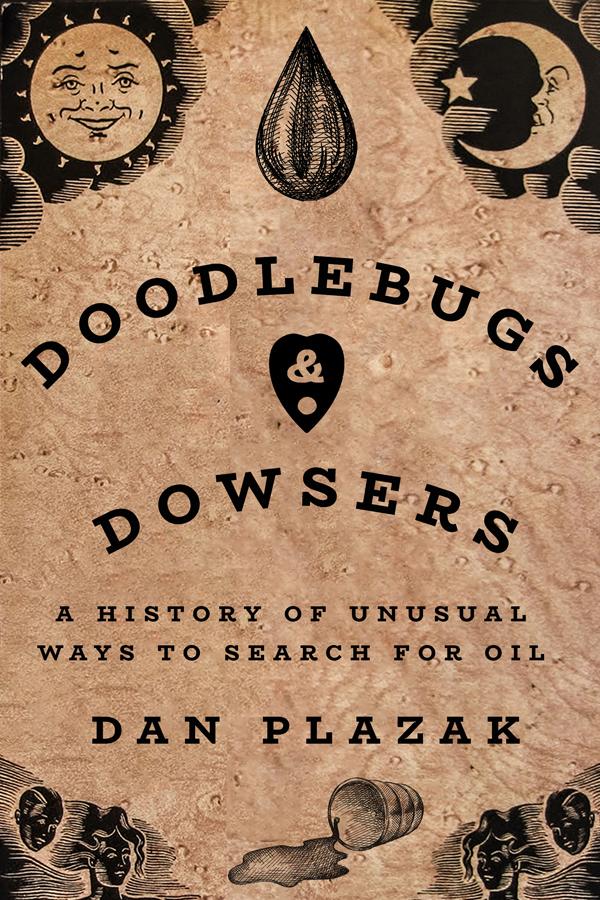
What lies beneath the ground? Our poor eyesight cannot penetrate even an inch into the soil, so for centuries, fortune-seekers have tried every way imaginable to see below the surface. Whether searching for mineral veins, groundwater, or buried treasure, people have looked for ways to avoid the plodding and backbreaking process of digging. They have followed dreams, seers, dowsing rods, and advice from the spirit world. When petroleum became an item of commerce, oil-hunters took to all these methods. Many built homemade inventions called doodlebugs, which they said could detect underground oil.
It took a while, but science finally came up with its own toolbox of oil-finding methods in the early twentieth century. Finding oil is still expensive and risky, however. The old ways? They are mostly gone, but a few oil-dowsers still stride across fields with rod or pendulum, and no doubt people still consult dreams and psychics. And don’t pretend that you yourself haven’t wondered if that dowser might be onto something, or if that famous psychic can really tell where there is oil, or if that inventor stumbled onto a better way to detect underground oil. Of course you have.
History is written by the victors, and scientists won over the oil industry—rightly so. But their accounts give short shrift to the rich history of less traditional ways to find oil. Although ignored, the records of nonscientific methods and their contributions to the oil business are well worthy of study. Lacking in science, they are rich in humanity.
Return with us now to those thrilling days of yesteryear . . . wait, scratch that . . . these things are still going on. Join us in a visit to a place where dreams, seers, and spooks are taken seriously, where forked twigs dip toward oil pools and homemade oil-finding gizmos blink or beep with the promise of riches tucked just below the surface of the known world.Before Memmo my notes were scattered across PDFs. Now a workspace pulls everything into one place — I see exactly what's still left to study.
Memmo's summaries are gold before exams. I don't have to re-read 800 pages two weeks before — just the important parts.
The AI chat has saved me the night before an exam more than once. I just keep asking until I get it — no waiting on a study group to reply.
The quizzes hit exactly what I need to know. Memmo tracks what I get stuck on — so I only practice what's worth it.
Flashcards with spaced repetition are magic. Memmo knows when I'm about to forget something and brings it back.
The AI podcasts are my favorite. I listen on my way to school and get a recap without sitting at a computer.

Handbok i kvalitativa metoder
281 kr

Hållbar utveckling: en introduktion för ingenjörer och andra problemlösare
334 kr

Brymans Samhällsvetenskapliga metoder
390 kr

Projektledning
491 kr

Den orättvisa hälsan: om socioekonomiska skillnader i hälsa och livslängd
326 kr

Organizational Leadership
429 kr

Vetenskapsteori för nybörjare
196 kr

På väg mot läraryrket
172 kr

Det sociala livet i skolan: Socialpsykologiska perspektiv
253 kr

Betygsättningens didaktik
151 kr

Personality
402 kr

Studying Leadership
404 kr

Managing Innovation
477 kr

Introduktion till samhällsvetenskaplig metod
347 kr

The Psychology of Sex and Gender
698 kr

Evidens och kunskap för socialt arbete
207 kr

Introduction to Leadership
605 kr