
Before Memmo my notes were scattered across PDFs. Now a workspace pulls everything into one place — I see exactly what's still left to study.
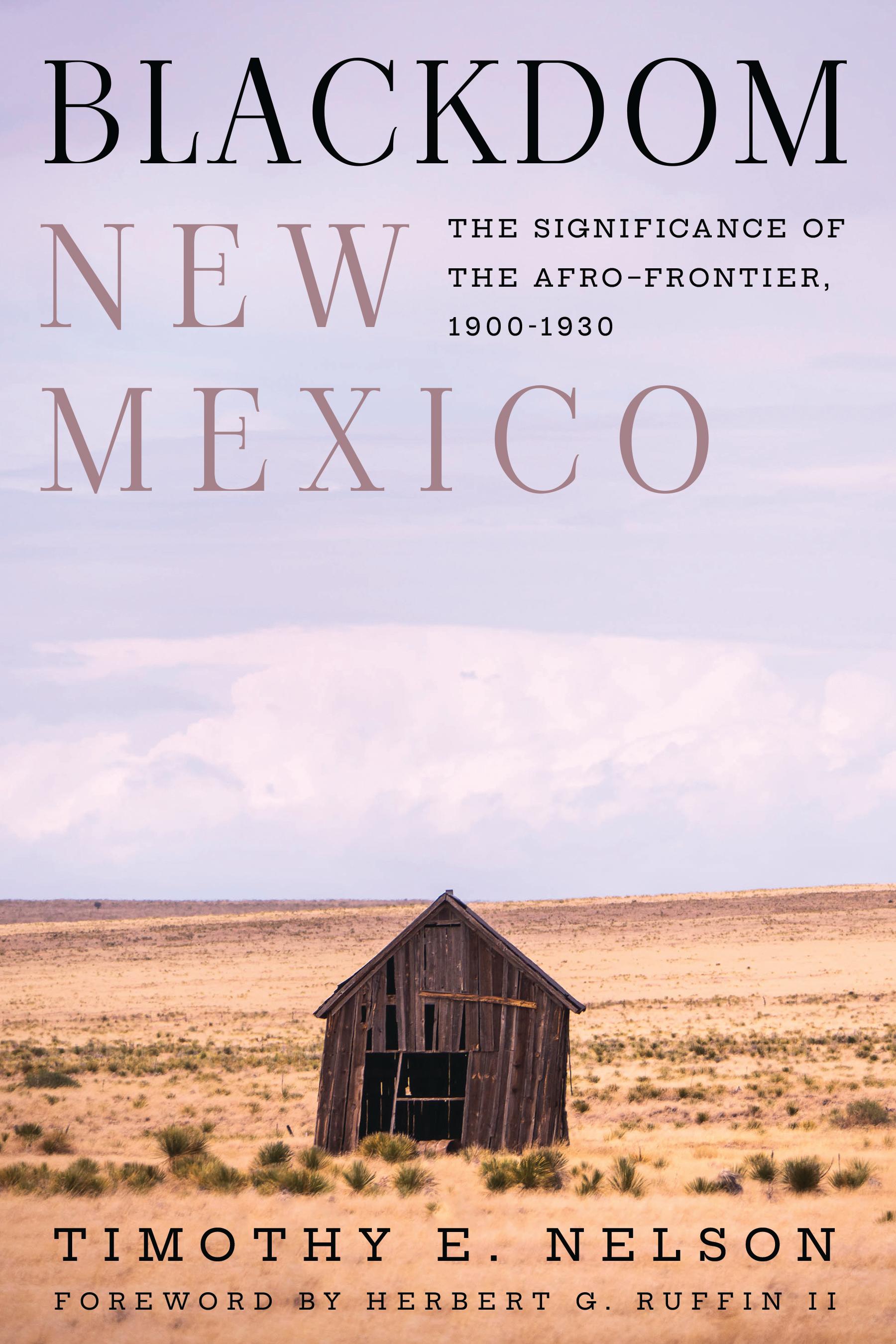
Blackdom, New Mexico, was a township that lasted about thirty years. In this book, Timothy E. Nelson situates the township’s story where it belongs: along the continuum of settlement in Mexico’s Northern Frontier. Dr. Nelson illuminates the set of conscious efforts that helped Black pioneers develop Blackdom Township into a frontier boomtown.
“Blackdom” started as an inherited idea of a nineteenth-century Afrotopia. The idea of creating a Blackdom was refined within Black institutions as part of the perpetual movement of Black Colonization. In 1903, thirteen Black men, encouraged by the 1896 Plessy v. Ferguson decision, formed the Blackdom Townsite Company and set out to make Blackdom a real place in New Mexico, where they were outside the reach of Jim Crow laws.
Many believed that Blackdom was simply abandoned. However, new evidence shows that the scheme to build generational wealth continued to exist throughout the twentieth century in other forms. During Blackdom’s boomtimes, in December 1919, Blackdom Oil Company shifted town business from a regenerative agricultural community to a more extractive model. Nelson has uncovered new primary source materials that suggest for Blackdom a newly discovered third decade. This story has never been fully told or contextualized until now.
Reoriented to Mexico’s “northern frontier,” one observes Black ministers, Black military personnel, and Black freemasons who colonized as part of the transmogrification of Indigenous spaces into the American West. Nelson’s concept of the Afro-Frontier evokes a “Turnerian West,” but it is also fruitfully understood as a Weberian “Borderland.” Its history highlights a brief period and space that nurtured Black cowboy culture. While Blackdom’s civic presence was not lengthy, its significance—and that of the Afro-Frontier—is an important window in the history of Afrotopias, Black Consciousness, and the notion of an American West.Before Memmo my notes were scattered across PDFs. Now a workspace pulls everything into one place — I see exactly what's still left to study.
Memmo's summaries are gold before exams. I don't have to re-read 800 pages two weeks before — just the important parts.
The AI chat has saved me the night before an exam more than once. I just keep asking until I get it — no waiting on a study group to reply.
The quizzes hit exactly what I need to know. Memmo tracks what I get stuck on — so I only practice what's worth it.
Flashcards with spaced repetition are magic. Memmo knows when I'm about to forget something and brings it back.
The AI podcasts are my favorite. I listen on my way to school and get a recap without sitting at a computer.

Handbok i kvalitativa metoder
281 kr

Hållbar utveckling: en introduktion för ingenjörer och andra problemlösare
334 kr

Brymans Samhällsvetenskapliga metoder
390 kr

Projektledning
491 kr

Den orättvisa hälsan: om socioekonomiska skillnader i hälsa och livslängd
326 kr

Organizational Leadership
429 kr

Vetenskapsteori för nybörjare
196 kr

På väg mot läraryrket
172 kr

Det sociala livet i skolan: Socialpsykologiska perspektiv
253 kr

Betygsättningens didaktik
151 kr

Personality
402 kr

Studying Leadership
404 kr

Managing Innovation
477 kr

Introduktion till samhällsvetenskaplig metod
347 kr

The Psychology of Sex and Gender
698 kr

Evidens och kunskap för socialt arbete
207 kr

Introduction to Leadership
605 kr