
Before Memmo my notes were scattered across PDFs. Now a workspace pulls everything into one place — I see exactly what's still left to study.
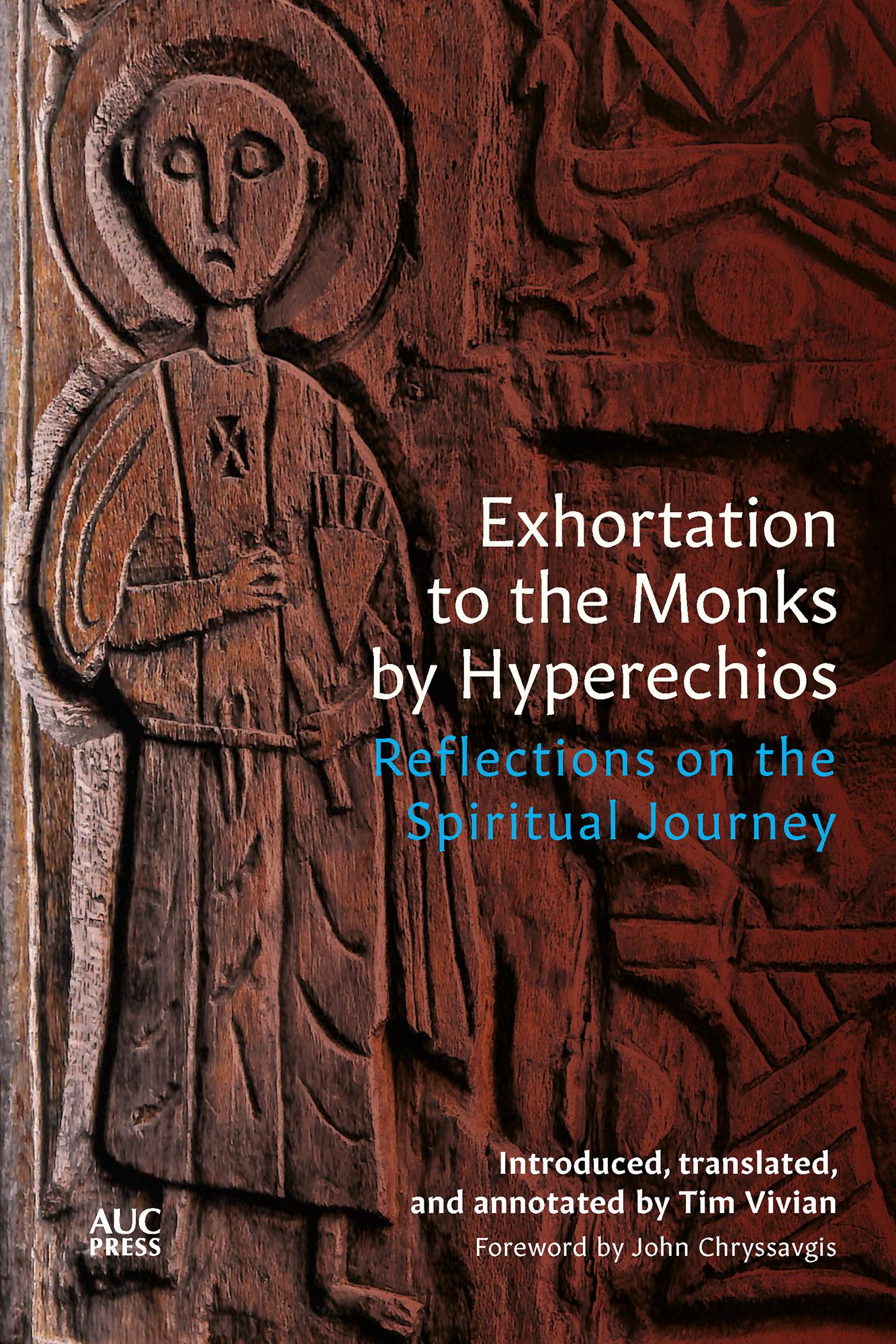
"Hyperechios’ sayings deserve to be known better and making them available in English translation makes them fully accessible to scholars/readers of all abilities.” —Greg Peters, American Benedictine Review
“[S]tellar scholarship . . . a marvel . . . . This volume is a great basis for lectiodivina, for a retreat, for a class in the spiritual life and its vision and tools.” —Michael Plekon, Cistercian Studies Quarterly
Hyperechios's Exhortation to the Monks for the first time in English translation
Hyperechios is a little-known monk of the fourth to fifth centuries, who is thought to have lived in Roman Palestine, possibly coastal Sinai. He wrote the Exhortation to the Monks, 160 short sayings, much like the apophthegmata, or sayings of the desert fathers and mothers, but also structurally very different—most of the sayings are two lines of poetry that offer instruction.
The Exhortation, and early Christian monastic writings in general, teach that a spiritual life requires a life of training and practice, individually and as a neighbor and friend within one’s community. This volume studies Hyperechios’s Exhortation to better understand the moral and spiritual values in a fourth to fifth-century Christian monastic community, while reflecting also on how these are contemporary with the modern day. Drawing on modern works by scholars and placing the Exhortation in conversation with contemporary writers on the spiritual life, Tim Vivian begins with an introduction about Hyperechios, his location, the text, then a lengthy reflection on spiritual matters. He follows this with an English-language translation of the Exhortation and the Greek text, both accompanied by footnotes that offer biblical and patristic cross-references.
Exhortation to the Monks by Hyperechios will be of interest to scholars and general readers of early Christianity, early monasticism, and Christian spirituality, both ancient and contemporary.
Before Memmo my notes were scattered across PDFs. Now a workspace pulls everything into one place — I see exactly what's still left to study.
Memmo's summaries are gold before exams. I don't have to re-read 800 pages two weeks before — just the important parts.
The AI chat has saved me the night before an exam more than once. I just keep asking until I get it — no waiting on a study group to reply.
The quizzes hit exactly what I need to know. Memmo tracks what I get stuck on — so I only practice what's worth it.
Flashcards with spaced repetition are magic. Memmo knows when I'm about to forget something and brings it back.
The AI podcasts are my favorite. I listen on my way to school and get a recap without sitting at a computer.

Handbok i kvalitativa metoder
281 kr

Hållbar utveckling: en introduktion för ingenjörer och andra problemlösare
334 kr

Brymans Samhällsvetenskapliga metoder
390 kr

Projektledning
491 kr

Den orättvisa hälsan: om socioekonomiska skillnader i hälsa och livslängd
326 kr

Vetenskapsteori för nybörjare
196 kr

Organizational Leadership
429 kr

På väg mot läraryrket
172 kr

Det sociala livet i skolan: Socialpsykologiska perspektiv
253 kr

Betygsättningens didaktik
151 kr

Personality
402 kr

Studying Leadership
404 kr

Managing Innovation
477 kr

Introduktion till samhällsvetenskaplig metod
347 kr

The Psychology of Sex and Gender
698 kr

Evidens och kunskap för socialt arbete
207 kr

Introduction to Leadership
605 kr