
Before Memmo my notes were scattered across PDFs. Now a workspace pulls everything into one place — I see exactly what's still left to study.
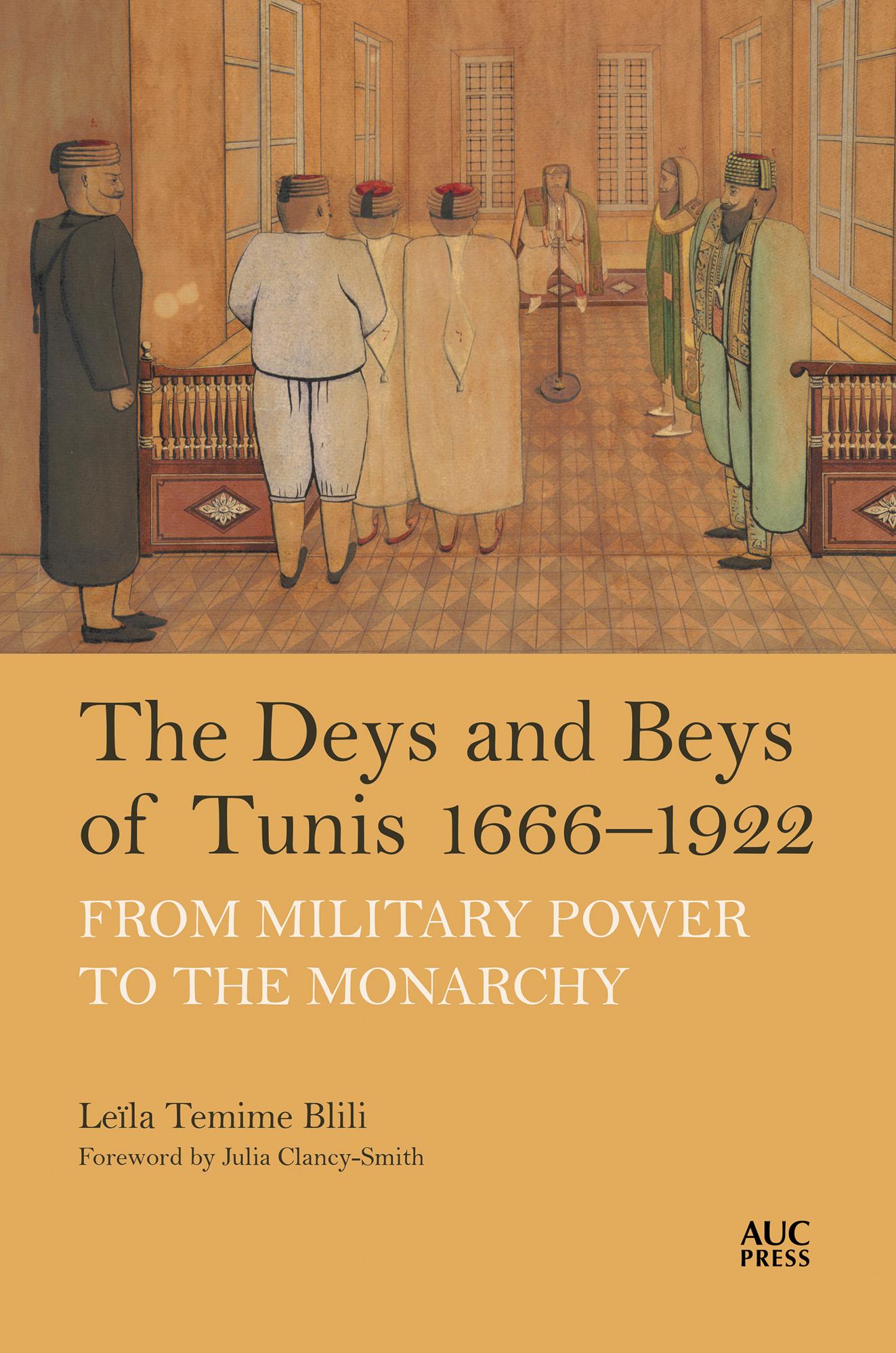
A foundational text on the early modern history of Tunis that places Tunisian history firmly within Ottoman history
The Tunisian historiography of the modern era has broadly centered on a narrative of three successive powers: the pashas, first, followed by the deys (the "symbolic uncles" of the Turkish militia), who were in turn deposed by the beys (native civil rulers arising out of Hafsid times). This approach has provided all the components of a national narrative: it has posited the decline of the pasha’s authority as a consequence of the Tunisian province’s autonomy, and has framed the wars between deys and beys as a conflict of identity between the Turks and the locals.
While this linear story is seductive in its apparent coherence, it leaves several questions in the shadows, in particular, the interference of several external forces in the affairs of the province: most notably, the Ottoman Empire. The Regency of Tunis was effectively controlled by the Ottomans who had reactivated a former Hafsid institution, the mhalla. A kind of itinerant power, the mhalla succeeded in allowing the Ottomans to establish peace through the creation of tax regulations and matrimonial alliances with the tribes. Thus, the Regency of Tunis was able to distinguish itself from other imperial provinces through the founding of a monarchical house symbolically linked to the Empire and, at the same time, socially anchored in its territory.
Relying on local sources in Tunisian archives, Leïla Blili places the Regency of Tunis firmly within the Ottoman Empire, revealing the complex connections between the imperial center and its far-flung province, and challenging the long-standing theory of Tunisian autonomy. Blili's examination of social continuity during moments of intense political turbulence restores the place of women in the narrative of state formation, underlining the significance of the matrimonial politics of sovereigns and the crucial political and social roles women played in the regency.
Before Memmo my notes were scattered across PDFs. Now a workspace pulls everything into one place — I see exactly what's still left to study.
Memmo's summaries are gold before exams. I don't have to re-read 800 pages two weeks before — just the important parts.
The AI chat has saved me the night before an exam more than once. I just keep asking until I get it — no waiting on a study group to reply.
The quizzes hit exactly what I need to know. Memmo tracks what I get stuck on — so I only practice what's worth it.
Flashcards with spaced repetition are magic. Memmo knows when I'm about to forget something and brings it back.
The AI podcasts are my favorite. I listen on my way to school and get a recap without sitting at a computer.

Handbok i kvalitativa metoder
281 kr

Hållbar utveckling: en introduktion för ingenjörer och andra problemlösare
334 kr

Brymans Samhällsvetenskapliga metoder
390 kr

Projektledning
491 kr

Den orättvisa hälsan: om socioekonomiska skillnader i hälsa och livslängd
326 kr

Vetenskapsteori för nybörjare
196 kr

Organizational Leadership
429 kr

På väg mot läraryrket
172 kr

Det sociala livet i skolan: Socialpsykologiska perspektiv
253 kr

Betygsättningens didaktik
151 kr

Personality
402 kr

Studying Leadership
404 kr

Managing Innovation
477 kr

Introduktion till samhällsvetenskaplig metod
347 kr

The Psychology of Sex and Gender
698 kr

Evidens och kunskap för socialt arbete
207 kr

Introduction to Leadership
605 kr