
Before Memmo my notes were scattered across PDFs. Now a workspace pulls everything into one place — I see exactly what's still left to study.
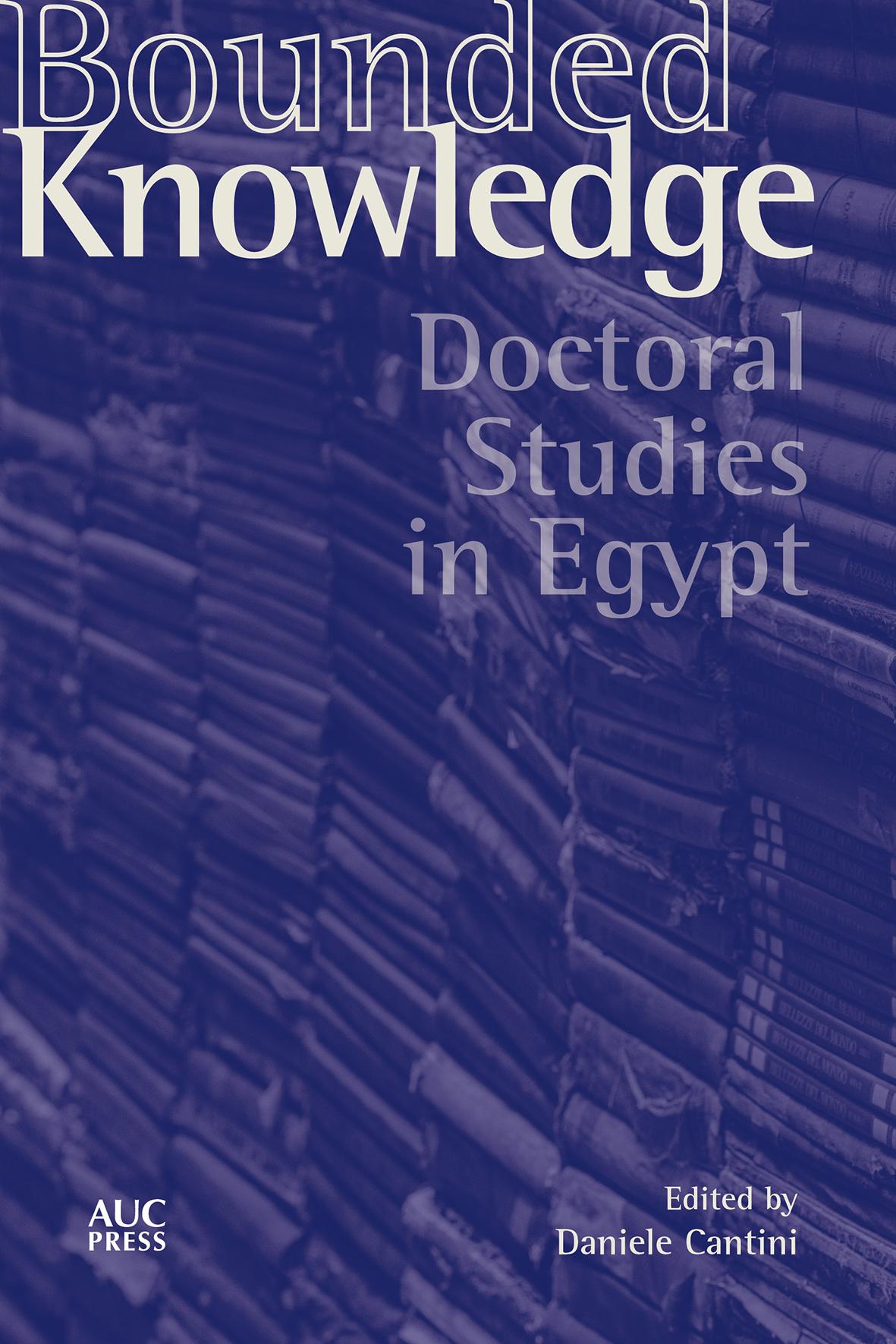
An ethnographic study of how doctoral-level research in the social sciences and humanities is produced in Egypt
Much scholarship has been devoted to debates around how global inequalities of knowledge production arise from asymmetric power relations and disparities in access to material resources, as well as values and practices that prioritize certain academic disciplines and research outputs over others. The central role played by universities in producing both knowledge and researchers is similarly acknowledged, with the doctorate increasingly recognized as a crucial phase in establishing both.
Bounded Knowledge: Doctoral Studies in Egypt explores these debates from a uniquely Egyptian perspective. It provides a fresh, historical analysis of how doctoral studies evolved in Egypt and an ethnographic inquiry into the actual conditions of knowledge production in the country’s public universities, with focus on the humanities and social sciences. Although it is commonplace to speak of international collaborations in knowledge production, institutional settings and material conditions are so uneven as to make the fiction of equality impossible to sustain. The chapters in this book, by social scientists within and outside Egypt, look closely at how such academic hierarchies are reinforced in the context of the internationalization of research. They also look at the ways in which notions of socially responsible research, common the world over, are translated in the particularly Egyptian context: how research topics are discussed, how doctoral studies are organized, and ultimately, how society thinks about research.
Contributors
Mona Abaza, The American University in Cairo, Egypt
Daniele Cantini, Martin-Luther-University of Halle/Wittenberg, Germany
Nefissa Dessouqi, Cairo University, Egypt
Hala Kamal, Cairo University, Egypt
Jonathan Kriener, Ruhr-University Bochum, Germany
Ola Kubbara, Cairo University, Egypt
Ahmed Mansour, University of Alexandria, Egypt
David Mills, University of Oxford, England
Before Memmo my notes were scattered across PDFs. Now a workspace pulls everything into one place — I see exactly what's still left to study.
Memmo's summaries are gold before exams. I don't have to re-read 800 pages two weeks before — just the important parts.
The AI chat has saved me the night before an exam more than once. I just keep asking until I get it — no waiting on a study group to reply.
The quizzes hit exactly what I need to know. Memmo tracks what I get stuck on — so I only practice what's worth it.
Flashcards with spaced repetition are magic. Memmo knows when I'm about to forget something and brings it back.
The AI podcasts are my favorite. I listen on my way to school and get a recap without sitting at a computer.

Handbok i kvalitativa metoder
281 kr

Hållbar utveckling: en introduktion för ingenjörer och andra problemlösare
334 kr

Brymans Samhällsvetenskapliga metoder
390 kr

Projektledning
491 kr

Den orättvisa hälsan: om socioekonomiska skillnader i hälsa och livslängd
326 kr

Organizational Leadership
429 kr

Vetenskapsteori för nybörjare
196 kr

På väg mot läraryrket
172 kr

Det sociala livet i skolan: Socialpsykologiska perspektiv
253 kr

Betygsättningens didaktik
151 kr

Personality
402 kr

Studying Leadership
404 kr

Managing Innovation
477 kr

Introduktion till samhällsvetenskaplig metod
347 kr

The Psychology of Sex and Gender
698 kr

Evidens och kunskap för socialt arbete
207 kr

Introduction to Leadership
605 kr