
Before Memmo my notes were scattered across PDFs. Now a workspace pulls everything into one place — I see exactly what's still left to study.
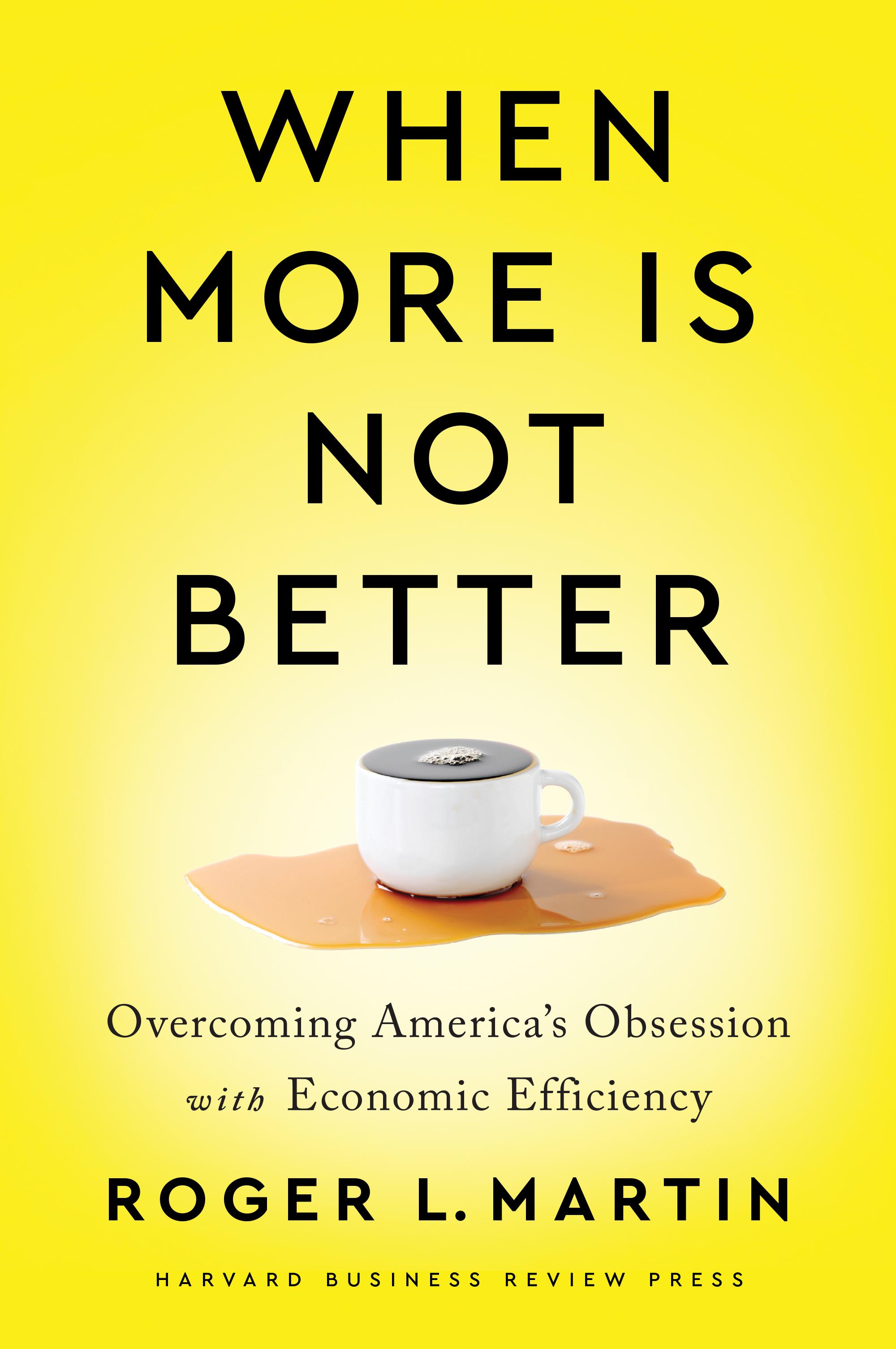
American democratic capitalism is in danger. How can we save it?
For its first two hundred years, the American economy exhibited truly impressive performance. The combination of democratically elected governments and a capitalist system worked, with ever-increasing levels of efficiency spurred by division of labor, international trade, and scientific management of companies. By the nation's bicentennial celebration in 1976, the American economy was the envy of the world.
But since then, outcomes have changed dramatically. Growth in the economic prosperity of the average American family has slowed to a crawl, while the wealth of the richest Americans has skyrocketed. This imbalance threatens the American democratic capitalist system and our way of life.
In this bracing yet constructive book, world-renowned business thinker Roger Martin starkly outlines the fundamental problem: We have treated the economy as a machine, pursuing ever-greater efficiency as an inherent good. But efficiency has become too much of a good thing. Our obsession with it has inadvertently shifted the shape of our economy, from a large middle class and smaller numbers of rich and poor (think of a bell-shaped curve) to a greater share of benefits accruing to a thin tail of already-rich Americans (a Pareto distribution).
With lucid analysis and engaging anecdotes, Martin argues that we must stop treating the economy as a perfectible machine and shift toward viewing it as a complex adaptive system in which we seek a fundamental balance of efficiency with resilience. To achieve this, we need to keep in mind the whole while working on the component parts; pursue improvement, not perfection; and relentlessly tweak instead of attempting to find permanent solutions.
Filled with keen economic insight and advice for citizens, executives, policy makers, and educators, When More Is Not Better is the must-read guide for saving democratic capitalism.
Before Memmo my notes were scattered across PDFs. Now a workspace pulls everything into one place — I see exactly what's still left to study.
Memmo's summaries are gold before exams. I don't have to re-read 800 pages two weeks before — just the important parts.
The AI chat has saved me the night before an exam more than once. I just keep asking until I get it — no waiting on a study group to reply.
The quizzes hit exactly what I need to know. Memmo tracks what I get stuck on — so I only practice what's worth it.
Flashcards with spaced repetition are magic. Memmo knows when I'm about to forget something and brings it back.
The AI podcasts are my favorite. I listen on my way to school and get a recap without sitting at a computer.

Handbok i kvalitativa metoder
281 kr

Hållbar utveckling: en introduktion för ingenjörer och andra problemlösare
334 kr

Brymans Samhällsvetenskapliga metoder
390 kr

Projektledning
491 kr

Den orättvisa hälsan: om socioekonomiska skillnader i hälsa och livslängd
326 kr

Vetenskapsteori för nybörjare
196 kr

Organizational Leadership
429 kr

På väg mot läraryrket
172 kr

Det sociala livet i skolan: Socialpsykologiska perspektiv
253 kr

Betygsättningens didaktik
151 kr

Personality
402 kr

Studying Leadership
404 kr

Managing Innovation
477 kr

Introduktion till samhällsvetenskaplig metod
347 kr

The Psychology of Sex and Gender
698 kr

Evidens och kunskap för socialt arbete
207 kr

Introduction to Leadership
605 kr