
Before Memmo my notes were scattered across PDFs. Now a workspace pulls everything into one place — I see exactly what's still left to study.
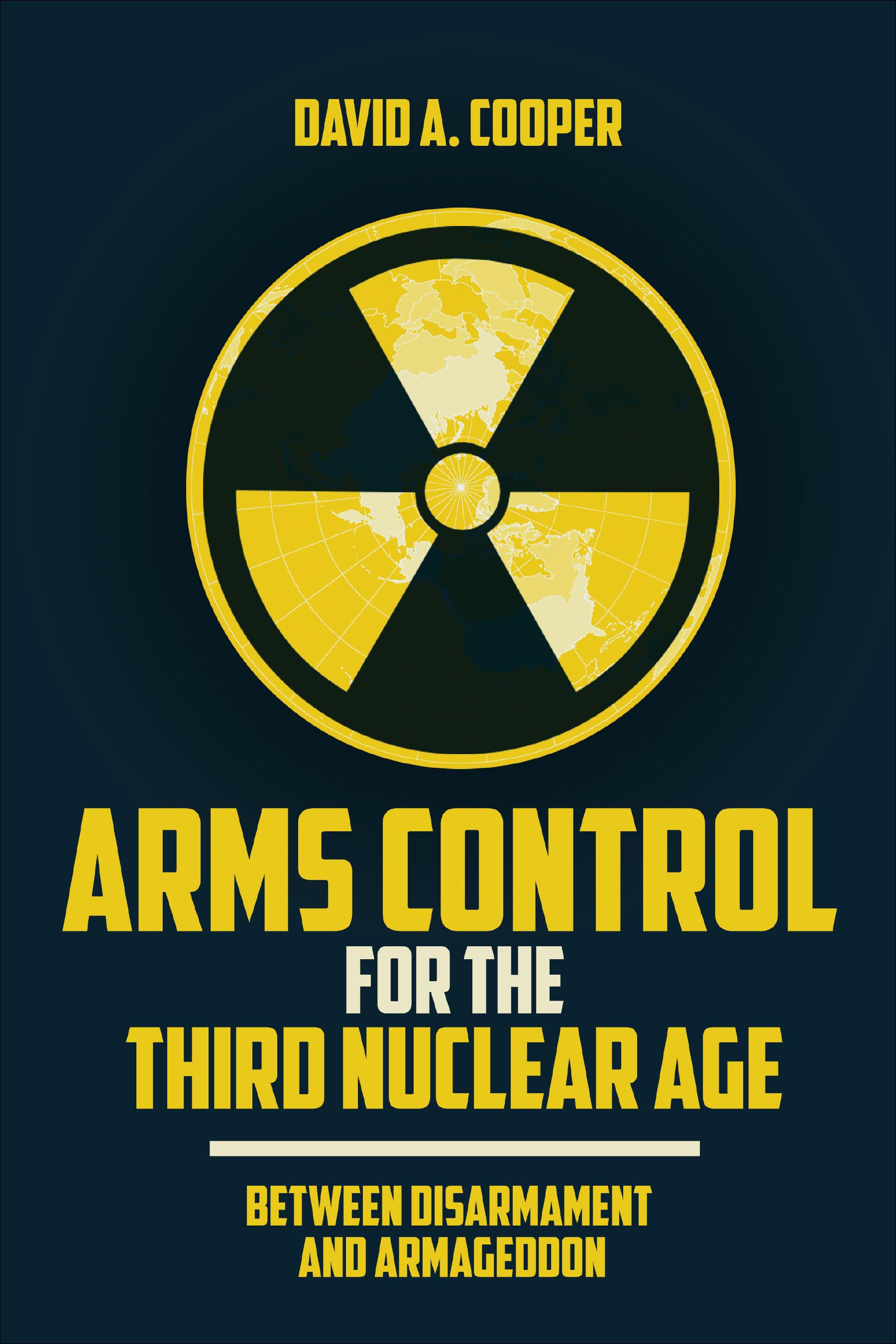
A reappraisal of classic arms control theory that advocates for reprioritizing deterrence over disarmament in a new era of nuclear multipolarity
The United States faces a new era of nuclear arms racing for which it is conceptually unprepared. Great power nuclear competition is seemingly returning with a vengeance as the post–Cold War international order morphs into something more uncertain, complicated, and dangerous. In this unstable third nuclear age, legacy nonproliferation and disarmament instruments designed for outmoded conditions are ill-equipped to tame the complex dynamics of a multipolar nuclear arms race centered on China, Russia, and the United States.
International relations scholar David A. Cooper proposes relearning, reviving, and adapting classic arms control theory and negotiating practices to steer the world away from threatening and destabilizing nuclear arms races. He surveys the history of nuclear arms control efforts, revisits strategic theory’s view of nuclear competition dynamics, and interviews US nuclear policy practitioners about both the past and the emerging era. To prepare for this third nuclear age, Cooper recommends adapting the Cold War’s classical paradigm of adversarial arms control for the contemporary landscape. Rather than prioritizing disarmament to eliminate nuclear weapons, this neoclassical approach would pursue pragmatic agreements to stabilize deterrence relationships among today’s nuclear rivals. Drawing on an extensive theoretical and practical study of the Cold War and its aftermath, Cooper distills relevant lessons that could inform the United States’ long-term efforts to navigate the unprecedented dangers of nuclear multipolarity.
Diverging from other recent books on the topic, Arms Control for the Third Nuclear Age provides analysts with a more hard-nosed strategic approach. In this very different era of great power rivalry, this book will be a must-read for scholars, students, and practitioners of nuclear arms control.
Before Memmo my notes were scattered across PDFs. Now a workspace pulls everything into one place — I see exactly what's still left to study.
Memmo's summaries are gold before exams. I don't have to re-read 800 pages two weeks before — just the important parts.
The AI chat has saved me the night before an exam more than once. I just keep asking until I get it — no waiting on a study group to reply.
The quizzes hit exactly what I need to know. Memmo tracks what I get stuck on — so I only practice what's worth it.
Flashcards with spaced repetition are magic. Memmo knows when I'm about to forget something and brings it back.
The AI podcasts are my favorite. I listen on my way to school and get a recap without sitting at a computer.

Handbok i kvalitativa metoder
281 kr

Hållbar utveckling: en introduktion för ingenjörer och andra problemlösare
334 kr

Brymans Samhällsvetenskapliga metoder
390 kr

Projektledning
491 kr

Den orättvisa hälsan: om socioekonomiska skillnader i hälsa och livslängd
326 kr

Organizational Leadership
429 kr

Vetenskapsteori för nybörjare
196 kr

På väg mot läraryrket
172 kr

Det sociala livet i skolan: Socialpsykologiska perspektiv
253 kr

Betygsättningens didaktik
151 kr

Personality
402 kr

Studying Leadership
404 kr

Managing Innovation
477 kr

Introduktion till samhällsvetenskaplig metod
347 kr

The Psychology of Sex and Gender
698 kr

Evidens och kunskap för socialt arbete
207 kr

Introduction to Leadership
605 kr