
Before Memmo my notes were scattered across PDFs. Now a workspace pulls everything into one place — I see exactly what's still left to study.
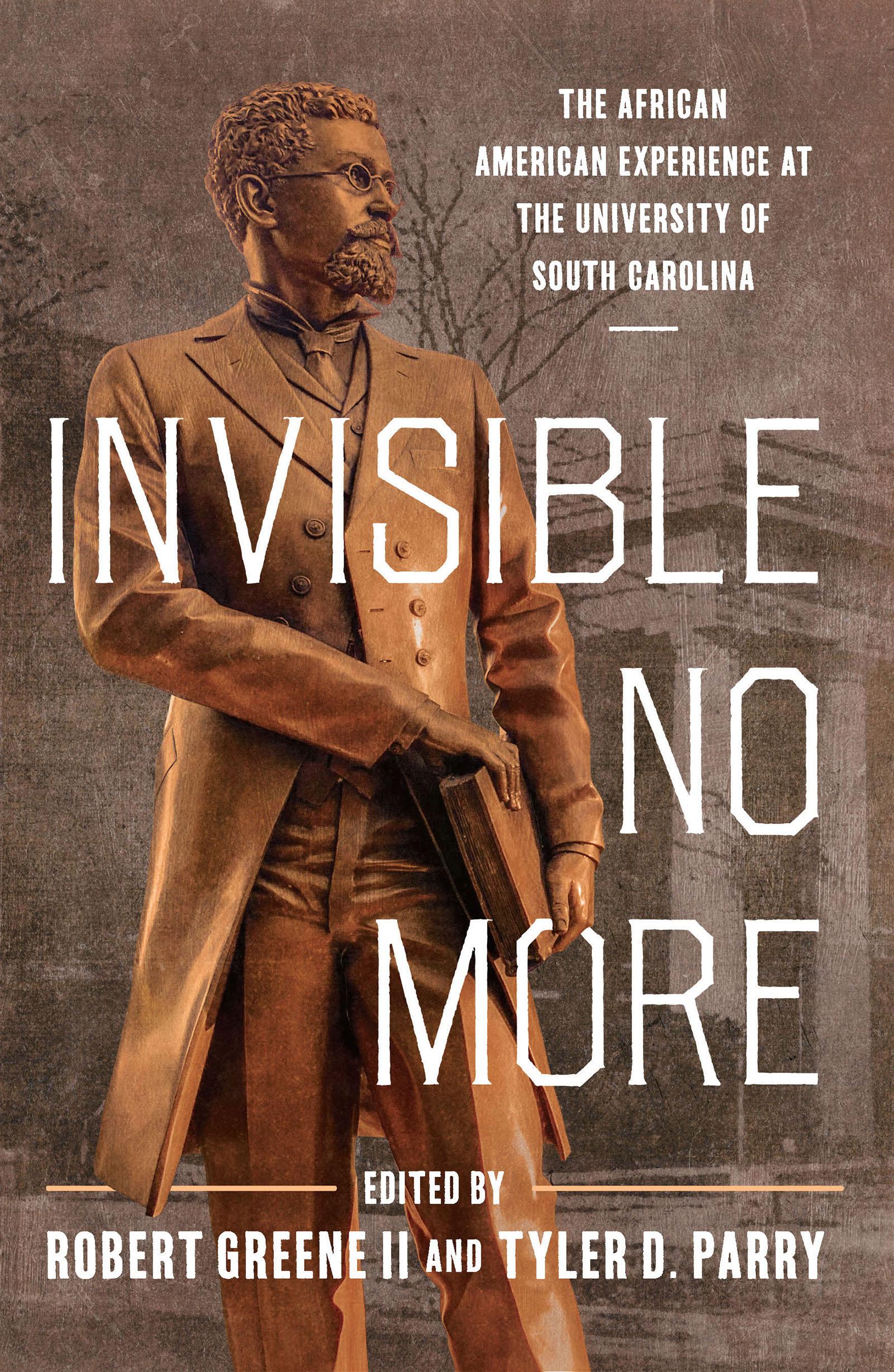
Since its founding in 1801, African Americans have played an integral, if too often overlooked, role in the history of the University of South Carolina. Invisible No More seeks to recover that historical legacy and reveal the many ways that African Americans have shaped the development of the university. The essays in this volume span the full sweep of the university's history, from the era of slavery to Reconstruction, Civil Rights to Black Power and Black Lives Matter. This collection represents the most comprehensive examination of the long history and complex relationship between African Americans and the university.
Like the broader history of South Carolina, the history of African Americans at the University of South Carolina is about more than their mere existence at the institution. It is about how they molded the university into something greater than the sum of its parts. Throughout the university's history, Black students, faculty, and staff have pressured for greater equity and inclusion. At various times they did so with the support of white allies, other times in the face of massive resistance; oftentimes, there were both.
Between 1868 and 1877, the brief but extraordinary period of Reconstruction, the University of South Carolina became the only state-supported university in the former Confederacy to open its doors to students of all races. This "first desegregation," which offered a glimpse of what was possible, was dismantled and followed by nearly a century during which African American students were once again excluded from the campus. In 1963, the "second desegregation" ended that long era of exclusion but was just the beginning of a new period of activism, one that continues today. Though African Americans have become increasingly visible on campus, the goal of equity and inclusion—a greater acceptance of African American students and a true appreciation of their experiences and contributions—remains incomplete. Invisible No More represents another contribution to this long struggle.
A foreword is provided by Valinda W. Littlefield, associate professor of history and African American studies at the University of South Carolina. Henrie Monteith Treadwell, research professor of community health and preventative medicine at Morehouse School of Medicine and one of the three African American students who desegregated the university in 1963, provides an afterword.
Before Memmo my notes were scattered across PDFs. Now a workspace pulls everything into one place — I see exactly what's still left to study.
Memmo's summaries are gold before exams. I don't have to re-read 800 pages two weeks before — just the important parts.
The AI chat has saved me the night before an exam more than once. I just keep asking until I get it — no waiting on a study group to reply.
The quizzes hit exactly what I need to know. Memmo tracks what I get stuck on — so I only practice what's worth it.
Flashcards with spaced repetition are magic. Memmo knows when I'm about to forget something and brings it back.
The AI podcasts are my favorite. I listen on my way to school and get a recap without sitting at a computer.

Handbok i kvalitativa metoder
281 kr

Hållbar utveckling: en introduktion för ingenjörer och andra problemlösare
334 kr

Brymans Samhällsvetenskapliga metoder
390 kr

Projektledning
491 kr

Den orättvisa hälsan: om socioekonomiska skillnader i hälsa och livslängd
326 kr

Organizational Leadership
429 kr

Vetenskapsteori för nybörjare
196 kr

På väg mot läraryrket
172 kr

Det sociala livet i skolan: Socialpsykologiska perspektiv
253 kr

Betygsättningens didaktik
151 kr

Personality
402 kr

Studying Leadership
404 kr

Managing Innovation
477 kr

Introduktion till samhällsvetenskaplig metod
347 kr

The Psychology of Sex and Gender
698 kr

Evidens och kunskap för socialt arbete
207 kr

Introduction to Leadership
605 kr