
Before Memmo my notes were scattered across PDFs. Now a workspace pulls everything into one place — I see exactly what's still left to study.
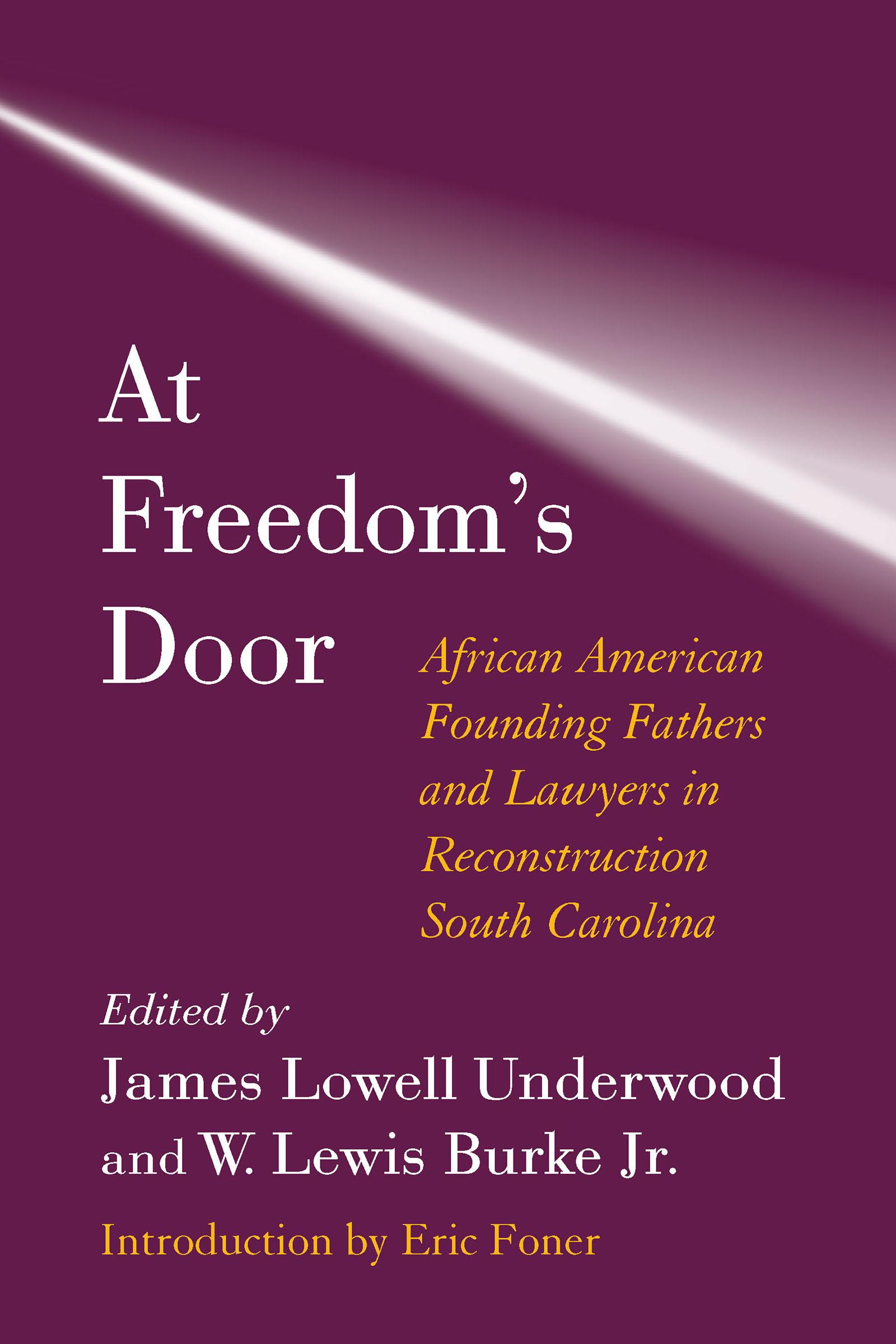
A telling reevaluation of African American roles in government and law during Reconstruction
At Freedom's Door rescues from obscurity the identities, images, and long-term contributions of black leaders who helped to rebuild and reform South Carolina after the Civil War. In seven essays, the contributors to the volume explore the role of African Americans in government and law during Reconstruction in the Palmetto State. Bringing into focus a legacy not fully recognized, the contributors collectively demonstrate the legal acumen displayed by prominent African Americans and the impact these individuals had on the enactment of substantial constitutional reforms—many of which, though abandoned after Reconstruction, would be resurrected in the twentieth century.
James Lowell Underwood, in a reexamination of the Constitutional Convention of 1868, recounts the critical role African American delegates played in the drafting of the state's first truly democratic constitution. In a pair of essays, J. Clay Smith and Belinda Gergel offer much new biographical information about Joseph Jasper Wright, the first African American to serve on a state supreme court bench. They discuss Wright's jurisprudence, approach to judicial decision making, role in the Dual Government Controversy of 1876, and coerced resignation from the court. In essays that explore the role of African American attorneys in South Carolina, W. Lewis Burke considers an all-but-forgotten phase in the history of the University of South Carolina Law School—the education and graduation of Black students in the 1870s—and John Oldfield sheds light on a law school administered by and for African Americans in post-Reconstruction South Carolina. Michael Mounter tells the story of Richard T. Greener, the first African American graduate of harvard and the first African American professor at the University of South Carolina. The eminent Reconstruction historian Eric Foner opens and concludes the volume by placing in national perspective the lives of these African Americans and the events in which they participated.
Before Memmo my notes were scattered across PDFs. Now a workspace pulls everything into one place — I see exactly what's still left to study.
Memmo's summaries are gold before exams. I don't have to re-read 800 pages two weeks before — just the important parts.
The AI chat has saved me the night before an exam more than once. I just keep asking until I get it — no waiting on a study group to reply.
The quizzes hit exactly what I need to know. Memmo tracks what I get stuck on — so I only practice what's worth it.
Flashcards with spaced repetition are magic. Memmo knows when I'm about to forget something and brings it back.
The AI podcasts are my favorite. I listen on my way to school and get a recap without sitting at a computer.

Handbok i kvalitativa metoder
281 kr

Hållbar utveckling: en introduktion för ingenjörer och andra problemlösare
334 kr

Brymans Samhällsvetenskapliga metoder
390 kr

Projektledning
491 kr

Den orättvisa hälsan: om socioekonomiska skillnader i hälsa och livslängd
326 kr

Vetenskapsteori för nybörjare
196 kr

Organizational Leadership
429 kr

På väg mot läraryrket
172 kr

Det sociala livet i skolan: Socialpsykologiska perspektiv
253 kr

Betygsättningens didaktik
151 kr

Personality
402 kr

Studying Leadership
404 kr

Managing Innovation
477 kr

Introduktion till samhällsvetenskaplig metod
347 kr

The Psychology of Sex and Gender
698 kr

Evidens och kunskap för socialt arbete
207 kr

Introduction to Leadership
605 kr