
Before Memmo my notes were scattered across PDFs. Now a workspace pulls everything into one place — I see exactly what's still left to study.
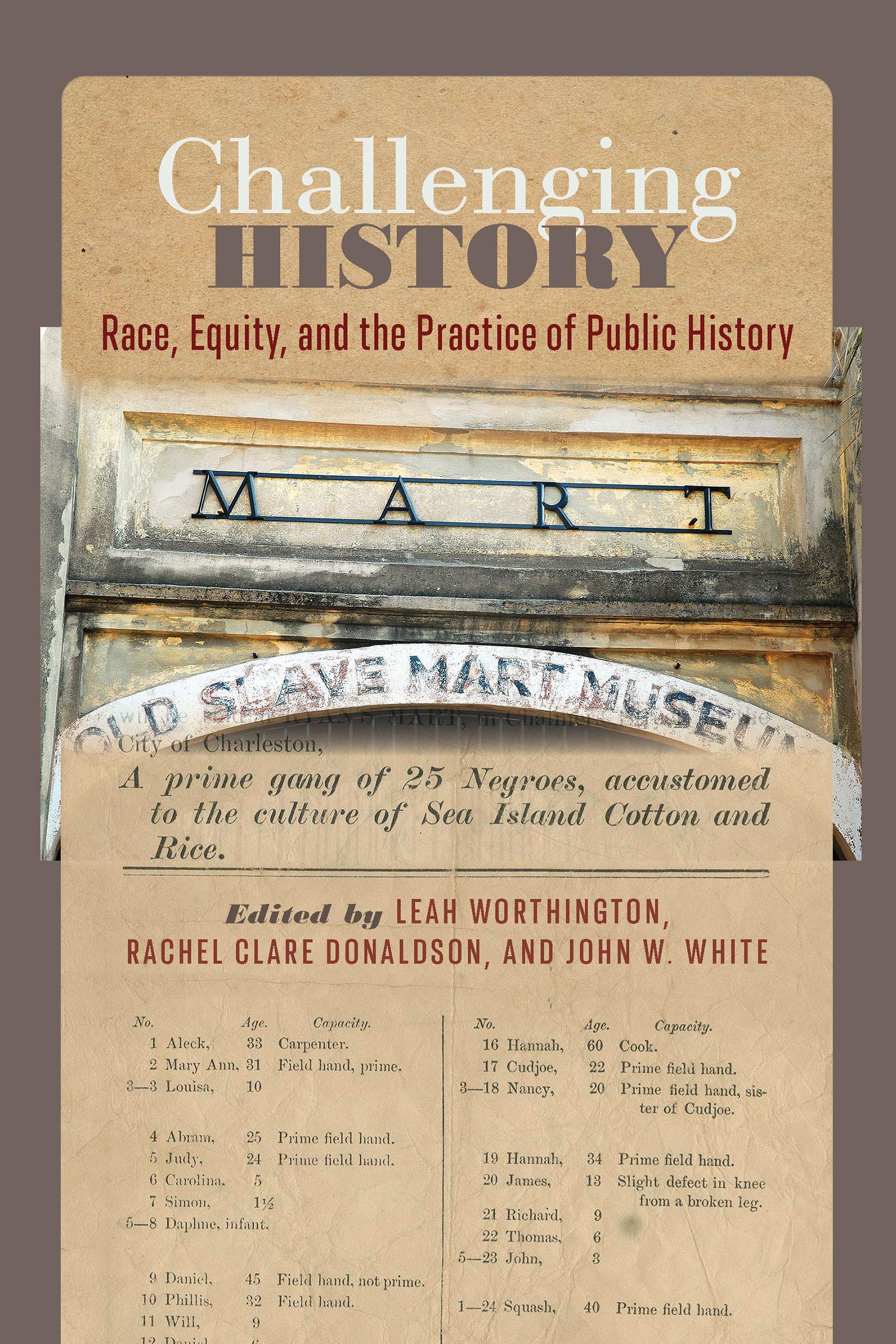
A collection of essays that examine how the history of slavery and race in the United States has been interpreted and inserted at public historic sites
For decades racism and social inequity have stayed at the center of the national conversation in the United States, sustaining the debate around public historic places and monuments and what they represent. These conversations are a reminder of the crucial role that public history professionals play in engaging public audiences on subjects of race and slavery. This "difficult history" has often remained un- or underexplored in our public discourse, hidden from view by the tourism industry, or even by public history professionals themselves, as they created historic sites, museums, and public squares based on white-centric interpretations of history and heritage.
Challenging History, through a collection of essays by a diverse group of scholars and practitioners, examines how difficult histories, specifically those of slavery and race in the United States, are being interpreted and inserted at public history sites and in public history work. Several essays explore the successes and challenges of recent projects, while others discuss gaps that public historians can fill at sites where Black history took place but is absent in the interpretation. Through case studies, the contributors reveal the entrenched false narratives that public history workers are countering in established public history spaces and the work they are conducting to reorient our collective understanding of the past.
History practitioners help the public better understand the world. Their choices help to shape ideas about heritage and historical remembrances and can reform, even transform, worldviews through more inclusive and ethically narrated histories. Challenging History invites public historians to consider the ethical implications of the narratives they choose to share and makes the case that an inclusive, honest, and complete portrayal of the past has the potential to reshape collective memory and ideas about the meaning of American history and citizenship.
Before Memmo my notes were scattered across PDFs. Now a workspace pulls everything into one place — I see exactly what's still left to study.
Memmo's summaries are gold before exams. I don't have to re-read 800 pages two weeks before — just the important parts.
The AI chat has saved me the night before an exam more than once. I just keep asking until I get it — no waiting on a study group to reply.
The quizzes hit exactly what I need to know. Memmo tracks what I get stuck on — so I only practice what's worth it.
Flashcards with spaced repetition are magic. Memmo knows when I'm about to forget something and brings it back.
The AI podcasts are my favorite. I listen on my way to school and get a recap without sitting at a computer.

Handbok i kvalitativa metoder
281 kr

Hållbar utveckling: en introduktion för ingenjörer och andra problemlösare
334 kr

Brymans Samhällsvetenskapliga metoder
390 kr

Projektledning
491 kr

Den orättvisa hälsan: om socioekonomiska skillnader i hälsa och livslängd
326 kr

Vetenskapsteori för nybörjare
196 kr

Organizational Leadership
429 kr

På väg mot läraryrket
172 kr

Det sociala livet i skolan: Socialpsykologiska perspektiv
253 kr

Betygsättningens didaktik
151 kr

Personality
402 kr

Studying Leadership
404 kr

Managing Innovation
477 kr

Introduktion till samhällsvetenskaplig metod
347 kr

The Psychology of Sex and Gender
698 kr

Evidens och kunskap för socialt arbete
207 kr

Introduction to Leadership
605 kr