
Before Memmo my notes were scattered across PDFs. Now a workspace pulls everything into one place — I see exactly what's still left to study.
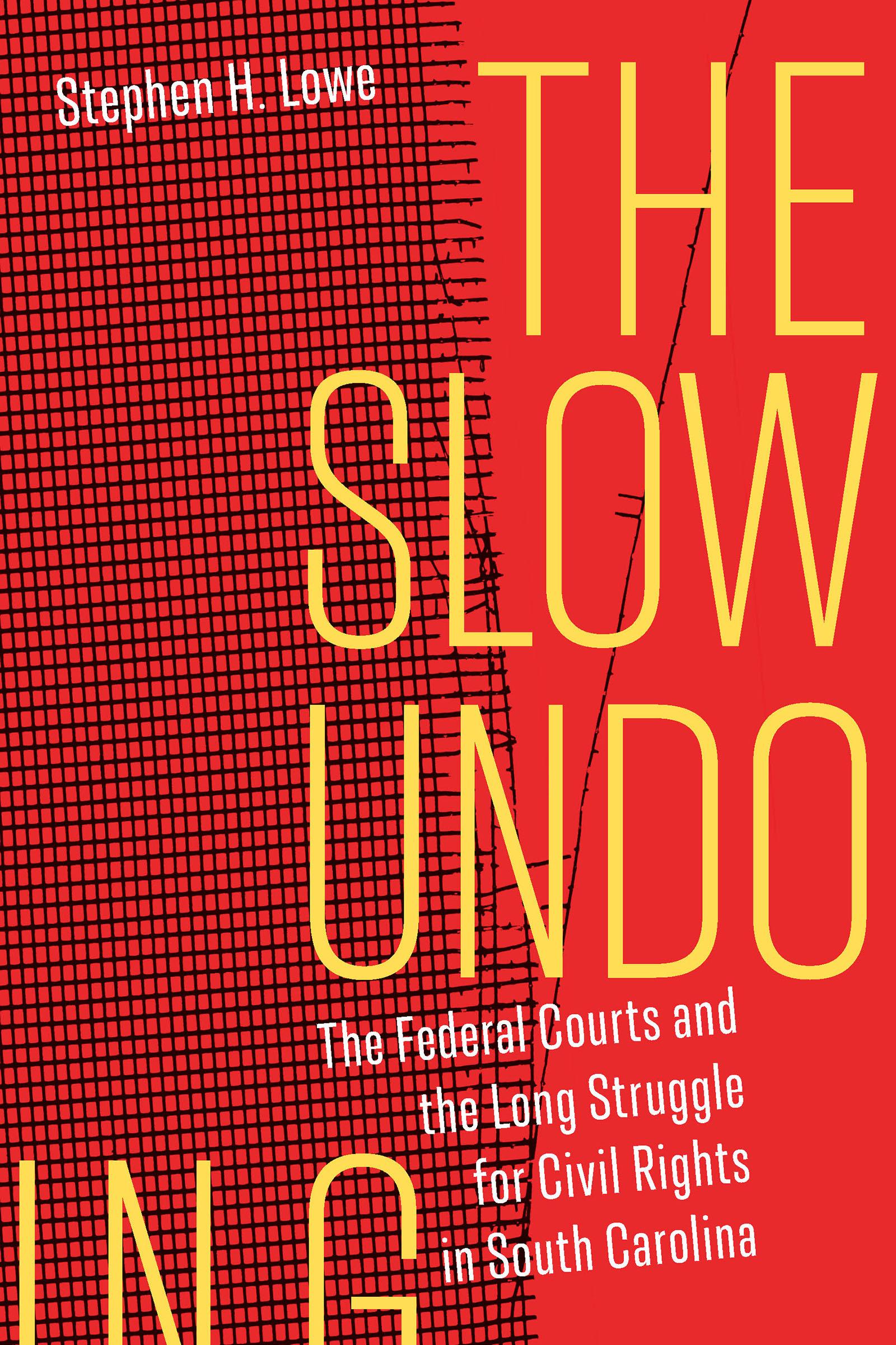
A study of how South Carolina's federal district courts were central to achieving and solidifying gains during the civil rights movement
As the first comprehensive study of one state's federal district courts during the long civil rights movement, The Slow Undoing argues for a reconsideration of the role of the federal courts in the civil rights movement. It places the courts as a central battleground at the intersections of struggles over race, law, and civil rights. During the long civil rights movement, Black and White South Carolinians used the courts as a venue to contest the meanings of the constitution, justice, equality, and citizenship.
African American plaintiffs and lawyers from South Carolina, with the support of Thurgood Marshall and other lawyers from the NAACP Legal Defense and Education Fund, brought and argued civil rights lawsuits in South Carolina's federal courts attempting to secure the vote, raise teacher salaries, and to equalize and then desegregate schools, parks, and public life. In response, white citizens, state politicians, and local officials, hired their own lawyers who countered these arguments by crafting new legal theories in an attempt to defend state practices and thwart African American aspirations of equality and to preserve white supremacy.
The Slow Undoing argues for a reconsideration of the role of federal courts in the civil rights movement by demonstrating that both before and after Brown v. Board of Education, the federal district courts were centrally important to achieving and solidifying civil rights gains. It relies on the entire legal record of actions in the federal district courts of South Carolina from 1940 to 1970 to make the case. It argues that rather than relying on litigation during the pre-Brown era and direct action in the post-Brown era, African Americans instead used courts and direct action in tandem to bring down legal segregation throughout the long civil rights era. But the process was far from linear and the courts were not always a progressive force. The battles were long, the victories won were often imperfect, and many of the fights remain. Author Stephen H. Lowe offers a chronicle of this enduring struggle.
Before Memmo my notes were scattered across PDFs. Now a workspace pulls everything into one place — I see exactly what's still left to study.
Memmo's summaries are gold before exams. I don't have to re-read 800 pages two weeks before — just the important parts.
The AI chat has saved me the night before an exam more than once. I just keep asking until I get it — no waiting on a study group to reply.
The quizzes hit exactly what I need to know. Memmo tracks what I get stuck on — so I only practice what's worth it.
Flashcards with spaced repetition are magic. Memmo knows when I'm about to forget something and brings it back.
The AI podcasts are my favorite. I listen on my way to school and get a recap without sitting at a computer.

Handbok i kvalitativa metoder
281 kr

Hållbar utveckling: en introduktion för ingenjörer och andra problemlösare
334 kr

Brymans Samhällsvetenskapliga metoder
390 kr

Projektledning
491 kr

Den orättvisa hälsan: om socioekonomiska skillnader i hälsa och livslängd
326 kr

Vetenskapsteori för nybörjare
196 kr

Organizational Leadership
429 kr

På väg mot läraryrket
172 kr

Det sociala livet i skolan: Socialpsykologiska perspektiv
253 kr

Betygsättningens didaktik
151 kr

Personality
402 kr

Studying Leadership
404 kr

Managing Innovation
477 kr

Introduktion till samhällsvetenskaplig metod
347 kr

The Psychology of Sex and Gender
698 kr

Evidens och kunskap för socialt arbete
207 kr

Introduction to Leadership
605 kr