
Before Memmo my notes were scattered across PDFs. Now a workspace pulls everything into one place — I see exactly what's still left to study.
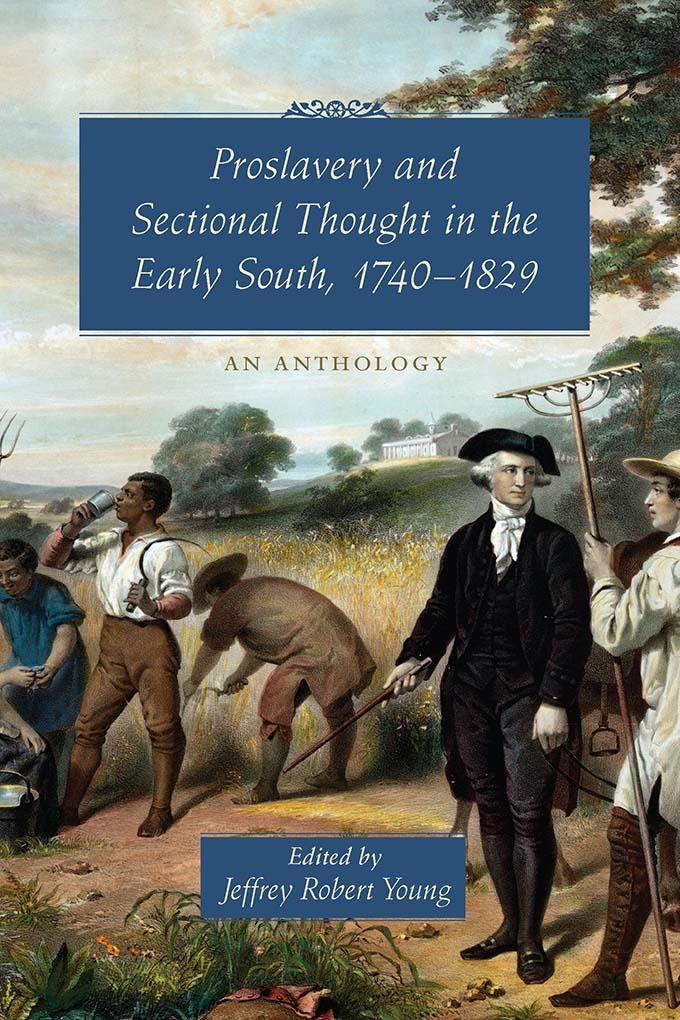
Thirteen treatises recall the history of slavery's defenders beginning in the colonial South
In Proslavery and Sectional Thought in the Early South, 1740–1829, Jeffrey Robert Young has assembled thirteen texts that reveal the development of proslavery perspectives across the colonial and early national South, from Maryland to Georgia. The tracts, lectures, sermons, and petitions in this volume demonstrate that defenses of human bondage had a history in southern thought that long predated the later antebellum era traditionally associated with the genesis of such positive defenses of slavery. Previous anthologies, notably Drew Gilpin Faust's The Ideology of Slavery, have made the perspectives of antebellum slavery's defenders widely available to scholars and students, but earlier proslavery thinkers have remained largely inaccessible to modern readers. Young's anthology offers a corrective.
In his introduction to the volume, Young explores the relationship between proslavery thought, Christianity, racism, and sectionalism. He emphasizes the ways in which justifications for slavery were introduced into the American South by reformers who hoped to integrate the region into a transatlantic religious community. These early proponents of slavery tended to minimize racial distinctions between master and slave, and they hoped to minimize the cultural distance between southern plantations and English society.
Only in the early nineteenth century—with the rise of an increasingly influential abolition movement—did proslavery thinkers begin to justify their beliefs with approaches that underscored differences between North and South. Even then the theorists included in this anthology emphasized the extent to which southern slaveholders' claims to mastery were rooted in a Western moral tradition that reached back to antiquity.
Before Memmo my notes were scattered across PDFs. Now a workspace pulls everything into one place — I see exactly what's still left to study.
Memmo's summaries are gold before exams. I don't have to re-read 800 pages two weeks before — just the important parts.
The AI chat has saved me the night before an exam more than once. I just keep asking until I get it — no waiting on a study group to reply.
The quizzes hit exactly what I need to know. Memmo tracks what I get stuck on — so I only practice what's worth it.
Flashcards with spaced repetition are magic. Memmo knows when I'm about to forget something and brings it back.
The AI podcasts are my favorite. I listen on my way to school and get a recap without sitting at a computer.

Handbok i kvalitativa metoder
281 kr

Hållbar utveckling: en introduktion för ingenjörer och andra problemlösare
334 kr

Brymans Samhällsvetenskapliga metoder
390 kr

Projektledning
491 kr

Den orättvisa hälsan: om socioekonomiska skillnader i hälsa och livslängd
326 kr

Vetenskapsteori för nybörjare
196 kr

Organizational Leadership
429 kr

På väg mot läraryrket
172 kr

Det sociala livet i skolan: Socialpsykologiska perspektiv
253 kr

Betygsättningens didaktik
151 kr

Personality
402 kr

Studying Leadership
404 kr

Managing Innovation
477 kr

Introduktion till samhällsvetenskaplig metod
347 kr

The Psychology of Sex and Gender
698 kr

Evidens och kunskap för socialt arbete
207 kr

Introduction to Leadership
605 kr