
Before Memmo my notes were scattered across PDFs. Now a workspace pulls everything into one place — I see exactly what's still left to study.
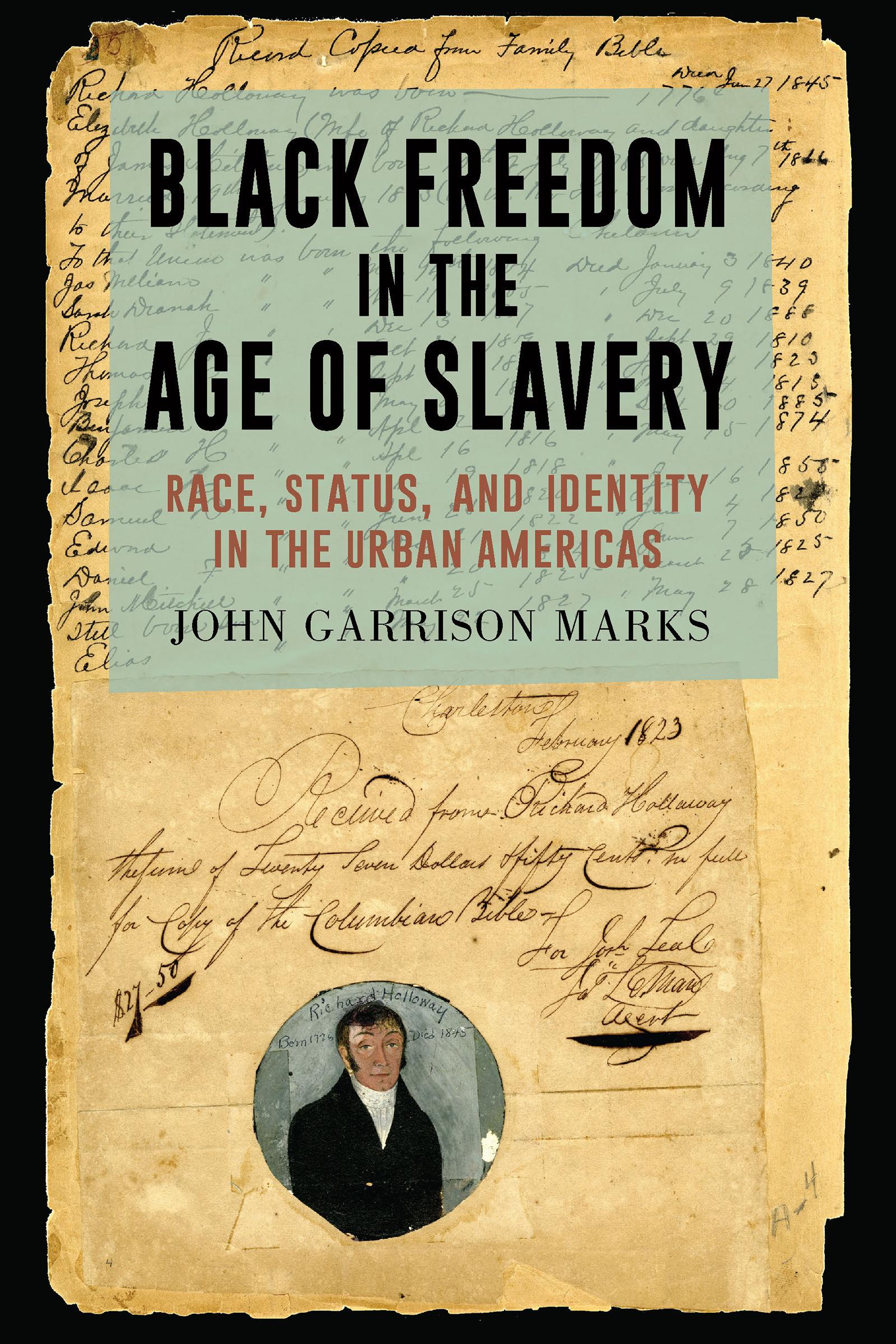
Prior to the abolition of slavery, thousands of African-descended people in the Americas lived in freedom. Their efforts to navigate daily life and negotiate the boundaries of racial difference challenged the foundations of white authority—and linked the Americas together.
In Black Freedom in the Age of Slavery John Garrison Marks examines how these individuals built lives in freedom for themselves and their families in two of the Atlantic World's most important urban centers: Cartagena, along the Caribbean coast of modern-day Colombia, and Charleston, in the lowcountry of North America's Atlantic coast. Marks reveals how skills, knowledge, reputation, and personal relationships helped free people of color improve their fortunes and achieve social distinction in ways that undermined whites' claims to racial superiority.
Built upon research conducted on three continents, this book takes a comparative approach to understanding the contours of black freedom in the Americas. It reveals in new detail the creative and persistent attempts of free black people to improve their lives and that of their families. It examines how various paths to freedom, responses to the Haitian Revolution, opportunities to engage in skilled labor, involvement with social institutions, and the role of the church all helped shape the lived experience of free people of color in the Atlantic World.
As free people of color worked to improve their individual circumstances, staking claims to rights, privileges, and distinctions not typically afforded to those of African descent, they engaged with white elites and state authorities in ways that challenged prevailing racial attitudes. While whites across the Americas shared common doubts about the ability of African-descended people to survive in freedom or contribute meaningfully to society, free black people in Cartagena, Charleston, and beyond conducted themselves in ways that exposed cracks in the foundations of American racial hierarchies. Their actions represented early contributions to the long fight for recognition, civil rights, and racial justice that continues today.
Before Memmo my notes were scattered across PDFs. Now a workspace pulls everything into one place — I see exactly what's still left to study.
Memmo's summaries are gold before exams. I don't have to re-read 800 pages two weeks before — just the important parts.
The AI chat has saved me the night before an exam more than once. I just keep asking until I get it — no waiting on a study group to reply.
The quizzes hit exactly what I need to know. Memmo tracks what I get stuck on — so I only practice what's worth it.
Flashcards with spaced repetition are magic. Memmo knows when I'm about to forget something and brings it back.
The AI podcasts are my favorite. I listen on my way to school and get a recap without sitting at a computer.

Handbok i kvalitativa metoder
281 kr

Hållbar utveckling: en introduktion för ingenjörer och andra problemlösare
334 kr

Brymans Samhällsvetenskapliga metoder
390 kr

Projektledning
491 kr

Den orättvisa hälsan: om socioekonomiska skillnader i hälsa och livslängd
326 kr

Vetenskapsteori för nybörjare
196 kr

Organizational Leadership
429 kr

På väg mot läraryrket
172 kr

Det sociala livet i skolan: Socialpsykologiska perspektiv
253 kr

Betygsättningens didaktik
151 kr

Personality
402 kr

Studying Leadership
404 kr

Managing Innovation
477 kr

Introduktion till samhällsvetenskaplig metod
347 kr

The Psychology of Sex and Gender
698 kr

Evidens och kunskap för socialt arbete
207 kr

Introduction to Leadership
605 kr