
Before Memmo my notes were scattered across PDFs. Now a workspace pulls everything into one place — I see exactly what's still left to study.
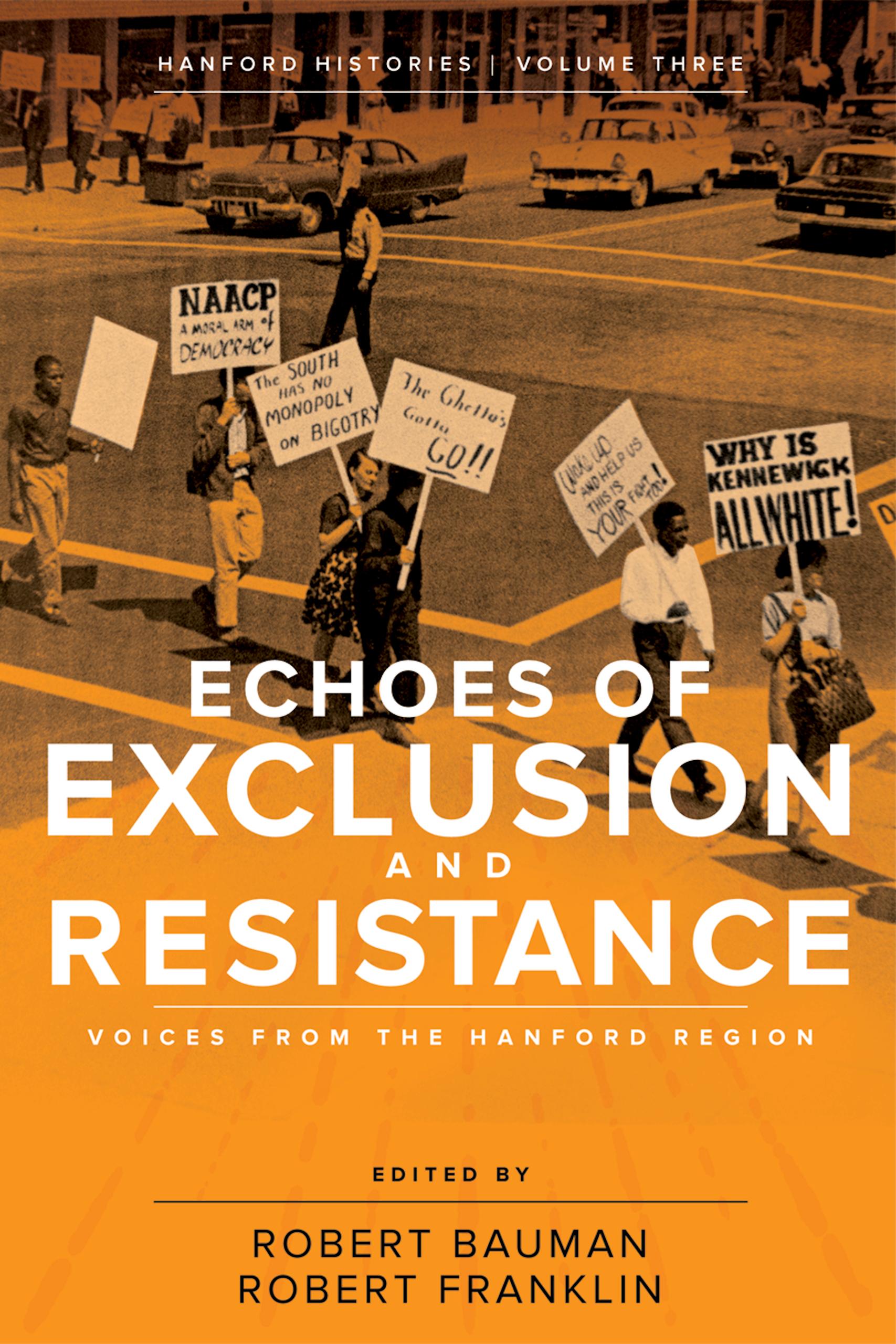
Like the rest of the American West, the mid-Columbia region has always been diverse. Its history mirrors common multiracial narratives, but with important nuances. In the late 1880s, Chinese railroad workers were segregated to East Pasco, a practice that later extended to all non-whites and continued for decades. Kennewick residents became openly proud of their status as a “lily-white” town.
In Echoes of Exclusion and Resistance, the third Hanford Histories volume, four scholars--Laura Arata, Robert Bauman, Robert Franklin, and Thomas E. Marceau--draw from Hanford History Project, Atomic Heritage Foundation, and Afro-American Community Cultural and Educational Society oral histories to focus on the experiences of non-white groups whose lives were deeply impacted by the Hanford Site. Linked in ways they likely could not know, each group resisted the segregation and discrimination they encountered, and in the process, challenged the region’s dominant racial norms.
The Wanapum, evicted by Hanford Nuclear Reservation construction, relate stories of their people, as well as their responses to dislocation and forced evacuation. Unable to interact with the ancient landscapes and utilize the natural resources of their traditional lands, they suffered painful, irretrievable losses. Early arrivals to the town of Pasco, the Yamauchi family built the American dream--including successful businesses and highly educated children--only to have their aspirations crushed by World War II Japanese-American internment. Thousands of African Americans migrated to the area for wartime jobs and discovered rampant segregation. Through negotiations, demonstrations, and protests, they fought the region’s ingrained racial disparity. During the early years of the Cold War, Black women, mostly from East Texas, also relocated to work at Hanford. They offer a unique perspective on employment, discrimination, family, and faith.
Before Memmo my notes were scattered across PDFs. Now a workspace pulls everything into one place — I see exactly what's still left to study.
Memmo's summaries are gold before exams. I don't have to re-read 800 pages two weeks before — just the important parts.
The AI chat has saved me the night before an exam more than once. I just keep asking until I get it — no waiting on a study group to reply.
The quizzes hit exactly what I need to know. Memmo tracks what I get stuck on — so I only practice what's worth it.
Flashcards with spaced repetition are magic. Memmo knows when I'm about to forget something and brings it back.
The AI podcasts are my favorite. I listen on my way to school and get a recap without sitting at a computer.

Handbok i kvalitativa metoder
281 kr

Hållbar utveckling: en introduktion för ingenjörer och andra problemlösare
334 kr

Brymans Samhällsvetenskapliga metoder
390 kr

Projektledning
491 kr

Den orättvisa hälsan: om socioekonomiska skillnader i hälsa och livslängd
326 kr

Vetenskapsteori för nybörjare
196 kr

Organizational Leadership
429 kr

På väg mot läraryrket
172 kr

Det sociala livet i skolan: Socialpsykologiska perspektiv
253 kr

Betygsättningens didaktik
151 kr

Personality
402 kr

Studying Leadership
404 kr

Managing Innovation
477 kr

Introduktion till samhällsvetenskaplig metod
347 kr

The Psychology of Sex and Gender
698 kr

Evidens och kunskap för socialt arbete
207 kr

Introduction to Leadership
605 kr