
Before Memmo my notes were scattered across PDFs. Now a workspace pulls everything into one place — I see exactly what's still left to study.
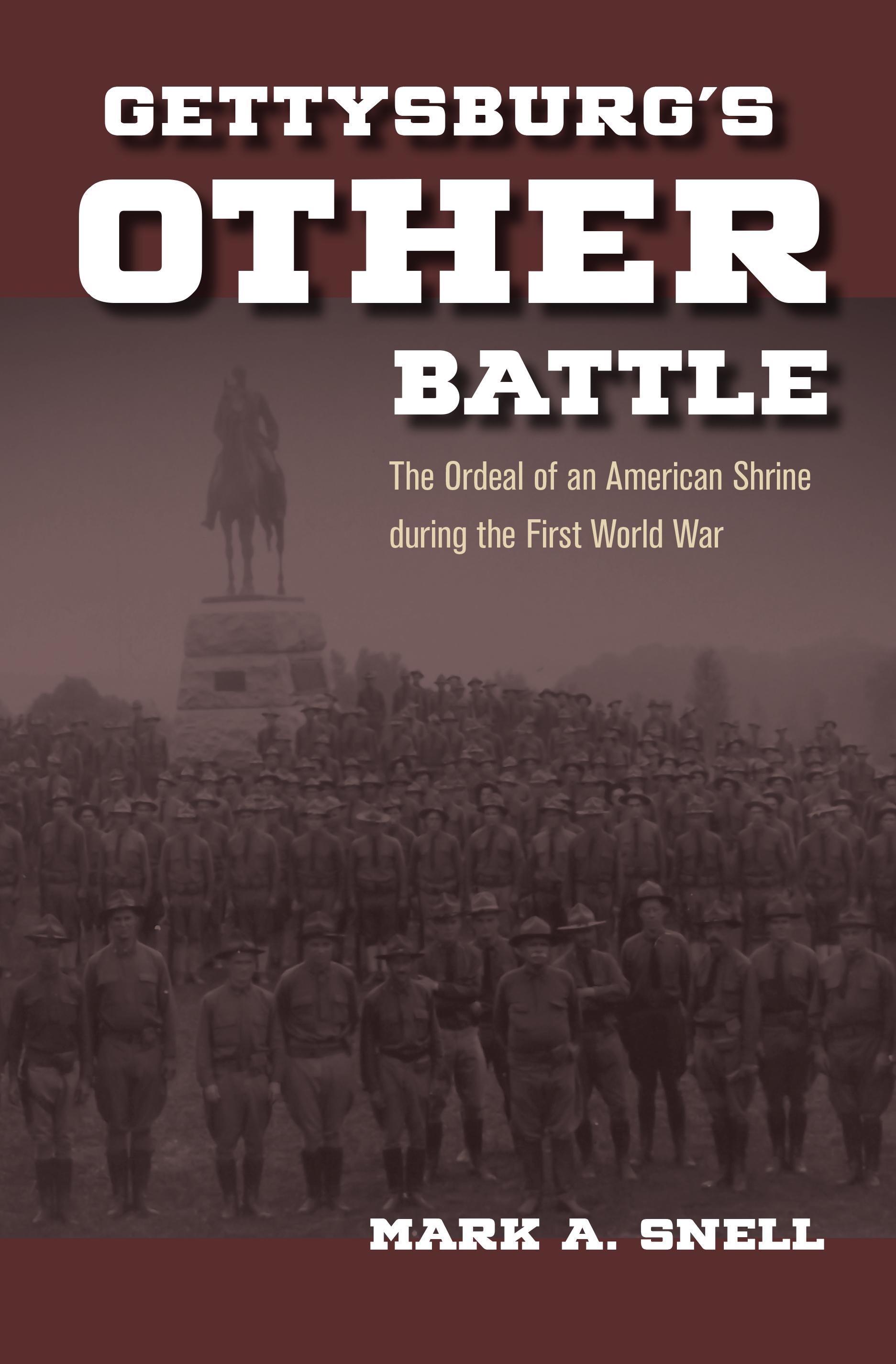
Gettysburg is known as the second bloodiest battle of the 19th century and as the site of Abraham Lincoln’s 1863 speech that gave new meaning to America’s Civil War. By the turn of the next century, the battlefield was enshrined as a national park under the jurisdiction of the War Department. In 1913, graying veterans commemorated the fiftieth anniversary of the momentous battle, dubbed the “Peace Jubilee,” a unity celebration largely administered by the U.S. Army. Four years later, the Army returned to establish a Regular Army infantry-training cantonment on the battlefield. The Tank Corps took over in 1918, and the area was dubbed “Camp Colt.”
Gettysburg’s Other Battle is the account of Gettysburg’s citizens and its tens of thousands of temporary guests during the Great War, a drama that took place on the most significant stage in American historical memory. It goes beyond the story of the training camps by using the Great War as a window-in-time to examine a unique community, one in the throes of modernization while at the same time trying to capitalize on, yet preserve a part of, the nation’s past.
Gettysburg’s residents, like all Americans during World War I, experienced measures such as conscription, food conservation, and censorship. As the nation applied Progressive reforms to the war effort, Gettysburg followed suit. Unlike other American towns and cities that hosted mobilization camps, Gettysburg was hallowed ground, and an earlier generation already had felt the ravages of war like few other American communities. Gettysburg was desecrated both unwittingly and intentionally—it took years for the national park to recover from this environmental catastrophe. Today, the only reminders of Gettysburg’s Great War heritage are a tiny marker, memorial tree, and wayside exhibit to commemorate Camp Colt, along with a small exhibit in the museum. Had Ike Eisenhower not commanded that camp in 1918, it doubtless would not be remembered at all.
Before Memmo my notes were scattered across PDFs. Now a workspace pulls everything into one place — I see exactly what's still left to study.
Memmo's summaries are gold before exams. I don't have to re-read 800 pages two weeks before — just the important parts.
The AI chat has saved me the night before an exam more than once. I just keep asking until I get it — no waiting on a study group to reply.
The quizzes hit exactly what I need to know. Memmo tracks what I get stuck on — so I only practice what's worth it.
Flashcards with spaced repetition are magic. Memmo knows when I'm about to forget something and brings it back.
The AI podcasts are my favorite. I listen on my way to school and get a recap without sitting at a computer.

Handbok i kvalitativa metoder
281 kr

Hållbar utveckling: en introduktion för ingenjörer och andra problemlösare
334 kr

Brymans Samhällsvetenskapliga metoder
390 kr

Projektledning
491 kr

Den orättvisa hälsan: om socioekonomiska skillnader i hälsa och livslängd
326 kr

Vetenskapsteori för nybörjare
196 kr

Organizational Leadership
429 kr

På väg mot läraryrket
172 kr

Det sociala livet i skolan: Socialpsykologiska perspektiv
253 kr

Betygsättningens didaktik
151 kr

Personality
402 kr

Studying Leadership
404 kr

Managing Innovation
477 kr

Introduktion till samhällsvetenskaplig metod
347 kr

The Psychology of Sex and Gender
698 kr

Evidens och kunskap för socialt arbete
207 kr

Introduction to Leadership
605 kr