
Before Memmo my notes were scattered across PDFs. Now a workspace pulls everything into one place — I see exactly what's still left to study.
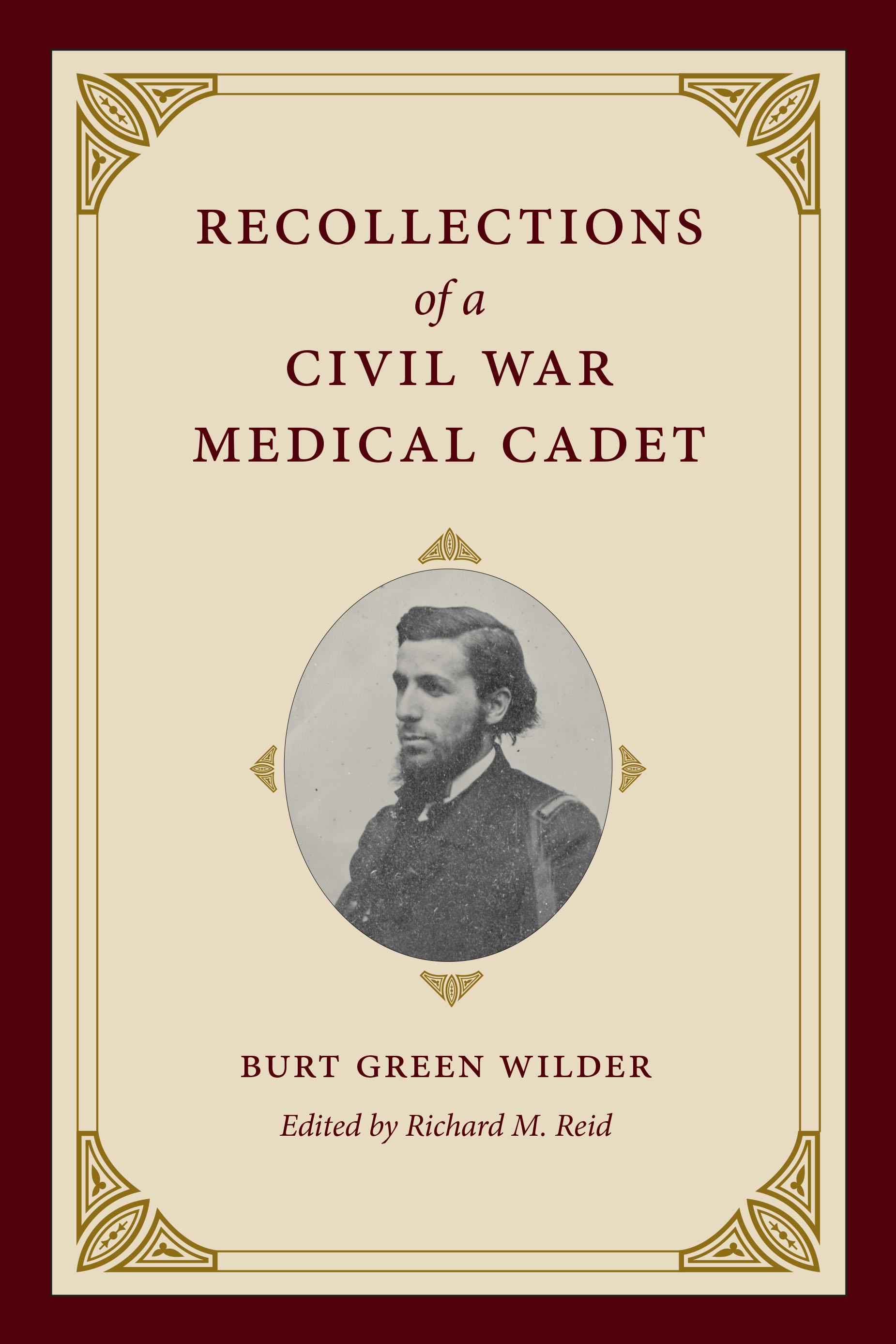
In July 1862, Burt Green Wilder left Boston to join Dr. Francis Brown, a surgeon working at Judiciary Square Hospital, one of the new army pavilion hospitals in Washington, D.C. Wilder had just finished his degree in comparative anatomy at Harvard, and the chance to assist Brown rather than serve as a soldier in the army was appealing. For the next ten months Wilder worked in the hospital’s wards as a medical cadet. Although he lacked formal medical training, he had aptitude, ability, and an advanced knowledge of anatomy. These qualities were increasingly valued in a medical department being reformed by the new surgeon general, William Hammond, who demanded a more scientific approach to medical care and to the creation and dissemination of medical knowledge. Forty-five years after the war ended Wilder began to draft his recollections of an era that had transformed him personally and radically altered American medicine.
Richard M. Reid’s introduction captures the ways the war dramatically reconfigured the American medical landscape. Prior to the war, the medical community was badly fragmented, and elite physicians felt undervalued by the American public. The war offered them the chance to assert their professional control and to make medicine more scientific and evidence-based. The introduction also includes an extensive historiographical analysis of Civil War medicine and situates Wilder’s recollections in the changing direction of the field.
Wilder’s manuscript, largely finished but never published, is written with humor and grace and provides a revealing eyewitness account of Civil War relief services and hospital work. The army hospitals, dramatically different from the prewar institutions, became centers of medical innovation and analytical record keeping. Even medical cadets such as Wilder conducted postmortems and were encouraged to submit specimens of combat-related injuries to Hammond’s newly created Army Medical Museum. His discussions of the day-to-day practice in the hospital, the war’s expansion of medical knowledge, the duties of medical cadets, scientific activity, and gender relations are particularly compelling.
Recollections of a Civil War Medical Cadet provides an important source to understand wartime medicine, the impact of the conflict on American medicine in the nineteenth century, and the little discussed role of the medical cadet in the army medical system.
Before Memmo my notes were scattered across PDFs. Now a workspace pulls everything into one place — I see exactly what's still left to study.
Memmo's summaries are gold before exams. I don't have to re-read 800 pages two weeks before — just the important parts.
The AI chat has saved me the night before an exam more than once. I just keep asking until I get it — no waiting on a study group to reply.
The quizzes hit exactly what I need to know. Memmo tracks what I get stuck on — so I only practice what's worth it.
Flashcards with spaced repetition are magic. Memmo knows when I'm about to forget something and brings it back.
The AI podcasts are my favorite. I listen on my way to school and get a recap without sitting at a computer.

Handbok i kvalitativa metoder
281 kr

Hållbar utveckling: en introduktion för ingenjörer och andra problemlösare
334 kr

Brymans Samhällsvetenskapliga metoder
390 kr

Projektledning
491 kr

Den orättvisa hälsan: om socioekonomiska skillnader i hälsa och livslängd
326 kr

Vetenskapsteori för nybörjare
196 kr

Organizational Leadership
429 kr

På väg mot läraryrket
172 kr

Det sociala livet i skolan: Socialpsykologiska perspektiv
253 kr

Betygsättningens didaktik
151 kr

Personality
402 kr

Studying Leadership
404 kr

Managing Innovation
477 kr

Introduktion till samhällsvetenskaplig metod
347 kr

The Psychology of Sex and Gender
698 kr

Evidens och kunskap för socialt arbete
207 kr

Introduction to Leadership
605 kr