
Before Memmo my notes were scattered across PDFs. Now a workspace pulls everything into one place — I see exactly what's still left to study.
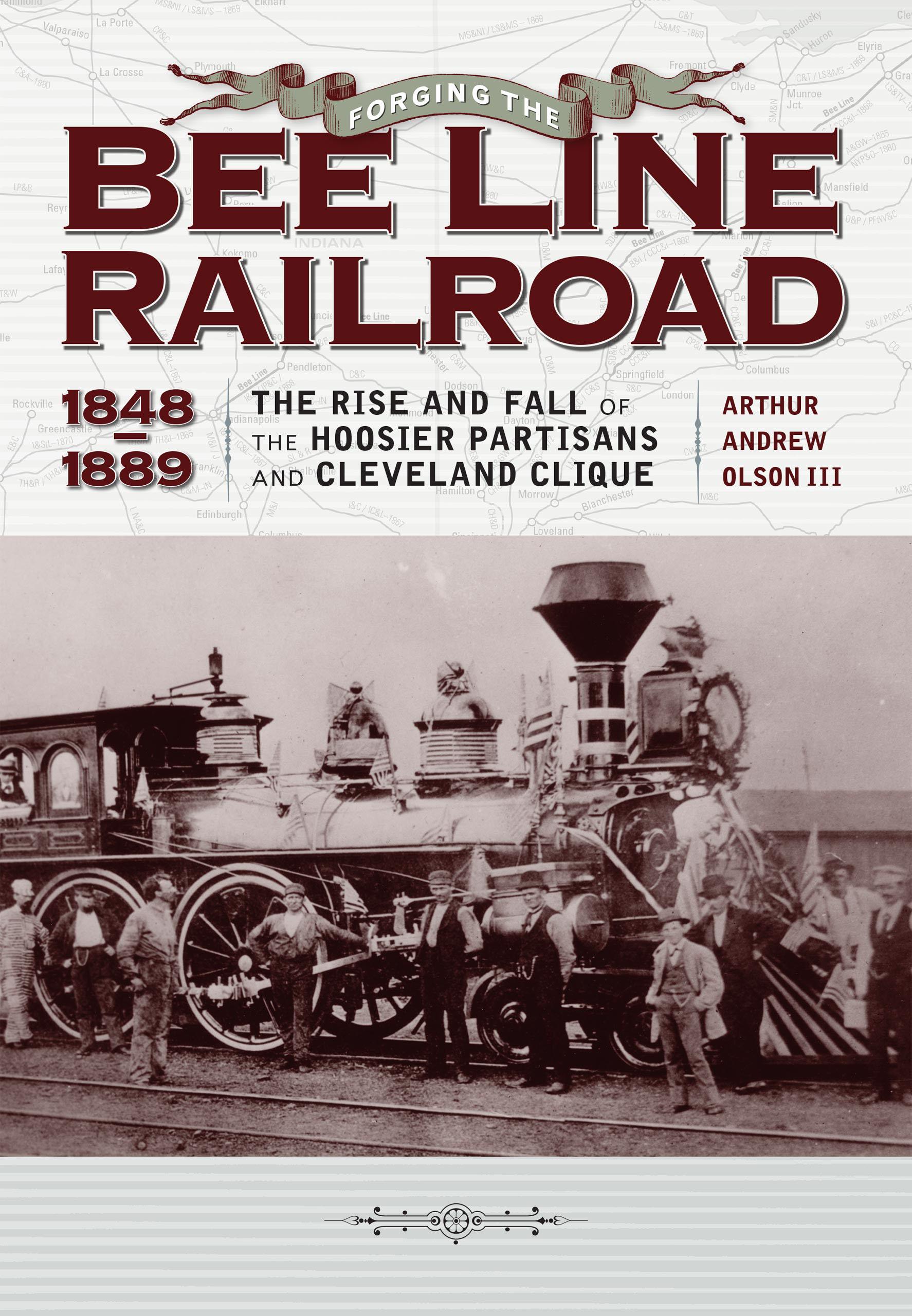
In the 1830s, as the Trans Appalachian economy began to stir and Europe's Industrial Revolution reached its peak, concerned Midwesterners saw opportunities and risks. Success of the Erie Canal as a link to East Coast economic markets whetted the appetites of visionaries and entrepreneurs, who saw huge opportunities. Amid this perfect storm of technology, enterprise, finance, location, and timing arose some of the earliest railroads in the Midwest.
By the late 1840s three such vision-driven railroad ventures had sprung to life. Two small railroads carrying goods to Midwestern markets - the Indianapolis & Bellefontaine in Indiana and the Bellefontaine & Indiana in Ohio - spawned early enthusiasm, but few citizens would look beyond the horizon. It was the admonition of Oliver H. Smith, founder of the Indiana line, who challenged the populace to look farther: "to decide whether the immense travel and business of the west should pass round or go through central Indiana."
Soon, the two local lines would crystallize in the minds of people as the "Bee Line." In Cleveland, meanwhile, a clique of committed businessmen, bankers, and politicians came together to finance the most prosperous of all early Midwestern railroads, extending from Cleveland to Columbus. Their aspirations expanded to control the larger Midwestern market from Cleveland to St. Louis. First by loans and then by bond purchases, they quickly took over the "Bee Line."
Hoosier partisans' independence, however, could not be easily brushed aside. Time and again they would frustrate the attempts of the Cleveland clique, exercising a degree of autonomy inconsistent with their dependent financial underpinnings. Ultimately, they acquiesced to the reality of their situation. After the Civil War, even the group from Cleveland fell victim to unscrupulous foreign and national financiers and manipulators who had taken their places on the boards of larger trunk lines expanding throughout the Midwest.
Exhaustively researched and meticulously documented, Forging the "Bee Line" Railroad, 1848-1889 is the first comprehensive scholarly work on this most important of early Midwestern railroads.
Before Memmo my notes were scattered across PDFs. Now a workspace pulls everything into one place — I see exactly what's still left to study.
Memmo's summaries are gold before exams. I don't have to re-read 800 pages two weeks before — just the important parts.
The AI chat has saved me the night before an exam more than once. I just keep asking until I get it — no waiting on a study group to reply.
The quizzes hit exactly what I need to know. Memmo tracks what I get stuck on — so I only practice what's worth it.
Flashcards with spaced repetition are magic. Memmo knows when I'm about to forget something and brings it back.
The AI podcasts are my favorite. I listen on my way to school and get a recap without sitting at a computer.

Handbok i kvalitativa metoder
281 kr

Hållbar utveckling: en introduktion för ingenjörer och andra problemlösare
334 kr

Brymans Samhällsvetenskapliga metoder
390 kr

Projektledning
491 kr

Den orättvisa hälsan: om socioekonomiska skillnader i hälsa och livslängd
326 kr

Vetenskapsteori för nybörjare
196 kr

Organizational Leadership
429 kr

På väg mot läraryrket
172 kr

Det sociala livet i skolan: Socialpsykologiska perspektiv
253 kr

Betygsättningens didaktik
151 kr

Personality
402 kr

Studying Leadership
404 kr

Managing Innovation
477 kr

Introduktion till samhällsvetenskaplig metod
347 kr

The Psychology of Sex and Gender
698 kr

Evidens och kunskap för socialt arbete
207 kr

Introduction to Leadership
605 kr