
Before Memmo my notes were scattered across PDFs. Now a workspace pulls everything into one place — I see exactly what's still left to study.
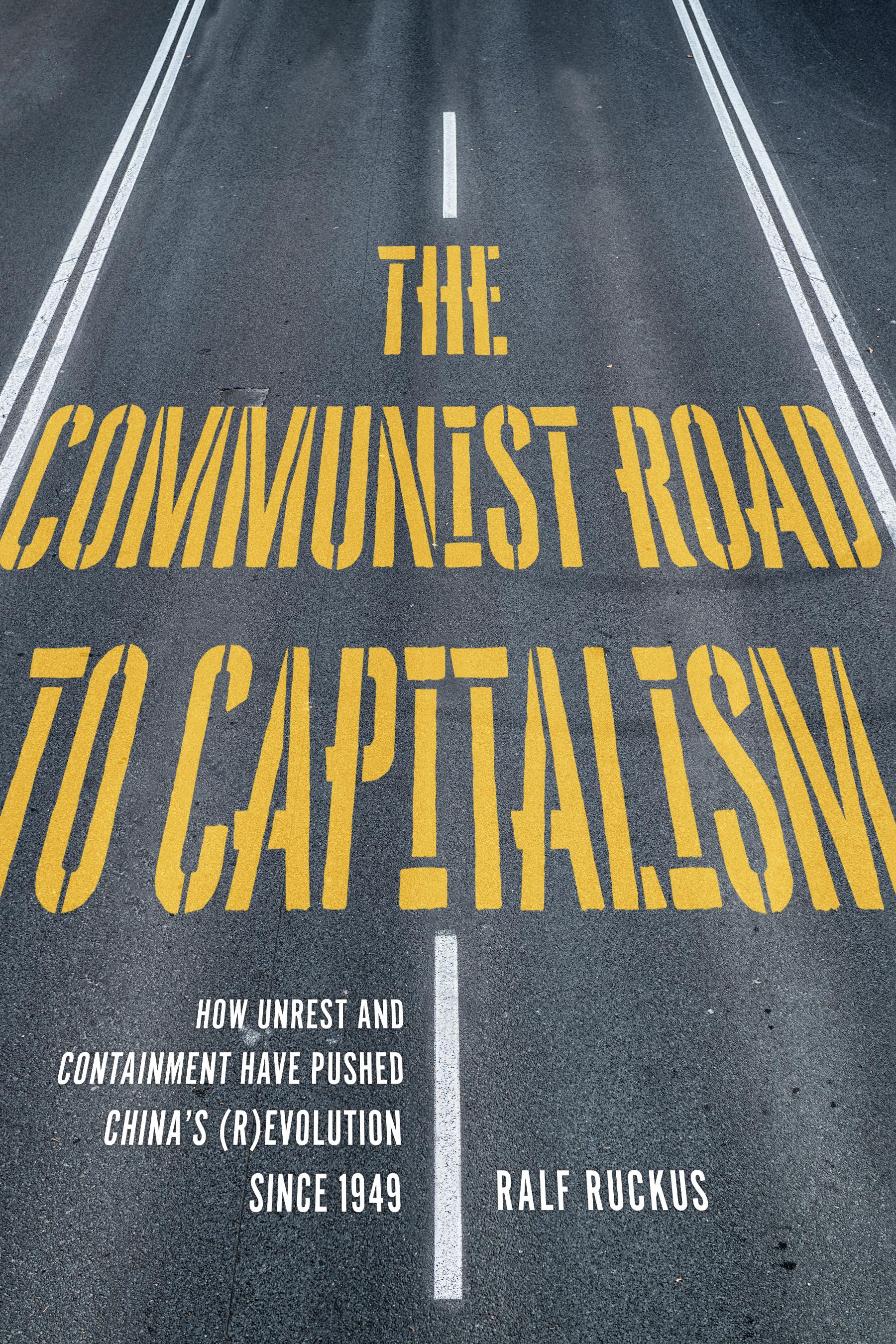
The Communist Road to Capitalism explores how a dynamic of social struggles from below followed by countermeasures of the Chinese Communist Party (CCP) regime has pushed the historical evolution of the People’s Republic of China (PRC) since 1949.
Under socialism until the mid-1970s, during the ensuing transition until the mid-1990s, and in the capitalist period since, the CCP regime responded to the struggles of workers, peasants, migrants, and women* with a mix of repression, concession, cooptation, and reform. Ralf Ruckus shows that this dynamic took the country into a new phase each time—and eventually all the way from socialism to capitalism: in the 1950s, labor struggles and the Hundred Flowers Movement were followed by the regime’s Great Leap Forward; in the 1960s, the Cultural Revolution led to the CCP’s failed attempt to revitalize socialism; in the 1970s, social unrest and movements for a democratic socialism made room for the regime’s Reform and Opening policies; in the late 1980s, the Tian’anmen Square uprising triggered more radical reforms; in the 1990s, peasant and state worker unrest could not stop the capitalist restructuring; and in the 2000s, migrant worker struggles led to concessions, tightened repression, and the regime’s global capitalist expansion strategy in the 2010s.
The Communist Road to Capitalism breaks with established orthodoxies about the PRC’s socialist “successes” and myths on its later rise as an economic power. It combines a historiography of workers’, peasants’, migrants’, and women*’s struggles with a searing critique of exploitation, authoritarian state power and gender discrimination under socialism and capitalism. Drawing lessons from PRC history, Ralf Ruckus finally outlines political aims and methods for the left that avoid past mistakes and allow to fight on for a society free of all forms of exploitation and oppression.
Before Memmo my notes were scattered across PDFs. Now a workspace pulls everything into one place — I see exactly what's still left to study.
Memmo's summaries are gold before exams. I don't have to re-read 800 pages two weeks before — just the important parts.
The AI chat has saved me the night before an exam more than once. I just keep asking until I get it — no waiting on a study group to reply.
The quizzes hit exactly what I need to know. Memmo tracks what I get stuck on — so I only practice what's worth it.
Flashcards with spaced repetition are magic. Memmo knows when I'm about to forget something and brings it back.
The AI podcasts are my favorite. I listen on my way to school and get a recap without sitting at a computer.

Handbok i kvalitativa metoder
281 kr

Hållbar utveckling: en introduktion för ingenjörer och andra problemlösare
334 kr

Brymans Samhällsvetenskapliga metoder
390 kr

Projektledning
491 kr

Den orättvisa hälsan: om socioekonomiska skillnader i hälsa och livslängd
326 kr

Vetenskapsteori för nybörjare
196 kr

Organizational Leadership
429 kr

På väg mot läraryrket
172 kr

Det sociala livet i skolan: Socialpsykologiska perspektiv
253 kr

Betygsättningens didaktik
151 kr

Personality
402 kr

Studying Leadership
404 kr

Managing Innovation
477 kr

Introduktion till samhällsvetenskaplig metod
347 kr

The Psychology of Sex and Gender
698 kr

Evidens och kunskap för socialt arbete
207 kr

Introduction to Leadership
605 kr