
Before Memmo my notes were scattered across PDFs. Now a workspace pulls everything into one place — I see exactly what's still left to study.
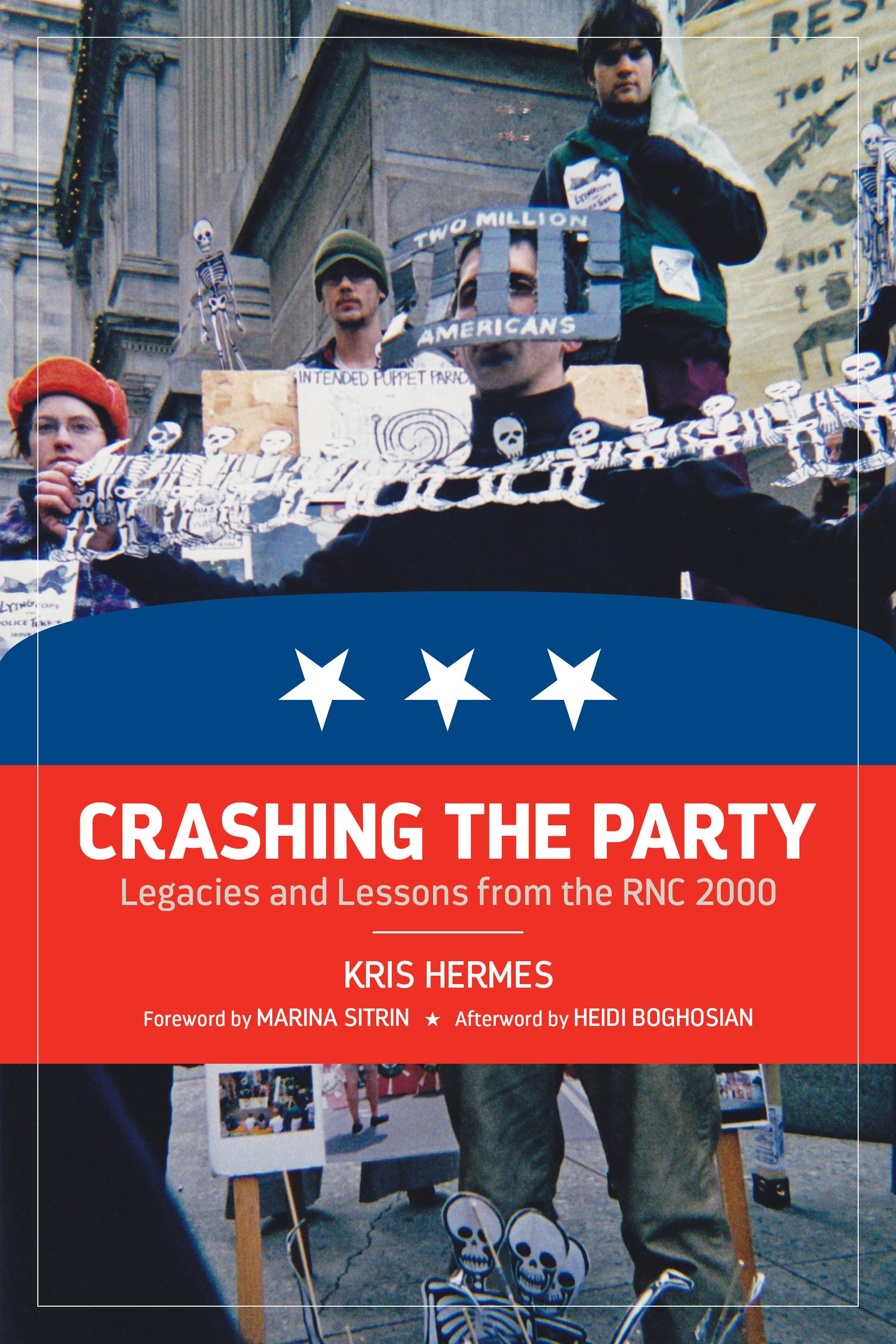
Over the past fifteen years, people in the United States—and dissidents in particular—have witnessed a steady escalation of the National Security State, including invasive surveillance and infiltration, indiscriminate police violence, and unlawful arrests. These concerted efforts to spy on Americans and undermine meaningful social change are greatly enhanced by the coordination of numerous local, state, and federal agencies often operating at the behest of private corporations. Normally associated with the realities of a post-9/11 world, Crashing the Party shows how these developments were already being set in motion during the Republican National Convention (RNC) protests in 2000. It also documents how, in response, dissidents confronted new forms of political repression by pushing legal boundaries and establishing new models of collective resistance.
Crashing the Party explains how the events of 2000 acted as a testing ground in which Philadelphia Police Commissioner John Timoney was able to develop repressive methods of policing that have been used extensively across the U.S. ever since. At the same time, these events also provided a laboratory for the radical, innovative, and confrontational forms of legal support carried out by R2K Legal, a defendant-led collective that raised unprecedented amounts of money for legal defense, used a unique form of court solidarity to overcome hundreds of serious charges, and implemented a PR campaign that turned the tide of public opinion in favor of dissidents. While much has been written about the global-justice era of struggle, little attention has been paid to the legal struggles of the period or the renewed use of solidarity tactics in jail and the courtroom that made them possible. By analyzing the successes and failures of these tactics, Crashing the Party offers rare insight into the mechanics and concrete effects of such resistance. In this way, it is an invaluable resource for those seeking to confront today’s renewed counterintelligence tactics.
Before Memmo my notes were scattered across PDFs. Now a workspace pulls everything into one place — I see exactly what's still left to study.
Memmo's summaries are gold before exams. I don't have to re-read 800 pages two weeks before — just the important parts.
The AI chat has saved me the night before an exam more than once. I just keep asking until I get it — no waiting on a study group to reply.
The quizzes hit exactly what I need to know. Memmo tracks what I get stuck on — so I only practice what's worth it.
Flashcards with spaced repetition are magic. Memmo knows when I'm about to forget something and brings it back.
The AI podcasts are my favorite. I listen on my way to school and get a recap without sitting at a computer.

Handbok i kvalitativa metoder
281 kr

Hållbar utveckling: en introduktion för ingenjörer och andra problemlösare
334 kr

Brymans Samhällsvetenskapliga metoder
390 kr

Projektledning
491 kr

Den orättvisa hälsan: om socioekonomiska skillnader i hälsa och livslängd
326 kr

Organizational Leadership
429 kr

Vetenskapsteori för nybörjare
196 kr

På väg mot läraryrket
172 kr

Det sociala livet i skolan: Socialpsykologiska perspektiv
253 kr

Betygsättningens didaktik
151 kr

Personality
402 kr

Studying Leadership
404 kr

Managing Innovation
477 kr

Introduktion till samhällsvetenskaplig metod
347 kr

The Psychology of Sex and Gender
698 kr

Evidens och kunskap för socialt arbete
207 kr

Introduction to Leadership
605 kr