
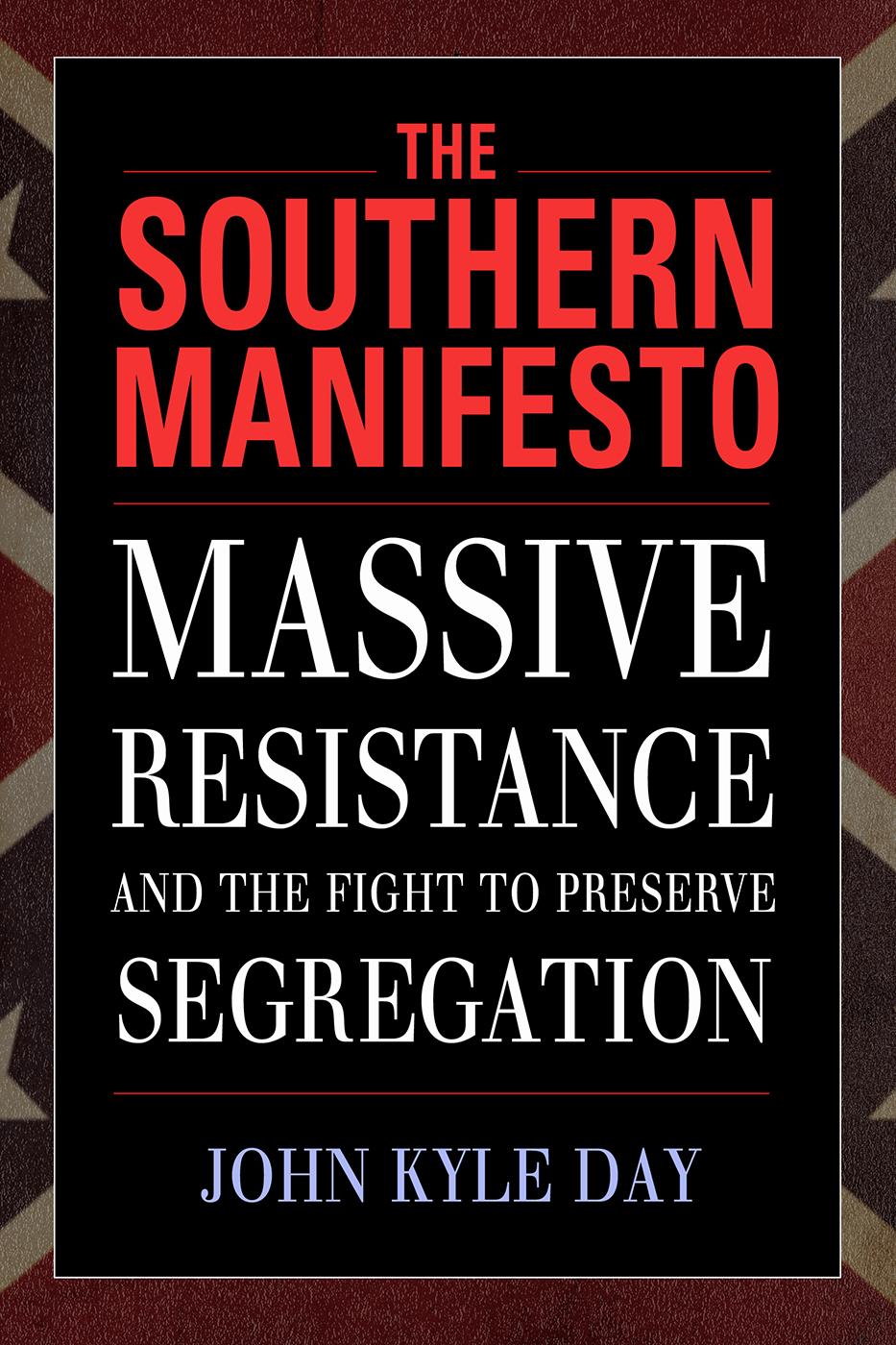
On March 13, 1956, ninety-nine members of the United States Congress promulgated the Declaration of Constitutional Principles, popularly known as the Southern Manifesto. Reprinted here, the Southern Manifesto formally stated opposition to the landmark United State Supreme Court decision Brown v. Board of Education, and the emergent civil rights movement. This statement allowed the white South to prevent Brown's immediate full-scale implementation and, for nearly two decades, set the slothful timetable and glacial pace of public school desegregation. The Southern Manifesto also provided the Southern Congressional Delegation with the means to stymie federal voting rights legislation, so that the dismantling of Jim Crow could be managed largely on white southern terms.
In the wake of the Brown decision that declared public school segregation unconstitutional, seminal events in the early stages of the civil rights movement--like the Emmett Till lynching, the Montgomery bus boycott, and the Autherine Lucy riots at the University of Alabama brought the struggle for black freedom to national attention. Orchestrated by United States Senator Richard Brevard Russell Jr. of Georgia, the Southern Congressional Delegation in general, and the United States Senate's Southern Caucus in particular, fought vigorously and successfully to counter the initial successes of civil rights workers and maintain Jim Crow. The South's defense of white supremacy culminated with this most notorious statement of opposition to desegregation. The Southern Manifesto: Massive Resistance and the Fight to Preserve Segregation narrates this single worst episode of racial demagoguery in modern American political history and considers the statement's impact upon both the struggle for black freedom and the larger racial dynamics of postwar America.
In the wake of the Brown decision that declared public school segregation unconstitutional, seminal events in the early stages of the civil rights movement--like the Emmett Till lynching, the Montgomery bus boycott, and the Autherine Lucy riots at the University of Alabama brought the struggle for black freedom to national attention. Orchestrated by United States Senator Richard Brevard Russell Jr. of Georgia, the Southern Congressional Delegation in general, and the United States Senate's Southern Caucus in particular, fought vigorously and successfully to counter the initial successes of civil rights workers and maintain Jim Crow. The South's defense of white supremacy culminated with this most notorious statement of opposition to desegregation. The Southern Manifesto: Massive Resistance and the Fight to Preserve Segregation narrates this single worst episode of racial demagoguery in modern American political history and considers the statement's impact upon both the struggle for black freedom and the larger racial dynamics of postwar America.
Pay easily by card, Klarna, Apple Pay or Google Pay. Not happy? You always have a 14-day money-back guarantee. Read more in our terms. If you have any questions, email us at hello@memmo.org.
Memmo makes studying easier – wherever you are in the world. We bring your course books and smart study tools together in one place: summaries, quizzes, podcasts and flashcards. Plus Ted, your study buddy who answers anything you wonder. Over 75,000 students already study here – built to help you learn faster and stress less.
You might also like
Buy the book0