
Before Memmo my notes were scattered across PDFs. Now a workspace pulls everything into one place — I see exactly what's still left to study.
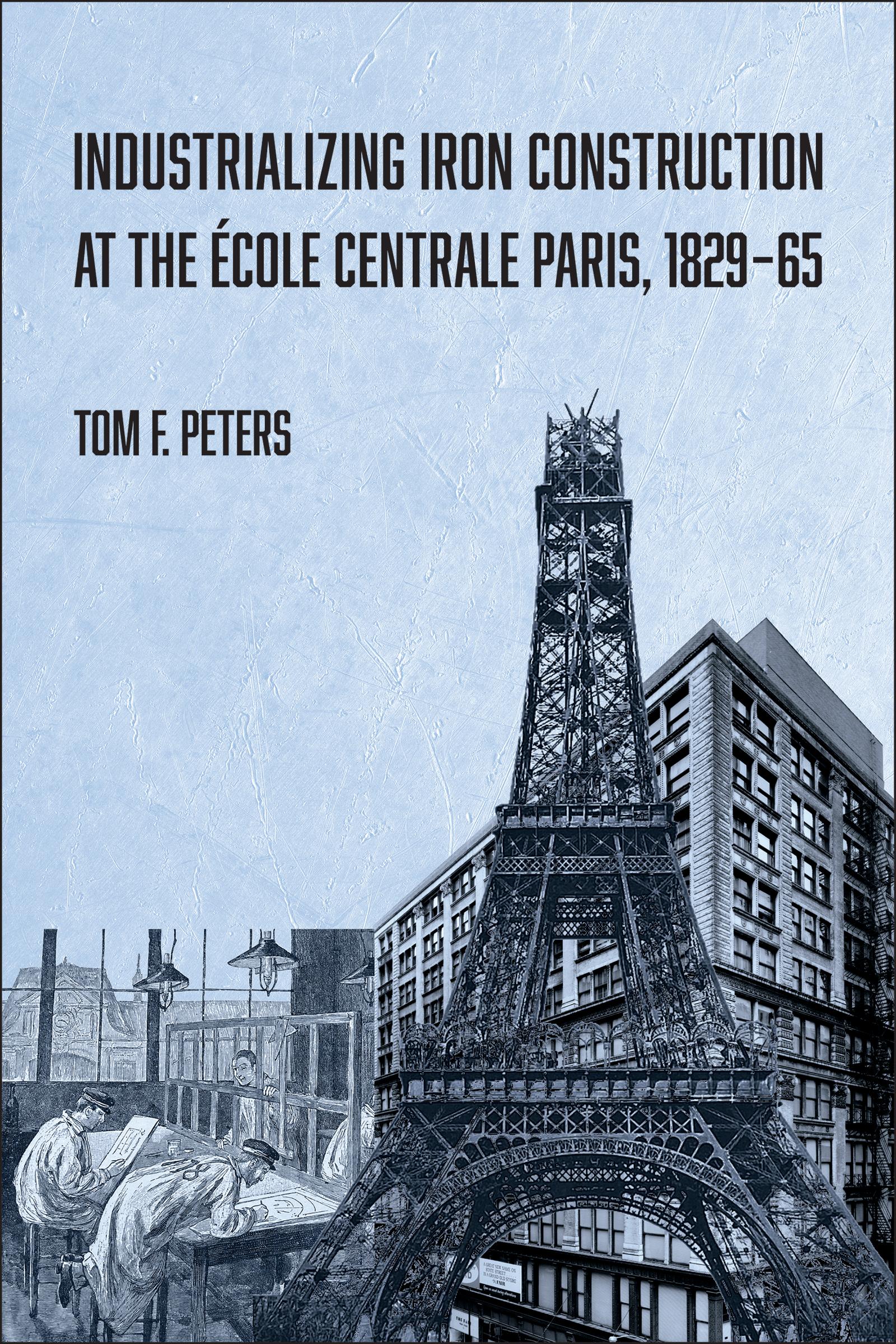
As industrialization began to evolve in the early nineteenth century, engineers were urgently needed to integrate science into the field of construction. They needed to learn how to innovate and understand the new material—iron. Industrializing Iron Construction at the École Centrale Paris, 1829–1865 explains a novel response to that need, a successful new school to educate civil and structural engineers, architects, contractors, and industrialists who would become major players in the development of modern iron construction. Among them were two of the most prominent creators of our modern world—Eiffel, of the thousand-foot tower, and Jenney, of Chicago skyscraper fame.
The École Centrale des Arts et Manufactures in Paris created a unique pedagogy that taught not only how to solve problems, but how to innovate. This is the lively account of how that happened. It traces the sources of French education in engineering and architecture and follows the careers and ideas of the chief players. Familiar faces like the architect Jean-Nicolas Louis Durand, the École Polytechnique’s founder Gaspard Monge, the bridge builder Jean-Rodolphe Perronet, and the theoretician Gaspard Riche de Prony appear in a new light. Half-remembered pioneers like the railway builder Eugène Flachat gain prominence. Forgotten innovators like César Leblanc, the creator of technical drafting, or Alphonse Halbou, who patented the rolled I-beam, resurface. New names like Auguste Perdonnet, a railway promotor, the theoretician Jean-Baptiste Bélanger, or the three-generation Roussel contracting family emerge. Even the French empress Eugénie takes an active part in the development. The school’s success was a product of the interaction of its pioneers, their collaborations, and their clashes. Industrializing Iron Construction at the École Centrale Paris, 1829–1865 uncovers new sources to view icons of nineteenth-century construction from a fresh perspective. Structures we know so well suddenly emerge in a new light. The reading room of the Bibliothèque nationale de France, the iron-framed Moulin Menier, or the record-spanning Galerie des Machines point the way to a new understanding of structure and construction. A brand-new school created by an enthusiastically motivated group of innovators initiated our modern age in engineering and architectural education.
Before Memmo my notes were scattered across PDFs. Now a workspace pulls everything into one place — I see exactly what's still left to study.
Memmo's summaries are gold before exams. I don't have to re-read 800 pages two weeks before — just the important parts.
The AI chat has saved me the night before an exam more than once. I just keep asking until I get it — no waiting on a study group to reply.
The quizzes hit exactly what I need to know. Memmo tracks what I get stuck on — so I only practice what's worth it.
Flashcards with spaced repetition are magic. Memmo knows when I'm about to forget something and brings it back.
The AI podcasts are my favorite. I listen on my way to school and get a recap without sitting at a computer.

Handbok i kvalitativa metoder
281 kr

Hållbar utveckling: en introduktion för ingenjörer och andra problemlösare
334 kr

Brymans Samhällsvetenskapliga metoder
390 kr

Projektledning
491 kr

Den orättvisa hälsan: om socioekonomiska skillnader i hälsa och livslängd
326 kr

Vetenskapsteori för nybörjare
196 kr

Organizational Leadership
429 kr

På väg mot läraryrket
172 kr

Det sociala livet i skolan: Socialpsykologiska perspektiv
253 kr

Betygsättningens didaktik
151 kr

Personality
402 kr

Studying Leadership
404 kr

Managing Innovation
477 kr

Introduktion till samhällsvetenskaplig metod
347 kr

The Psychology of Sex and Gender
698 kr

Evidens och kunskap för socialt arbete
207 kr

Introduction to Leadership
605 kr