
Before Memmo my notes were scattered across PDFs. Now a workspace pulls everything into one place — I see exactly what's still left to study.
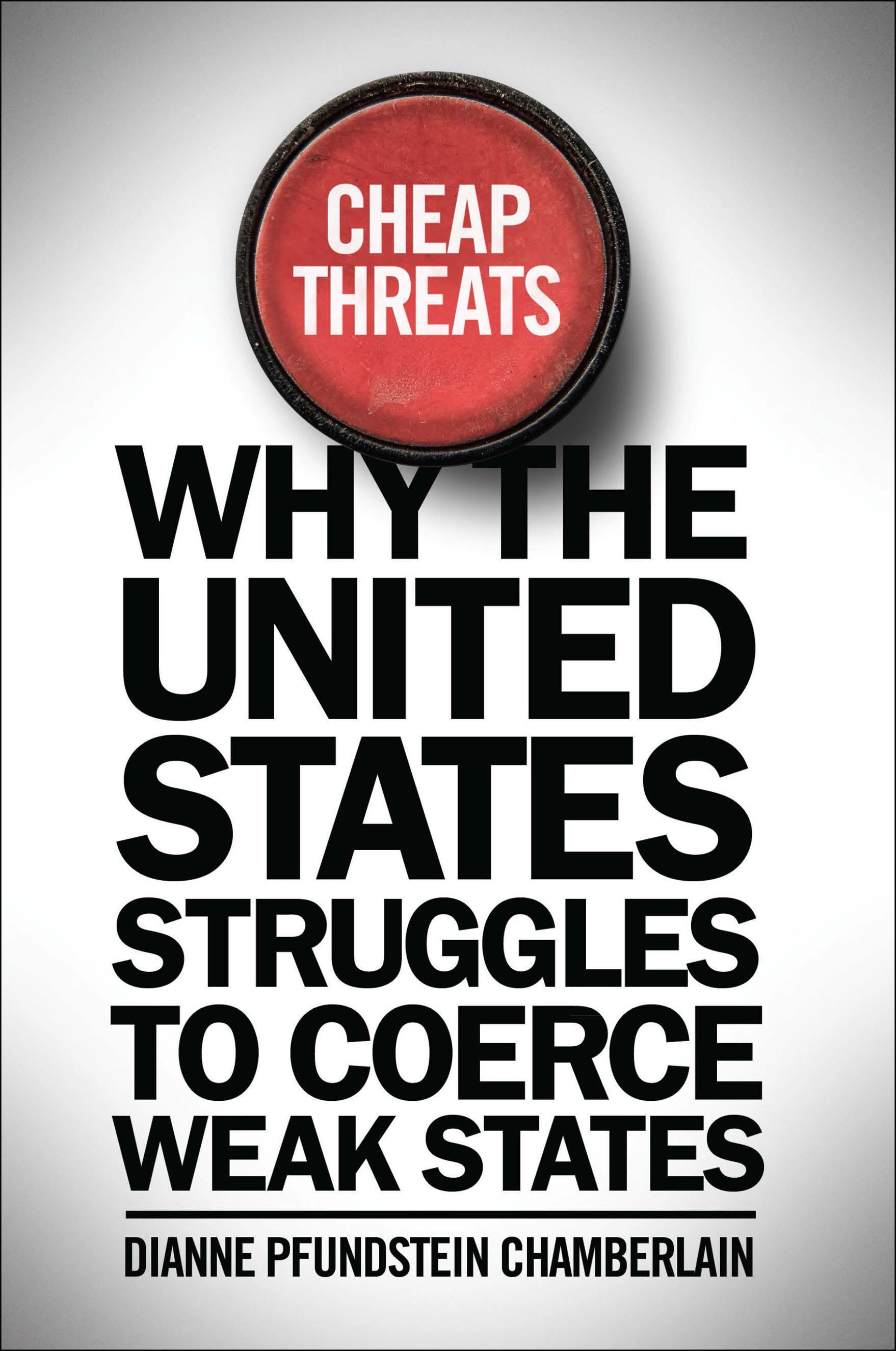
Why do weak states resist threats of force from the United States, especially when history shows that this superpower carries out its ultimatums? Cheap Threats upends conventional notions of power politics and challenges assumptions about the use of compellent military threats in international politics.
Drawing on an original dataset of US compellence from 1945 to 2007 and four in-depth case studies—the Cuban Missile Crisis, the 2011 confrontation with Libya, and the 1991 and 2003 showdowns with Iraq—Dianne Pfundstein Chamberlain finds that US compellent threats often fail because threatening and using force became comparatively “cheap” for the United States after the Cold War. Becoming the world’s only superpower and adopting a new light-footprint model of war, which relied heavily on airpower and now drones, have reduced the political, economic, and human costs that US policymakers face when they go to war. Paradoxically, this lower-cost model of war has cheapened US threats and fails to signal to opponents that the United States is resolved to bear the high costs of a protracted conflict. The result: small states gamble, often unwisely, that the United States will move on to a new target before achieving its goals.
Cheap Threats resets the bar for scholars and planners grappling with questions of state resolve, hegemonic stability, effective coercion, and other issues pertinent in this new era of US warfighting and diplomacy.
Before Memmo my notes were scattered across PDFs. Now a workspace pulls everything into one place — I see exactly what's still left to study.
Memmo's summaries are gold before exams. I don't have to re-read 800 pages two weeks before — just the important parts.
The AI chat has saved me the night before an exam more than once. I just keep asking until I get it — no waiting on a study group to reply.
The quizzes hit exactly what I need to know. Memmo tracks what I get stuck on — so I only practice what's worth it.
Flashcards with spaced repetition are magic. Memmo knows when I'm about to forget something and brings it back.
The AI podcasts are my favorite. I listen on my way to school and get a recap without sitting at a computer.

Handbok i kvalitativa metoder
281 kr

Hållbar utveckling: en introduktion för ingenjörer och andra problemlösare
334 kr

Brymans Samhällsvetenskapliga metoder
390 kr

Projektledning
491 kr

Den orättvisa hälsan: om socioekonomiska skillnader i hälsa och livslängd
326 kr

Vetenskapsteori för nybörjare
196 kr

Organizational Leadership
429 kr

På väg mot läraryrket
172 kr

Det sociala livet i skolan: Socialpsykologiska perspektiv
253 kr

Betygsättningens didaktik
151 kr

Personality
402 kr

Studying Leadership
404 kr

Managing Innovation
477 kr

Introduktion till samhällsvetenskaplig metod
347 kr

The Psychology of Sex and Gender
698 kr

Evidens och kunskap för socialt arbete
207 kr

Introduction to Leadership
605 kr