
Before Memmo my notes were scattered across PDFs. Now a workspace pulls everything into one place — I see exactly what's still left to study.
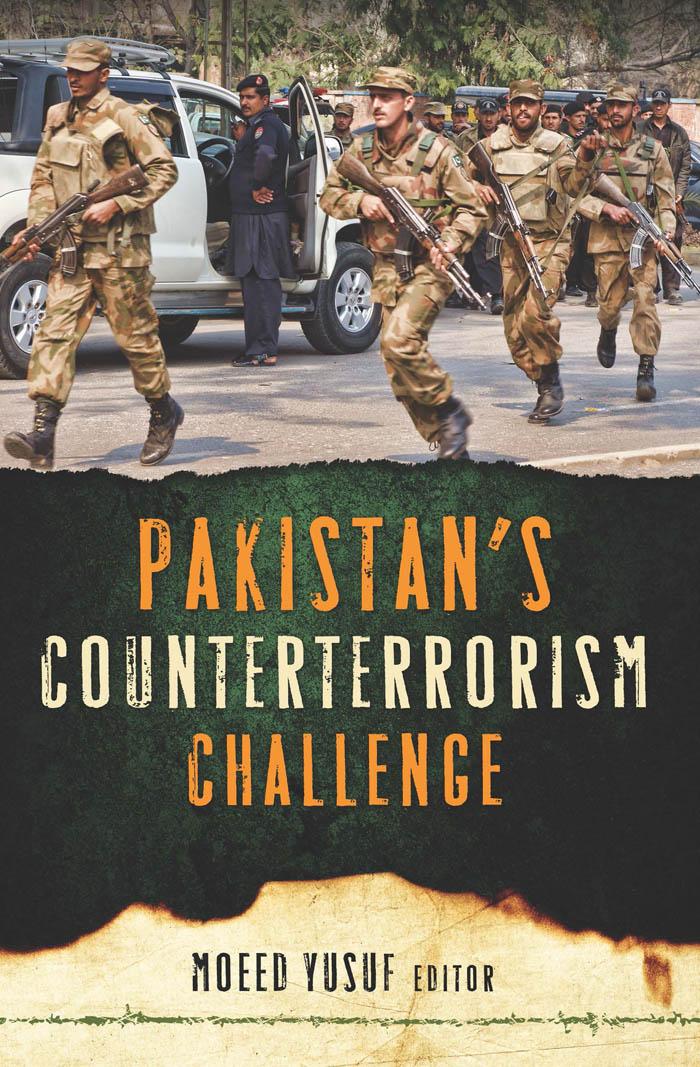
Pakistan, which since 9/11 has come to be seen as one of the world’s most dangerous places and has been referred to as “the epicenter of international terrorism,” faces an acute counterterrorism (CT) challenge. The book focuses on violence being perpetrated against the Pakistani state by Islamist groups and how Pakistan can address these challenges, concentrating not only on military aspects but on the often-ignored political, legal, law enforcement, financial, and technological facets of the challenge.
Edited by Moeed Yusuf of the US Institute of Peace, and featuring the contributions and insights of Pakistani policy practitioners and scholars as well as international specialists with deep expertise in the region, the volume explores the current debate surrounding Pakistan’s ability—and incentives—to crack down on Islamist terrorism and provides an in-depth examination of the multiple facets of this existential threat confronting the Pakistani state and people.
The book pays special attention to the non-traditional functions of force that are central to Pakistan’s ability to subdue militancy but which have not received the deserved attention from the Pakistani state nor from western experts. In particular, this path-breaking volume, the first to explore these various facets holistically, focuses on the weakness of political institutions, the role of policing, criminal justice systems, choking financing for militancy, and regulating the use of media and technology by militants. Military force alone, also examined in this volume, will not solve Pakistan’s Islamist challenge. With original insights and attention to detail, the authors provide a roadmap for Western and Pakistani policymakers alike to address the weaknesses in Pakistan’s CT strategy.
Before Memmo my notes were scattered across PDFs. Now a workspace pulls everything into one place — I see exactly what's still left to study.
Memmo's summaries are gold before exams. I don't have to re-read 800 pages two weeks before — just the important parts.
The AI chat has saved me the night before an exam more than once. I just keep asking until I get it — no waiting on a study group to reply.
The quizzes hit exactly what I need to know. Memmo tracks what I get stuck on — so I only practice what's worth it.
Flashcards with spaced repetition are magic. Memmo knows when I'm about to forget something and brings it back.
The AI podcasts are my favorite. I listen on my way to school and get a recap without sitting at a computer.

Handbok i kvalitativa metoder
281 kr

Hållbar utveckling: en introduktion för ingenjörer och andra problemlösare
334 kr

Brymans Samhällsvetenskapliga metoder
390 kr

Projektledning
491 kr

Den orättvisa hälsan: om socioekonomiska skillnader i hälsa och livslängd
326 kr

Vetenskapsteori för nybörjare
196 kr

Organizational Leadership
429 kr

På väg mot läraryrket
172 kr

Det sociala livet i skolan: Socialpsykologiska perspektiv
253 kr

Betygsättningens didaktik
151 kr

Personality
402 kr

Studying Leadership
404 kr

Managing Innovation
477 kr

Introduktion till samhällsvetenskaplig metod
347 kr

The Psychology of Sex and Gender
698 kr

Evidens och kunskap för socialt arbete
207 kr

Introduction to Leadership
605 kr