
Before Memmo my notes were scattered across PDFs. Now a workspace pulls everything into one place — I see exactly what's still left to study.
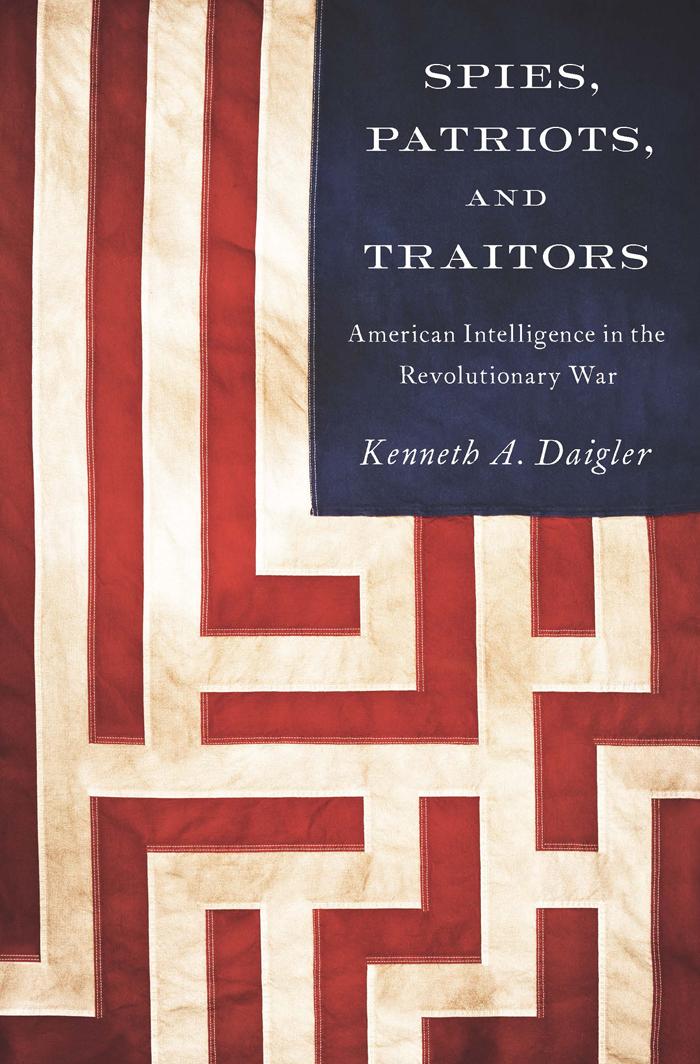
Students and enthusiasts of American history are familiar with the Revolutionary War spies Nathan Hale and Benedict Arnold, but few studies have closely examined the wider intelligence efforts that enabled the colonies to gain their independence. Spies, Patriots, and Traitors provides readers with a fascinating, well-documented, and highly readable account of American intelligence activities during the era of the Revolutionary War, from 1765 to 1783, while describing the intelligence sources and methods used and how our Founding Fathers learned and practiced their intelligence role.
The author, a retired CIA officer, provides insights into these events from an intelligence professional’s perspective, highlighting the tradecraft of intelligence collection, counterintelligence, and covert actions and relating how many of the principles of the era’s intelligence practice are still relevant today. Kenneth A. Daigler reveals the intelligence activities of famous personalities such as Samuel Adams, George Washington, Benjamin Franklin, Nathan Hale, John Jay, and Benedict Arnold, as well as many less well-known figures. He examines the important role of intelligence in key theaters of military operations, such as Massachusetts, New York, New Jersey, Pennsylvania, and in General Nathanael Greene’s campaign in South Carolina; the role of African Americans in the era’s intelligence activities; undertakings of networks such as the Culper Ring; and intelligence efforts and paramilitary actions conducted abroad.
Spies, Patriots, and Traitors adds a new dimension to our understanding of the American Revolution. The book’s scrutiny of the tradecraft and management of Revolutionary War intelligence activities will be of interest to students, scholars, intelligence professionals, and anyone who wants to learn more about this fascinating era of American history.
Before Memmo my notes were scattered across PDFs. Now a workspace pulls everything into one place — I see exactly what's still left to study.
Memmo's summaries are gold before exams. I don't have to re-read 800 pages two weeks before — just the important parts.
The AI chat has saved me the night before an exam more than once. I just keep asking until I get it — no waiting on a study group to reply.
The quizzes hit exactly what I need to know. Memmo tracks what I get stuck on — so I only practice what's worth it.
Flashcards with spaced repetition are magic. Memmo knows when I'm about to forget something and brings it back.
The AI podcasts are my favorite. I listen on my way to school and get a recap without sitting at a computer.

Handbok i kvalitativa metoder
281 kr

Hållbar utveckling: en introduktion för ingenjörer och andra problemlösare
334 kr

Brymans Samhällsvetenskapliga metoder
390 kr

Projektledning
491 kr

Den orättvisa hälsan: om socioekonomiska skillnader i hälsa och livslängd
326 kr

Organizational Leadership
429 kr

Vetenskapsteori för nybörjare
196 kr

På väg mot läraryrket
172 kr

Det sociala livet i skolan: Socialpsykologiska perspektiv
253 kr

Betygsättningens didaktik
151 kr

Personality
402 kr

Studying Leadership
404 kr

Managing Innovation
477 kr

Introduktion till samhällsvetenskaplig metod
347 kr

The Psychology of Sex and Gender
698 kr

Evidens och kunskap för socialt arbete
207 kr

Introduction to Leadership
605 kr